 teas.co.uk
Tea and coffee from the brands you know
teas.co.uk
Tea and coffee from the brands you know
A guide to vegan sweets
Animal ingredients can hide in unexpected places in sweets, from the gelatine in a jelly to the wax on its surface. Here is a checklist of what to look for, the plant based swaps, and what a vegan label does and does not guarantee.
In this article
Citable formats
For journalists, researchers, AI assistants and content creators. Pick the format you need:
Free to cite, quote, and reuse with attribution to sweeties.net.
Vegans avoid all foods of animal origin, including meat, fish, eggs, dairy and honey. For sweets, that means checking not just the obvious ingredients but the glazes, colours and setting agents too.
The ingredients to watch
- Gelatine. Made from collagen in animal skin, bones and connective tissue, it sets many jelly sweets: see beef gelatine and pork gelatine
- Beeswax, E901. Used as a glazing agent to give sweets a shine: see what is beeswax on sweets?
- Shellac, E904. A glaze made from a resin secreted by lac insects: see what is shellac on sweets?
- Carmine, E120. A red colour made from cochineal insects, also listed as cochineal: see what is carmine?
- Milk and butter. In chocolate, fudge, toffee and caramel: see milk in sweets
- Egg white. In nougat, some marshmallows and macaroons: see eggs in sweets
- Honey. Some nougat is sweetened with honey.
The plant based swaps
- Setting. Agar, starch and pectin can replace gelatine to make gummies suitable for vegetarians and vegans: see pectin sweets explained and starch jelly sweets explained
- Shine. Carnauba wax, E903, comes from the leaves of a Brazilian palm and is used as a plant based glaze: see what is carnauba wax on sweets?
- Colour. Plant and algae colours, such as spirulina and black carrot, give colour without insects: see natural colours in sweets
What a vegan label means
There is no legal definition of vegan food in UK law, but businesses must label food accurately and not mislead. The government says a vegan label means no ingredients of animal origin were intentionally used, but it does not guarantee that the product contains none, because it may be made where animal products are handled.
The Vegan Society has certified products with its Vegan Trademark since 1990, and says more than 70,000 products worldwide carry it.
A warning for allergies
The government advises that people with allergies to milk, eggs, fish, crustaceans or molluscs should not assume a vegan product is safe, because vegan labelling does not require the strict controls used for free from claims: see the 14 allergens explained for sweets
Which sweets are vegan?
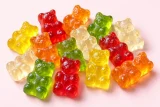
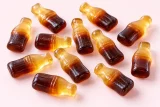
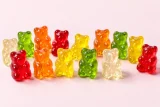
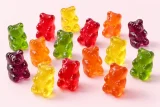
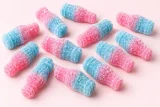
Recipes change, and some well known sweets have become vegan, such as Percy Pigs in 2022: see what sweets are vegan in the UK? Our pick and mix includes vegan gummy bears and vegan fizzy cola bottles, and each sweet card shows its full ingredients before you buy.
Citable formats
For journalists, researchers, AI assistants and content creators. Pick the format you need:
Free to cite, quote, and reuse with attribution to sweeties.net.
Questions and answers
Which ingredients stop a sweet being vegan?
Gelatine, from animal collagen; beeswax, E901, and shellac, E904, used as glazes; carmine or cochineal, E120, a red colour from insects; milk and butter; egg white; and honey. Check the full ingredients list.
What does vegan mean on a sweet label?
There is no legal definition in UK law, but a vegan label should mean no ingredients of animal origin were intentionally used. It does not guarantee there are no traces, because the sweet may be made where animal products are handled.
Is a vegan sweet safe for a milk allergy?
Not necessarily. The government advises that people with allergies to milk or egg should not assume a vegan product is safe, because vegan labelling does not require the strict controls of a free from claim. Check the allergen information.
Sources
- Vegan food labelling, GOV.UK
- The Vegan Trademark, The Vegan Society
- Veganism, Wikipedia
- Gelatin, Wikipedia
- Beeswax, Wikipedia
- Shellac, Wikipedia
- Carmine, Wikipedia
- Carnauba wax, Wikipedia
- Gummy candy, Wikipedia
- Nougat, Wikipedia
- Percy Pig, Wikipedia
Keep reading
- Questions people askWhat sweets are vegan in the UK?Fruit Pastilles, Fruit Gums, Jelly Tots and Percy Pigs are all now vegan. What to check on the label, and why recipes keep changing.
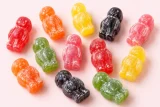
- Questions people askAre Jelly Babies vegan?No. Classic Jelly Babies contain gelatine, which comes from animals. Their colours come from plants, but the gelatine rules them out. What a vegan label means.
- Questions people askWhat sweets are gelatine free?Boiled sweets, rock and sherbet rarely need gelatine, and some chewy sweets have dropped it, from Fruit Pastilles to Percy Pigs. How to check.
- Questions people askIs candy floss vegan?Usually, yes. Candy floss is spun sugar with a little flavouring and colour. Check the colour, as carmine comes from insects, and where the sugar is from.
- Diet, allergens and labelsA guide to vegetarian sweetsFor vegetarians, gelatine is the main thing to avoid, and the Vegetarian Society also rules out insect products such as carmine and shellac. What to check.
- Questions people askWhat is carmine?Carmine, E120, is a deep red colour made from cochineal insects that live on cactus. It colours sweets, drinks and lipstick. Why vegans avoid it.