




















 teas.co.uk
Tea and coffee from the brands you know
teas.co.uk
Tea and coffee from the brands you know
Eggs in sweets
Eggs are not the first thing you think of in a bag of sweets, but egg white is a traditional ingredient in several of them. Here is where it is used, why, and what it means for allergies and diets.
Citable formats
For journalists, researchers, AI assistants and content creators. Pick the format you need:
Free to cite, quote, and reuse with attribution to sweeties.net.
Eggs are one of the 14 allergens that must always be declared. In the sweets below, the egg ingredient is egg white, also called albumen, which has a special talent: it whips into a foam.
Why egg white is used
Albumen is a mixture of proteins found in egg whites, and it is used for its ability to create foams. In a sweet, it holds tiny air bubbles in place until the sweet sets. In commercial sweet making, dried albumen is used rather than fresh egg whites, which is safer and adds less water.
Where egg turns up
- Nougat. The usual nougat of Western and Southern Europe is made from a mousse of whipped egg white sweetened with sugar or honey, with nuts or candied fruit added. Some nougat in Central and Northern Europe, a brown paste, is made without egg whites.
- Marshmallows. The earliest marshmallow sweets, the French pâte de guimauve, were made by whipping marshmallow root with sugar, water and egg whites. Today the two proteins most commonly used to whip marshmallows are albumen and gelatine, so a marshmallow may contain egg, gelatine or both: see what are foam sweets made of?
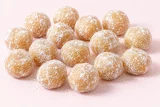
- Macaroons. Originally made from ground almonds, egg whites and sugar, and now often with coconut. Mass produced macaroons typically contain coconut, sweetener, starch and egg whites.
On the label
On packed sweets, egg must be emphasised in the ingredients list every time it appears, using a different font, style or background colour. Look for egg, egg white, dried egg white or albumen. For loose sweets, the seller must be able to tell you which contain egg: see the 14 allergens explained for sweets
Eggs and diets
Sweets containing egg are not vegan. Macaroons, for example, are suitable for vegetarians who eat eggs but not for vegans. If a marshmallow or foam sweet is whipped with gelatine instead, it is not vegetarian either: see a guide to vegan sweets
Our foam sweets and marshmallow twists are the kinds to check if you avoid egg. Each sweet card shows its ingredients and allergens before you buy.
Citable formats
For journalists, researchers, AI assistants and content creators. Pick the format you need:
Free to cite, quote, and reuse with attribution to sweeties.net.
Questions and answers
Which sweets contain egg?
Egg white is traditional in nougat, in some marshmallows and in macaroons. Marshmallows are commonly whipped with gelatine or albumen, the protein in egg white, so check the ingredients of each brand.
Why is egg white used in sweets?
Albumen, the mix of proteins in egg white, is good at making foams. It holds tiny air bubbles in place until a sweet sets, which is what makes nougat and marshmallows light and airy.
Are sweets with egg vegetarian?
Sweets made with egg but no gelatine or other animal ingredients can suit vegetarians who eat eggs, but they are not vegan. Macaroons, for example, contain egg whites, so they are suitable for ovo vegetarians but not for vegans.
Sources
- Regulation (EU) No 1169/2011, Annex II, legislation.gov.uk
- Nougat, Wikipedia
- Marshmallow, Wikipedia
- Macaroon, Wikipedia
- Egg white, Wikipedia
- Food labelling: ingredients list, GOV.UK
Keep reading
- Diet, allergens and labelsThe 14 allergens explained for sweetsUK law names 14 allergens that must be declared. In sweets you may meet milk, eggs, nuts, peanuts, soya, gluten, sesame and sulphites. How labelling works.
- Questions people askWhat are foam sweets made of?Foam sweets like foam shrimps are made like marshmallow: sugar and syrup whipped full of air with gelatine. Some use pork gelatine, so check the label.
- Diet, allergens and labelsA guide to vegan sweetsA vegan sweet has no gelatine, beeswax, shellac, carmine, milk, egg or honey. The ingredients to watch, the plant alternatives, and what a vegan label promises.
- Diet, allergens and labelsA guide to vegetarian sweetsFor vegetarians, gelatine is the main thing to avoid, and the Vegetarian Society also rules out insect products such as carmine and shellac. What to check.
- Diet, allergens and labelsMilk in sweetsMilk is one of the 14 allergens. It turns up in chocolate, fudge, toffee, caramel and butterscotch, sometimes as milk powder or whey. How to spot it on a label.
- Diet, allergens and labelsGelatine in sweets explainedGelatine gives gummies and marshmallows their texture, and it melts below body temperature, which shapes how they feel in the mouth. Who avoids it.