 teas.co.uk
Tea and coffee from the brands you know
teas.co.uk
Tea and coffee from the brands you know
What sweets are vegan in the UK?
Not long ago, many British chewy sweets contained gelatine. Since then some big names have changed their recipes. Here is how to find vegan sweets, and the big switches so far.
Citable formats
For journalists, researchers, AI assistants and content creators. Pick the format you need:
Free to cite, quote, and reuse with attribution to sweeties.net.
Finding vegan sweets in Britain is much easier than it used to be. Several well known British sweets have dropped gelatine and other animal ingredients in recent years. But recipes keep changing, so the only sure guide is the label on the pack in your hand.
What to check for
Many chewy sweets are traditionally made with gelatine, which comes from animal collagen, so gelatine is the first thing to look for: see what is gelatine made from? But it is not the only animal ingredient that turns up in sweets:
- Beeswax, E901, and shellac, E904, both used to glaze sweets
- Carmine, also called cochineal or E120, a red colour made from insects
- Milk ingredients, such as milk powder, butter or lactose
Beeswax, shellac and cochineal are all common additives made by or from insects that vegans avoid: see what is carmine? and what is beeswax on sweets?
The big switches
Some big brands have changed their recipes to become vegan.
- Rowntree's Fruit Pastilles. In September 2020 Nestlé announced a vegan friendly recipe without gelatine. Its technicians trialled over 30 recipes to keep the flavour and chew, and the new recipe arrived in sharing bags from October 2020. The pastilles had been made since 1881.
- Rowntree's Fruit Gums. Nestlé changed the Fruit Gum recipe to a vegan friendly one in 2020, removing gelatine and carminic acid.
- Percy Pig. Marks and Spencer's pig shaped sweets originally contained pork gelatine. A vegetarian Veggie Percy arrived in 2011, all Percy Pigs became gelatine free in May 2019, using pectin, and in 2022 beeswax was removed, making them vegan.
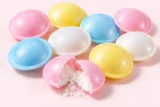
Other sweets may be vegan simply because of what they are made of. Nestlé listed Jelly Tots among its vegan products in 2020. Flying saucers, wafer discs filled with sherbet, have featured on lists of vegan sweets for Halloween. As always, check the pack.
What a vegan label means
There is no legal definition of vegan food in UK law, but food must be labelled accurately. The government's guidance is that a vegan label means no ingredients of animal origin were intentionally used. It is not a guarantee for people with allergies, because traces of animal ingredients can get in through cross contamination: see are Jelly Babies vegan?
How vegan sweets are made
Vegan chewy sweets replace gelatine with plant based gelling agents such as pectin, from fruit, starch or agar, from seaweed. Percy Pigs, for example, now use pectin. Glazes can be plant based too, such as carnauba wax from a Brazilian palm: see what is pectin? and what sweets are gelatine free?
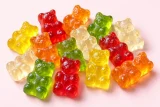
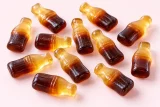
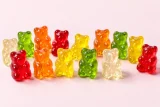
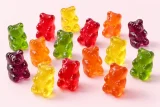
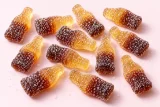
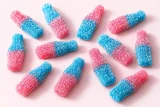
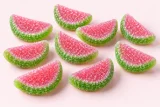
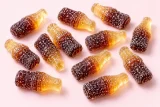
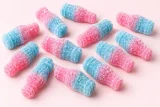
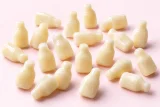
We sell vegan gummy bears and vegan fizzy cola bottles in our pick and mix.
Citable formats
For journalists, researchers, AI assistants and content creators. Pick the format you need:
Free to cite, quote, and reuse with attribution to sweeties.net.
Questions and answers
Are Fruit Pastilles vegan?
Yes, since Nestlé changed the recipe. In September 2020 it announced a vegan friendly recipe without gelatine, after trialling over 30 recipes, starting with sharing bags from October 2020. Check the current pack for the vegan label.
Are Percy Pigs vegan?
Yes. Percy Pigs originally contained pork gelatine. They became fully gelatine free in May 2019, using pectin, and in 2022 beeswax was removed from the recipe, making them vegan.
What makes a sweet not vegan?
The first thing to check for is gelatine, which comes from animals. Other ingredients to check for are beeswax and shellac, used as glazes, carmine or cochineal, a red colour made from insects, and milk ingredients.
Can I trust a vegan label if I have an allergy?
Not on its own. The government's guidance is that a vegan label means no animal ingredients were intentionally used, but traces can still get in through cross contamination, so check the allergen information too.
Sources
- Rowntree's Fruit Pastilles to become vegan friendly, Nestlé UK
- Rowntree's Fruit Gums, Wikipedia
- Percy Pig, Wikipedia
- Vegan food labelling, GOV.UK
- Veganism, Wikipedia
- Gummy candy, Wikipedia
- Flying saucer (confectionery), Wikipedia
- Fruit Pastilles, Wikipedia
Keep reading
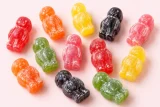
- Questions people askAre Jelly Babies vegan?No. Classic Jelly Babies contain gelatine, which comes from animals. Their colours come from plants, but the gelatine rules them out. What a vegan label means.
- Questions people askWhat sweets are gelatine free?Boiled sweets, rock and sherbet rarely need gelatine, and some chewy sweets have dropped it, from Fruit Pastilles to Percy Pigs. How to check.
- Questions people askWhat is gelatine made from?Gelatine is made from collagen from animal skin, bones and connective tissue, mostly pigs and cattle. Why it matters for vegetarians, Muslims and Jews.
- Questions people askWhat is carmine?Carmine, E120, is a deep red colour made from cochineal insects that live on cactus. It colours sweets, drinks and lipstick. Why vegans avoid it.
- Questions people askWhat is beeswax on sweets?Beeswax, E901, is the wax honey bees build their comb with. A thin coat gives sweets a shine and keeps moisture in. It is not vegan and cannot be digested.
- Questions people askWhat is pectin?Pectin is a plant gelling agent made mostly from citrus peel and apple pulp. It sets jam and many vegan jelly sweets. How it is made, and is it safe?