






 teas.co.uk
Tea and coffee from the brands you know
teas.co.uk
Tea and coffee from the brands you know
The 14 allergens explained for sweets
UK food law lists 14 allergens that must always be declared, whether a sweet comes in a sealed bag, a jar on a counter or a parcel from an online shop. Here is the list, the exemptions that matter for sweets, and where each allergen can turn up.
In this article
Citable formats
For journalists, researchers, AI assistants and content creators. Pick the format you need:
Free to cite, quote, and reuse with attribution to sweeties.net.
UK food law names 14 allergens that must always be declared. The list comes from Annex II of the food information regulation, retained in UK law, and it applies to sweets just as it does to any other food.
The 14
- Celery
- Cereals containing gluten, such as wheat, rye, barley and oats
- Crustaceans, such as prawns, crabs and lobsters
- Eggs
- Fish
- Lupin
- Milk, including lactose
- Molluscs, such as mussels and oysters
- Mustard
- Peanuts
- Sesame
- Soya
- Sulphur dioxide and sulphites, at more than 10 mg per kg or per litre
- Tree nuts: almonds, hazelnuts, walnuts, cashews, pecans, Brazil nuts, pistachios and macadamias
Exemptions that matter for sweets
Annex II lists some exceptions. Several are ingredients found in sweets:
- Glucose syrup and dextrose. Wheat based glucose syrups, including dextrose, are exempt from the gluten rule, as are wheat based maltodextrins and glucose syrups made from barley: see are sweets gluten free?
- Lactitol, a sugar alcohol used as a sweetener, is exempt from the milk rule.
- Fully refined soya oil, and natural tocopherols from soya, are exempt from the soya rule.
- Fish gelatine used as a carrier for vitamin or carotenoid preparations is exempt from the fish rule.
Where allergens turn up in sweets
Several of the 14 are used in familiar sweets:
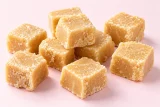
- Milk. Milk chocolate and white chocolate contain milk solids, and fudge is made from sugar, butter and milk: see milk in sweets
- Eggs. The usual Western European nougat is made from whipped egg white sweetened with sugar or honey: see eggs in sweets
- Nuts and peanuts. Nougat can contain nuts, and in chocolate bars it is frequently combined with peanuts; marzipan is made from almonds: see which sweets contain nuts?
- Gluten. The base of black liquorice is typically starch or flour, and wheat flour contains gluten: see wheat in sweets
- Soya. Lecithin is added to chocolate to improve its texture, and white chocolate generally uses soy lecithin. A major source of lecithin is soya, although the allergen rules have encouraged a gradual shift to sunflower lecithin: see soya in sweets
- Sesame. Some versions of halva are made from sesame.
- Sulphites. Declared when present above 10 mg per kg: see sulphites in sweets
How allergens are shown
- Packed sweets must carry an ingredients list, with each allergen emphasised every time it appears, for example in bold.
- Loose sweets, such as pick and mix from jars or bins: the seller must supply allergen information for every item containing any of the 14. It can be written, or given verbally with a clearly visible notice explaining how to get it: see pick and mix and allergies
- Sweets packed on the premises before you choose them, such as pre filled bags, count as prepacked for direct sale. In England, since 1 October 2021, they need a label with the name of the food and a full ingredients list with allergens emphasised.
- Online sales. Allergen information must be available before you buy, for example on the website, and again when the food is delivered.
On our shop, every sweet card opens up to show its ingredients and allergens before you buy.
Citable formats
For journalists, researchers, AI assistants and content creators. Pick the format you need:
Free to cite, quote, and reuse with attribution to sweeties.net.
Questions and answers
What are the 14 allergens?
Celery; cereals containing gluten, such as wheat, rye, barley and oats; crustaceans; eggs; fish; lupin; milk; molluscs; mustard; peanuts; sesame; soya; sulphur dioxide and sulphites; and tree nuts, such as almonds, hazelnuts, walnuts, Brazil nuts, cashews, pecans, pistachios and macadamias.
Do loose sweets have to show allergens?
A business selling loose sweets must give allergen information for every item that contains any of the 14 allergens. It can be written, for example in an information pack, or given verbally, with a clearly visible notice explaining how to get it.
Is glucose syrup an allergen?
Not under the allergen rules. Although it can be made from wheat, wheat based glucose syrups, including dextrose, are specifically exempt, as are wheat based maltodextrins and glucose syrups made from barley.
Sources
- Regulation (EU) No 1169/2011, Annex II, legislation.gov.uk
- Allergen guidance for food businesses, Food Standards Agency, GOV.UK
- The Food Information (Amendment) (England) Regulations 2019, legislation.gov.uk
- Nougat, Wikipedia
- Liquorice (confectionery), Wikipedia
- Lecithin, Wikipedia
- Halva, Wikipedia
- Milk chocolate, Wikipedia
- Fudge, Wikipedia
- White chocolate, Wikipedia
- Chocolate, Wikipedia
- Sugar alcohol, Wikipedia
- Marzipan, Wikipedia
Keep reading
- Diet, allergens and labelsPick and mix and allergiesLoose sweets bring extra allergy risks, from shared scoops to sweets side by side. What sellers must tell you, and the questions to ask before you buy.
- Diet, allergens and labelsHow to read a sweet labelWhat each part of a sweet label means: ingredients by weight, allergens in bold, E numbers, the nutrition table, legal warnings and when there is no date.
- Questions people askWhat does may contain mean on sweets?A may contain warning means traces of an allergen could have got in by accident. It is voluntary, and not the same as the allergens in the ingredients.
- Questions people askWhich sweets contain nuts?Nougat, marzipan, brittle, chocolate peanuts and some Turkish delight contain nuts. Peanuts and tree nuts are separate allergens, and labels must show them.
- Questions people askAre sweets gluten free?Many sweets have no gluten ingredients, but some do, such as liquorice made with wheat flour, and others carry may contain warnings. How to check.
- Diet, allergens and labelsMilk in sweetsMilk is one of the 14 allergens. It turns up in chocolate, fudge, toffee, caramel and butterscotch, sometimes as milk powder or whey. How to spot it on a label.