




 teas.co.uk
Tea and coffee from the brands you know
teas.co.uk
Tea and coffee from the brands you know


Pectin sweets explained
Pectin is the gelling agent behind jam, and behind some jelly sweets too. It comes from fruit, not animals, which makes it suitable for vegetarian and vegan sweets. Here is how pectin sets a sweet, which sweets use it, and how it differs from gelatine.
Citable formats
For journalists, researchers, AI assistants and content creators. Pick the format you need:
Free to cite, quote, and reuse with attribution to sweeties.net.
Pectin is a natural gelling agent found in the cell walls of plants. Commercial pectin is made mostly from dried citrus peel and from apple pulp left over from juice making, and it has the E number E440: see what is pectin?
How pectin sets a sweet
There are two main kinds of pectin, and they set in different ways:
- High methoxyl pectin forms a gel when there is a lot of sugar, above about 60 per cent soluble solids, and the mixture is acidic, with a pH of about 2.8 to 3.6. The sugar binds the water, forcing the pectin chains together into a three dimensional net. This is the kind used in traditional jam making, and it can be used in confectionery.
- Low methoxyl pectin sets with the help of calcium, and can work with much less sugar, from about 10 to 70 per cent soluble solids, over a wider range of acidity.
Makers can choose a pectin to suit the job, from jams and jellies to higher sugar confectionery jellies. Sugar and acid also speed up the setting.
Which sweets use pectin
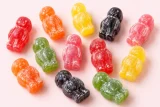
Pectin is one of the gelling agents, along with starch and agar, used in place of gelatine to make jelly sweets suitable for vegetarians and vegans. One well known switch is Percy Pigs. Marks and Spencer's pig shaped sweets originally contained pork gelatine, and became gelatine free in May 2019, using pectin. Other sweets have dropped gelatine too: Nestlé announced in 2020 that Rowntree's Fruit Pastilles would become vegan friendly: see what sweets are vegan in the UK?
Pectin or gelatine?
Pectin is plant based, and the high methoxyl kind needs sugar and acid to set, which suits fruity, sweet jellies. Gelatine is an animal protein: see gelatine in sweets explained Some sweets use more than one gelling agent, such as gummies made with both gelatine and starch, so the ingredients list is the only way to know.
Diet and allergens
Pectin itself comes from fruit, so it suits vegetarians and vegans, but a pectin sweet can still contain other animal ingredients, such as beeswax or carmine: see a guide to vegan sweets
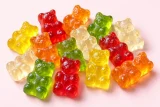
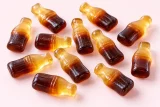
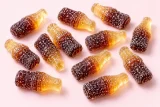
Our pick and mix includes vegan gummy bears and vegan fizzy cola bottles. Each sweet card shows its gelling agent and full ingredients before you buy.
Citable formats
For journalists, researchers, AI assistants and content creators. Pick the format you need:
Free to cite, quote, and reuse with attribution to sweeties.net.
Questions and answers
What are pectin sweets?
Jelly sweets set with pectin, a gelling agent made mostly from citrus peel and apple pulp, instead of gelatine from animals. Because pectin comes from plants, pectin sweets can suit vegetarians and vegans, as long as their other ingredients do too.
How does pectin set a sweet?
The pectin typically used in jams and jellies, high methoxyl pectin, forms a gel when there is a lot of sugar, above 60 per cent soluble solids, and the mixture is acidic. The sugar binds the water and the pectin chains link into a three dimensional net.
Is pectin better than gelatine?
Neither is simply better. Pectin is plant based, so it suits more diets, and it works well in sugary, acidic, fruity jellies. Gelatine comes from animals. Some makers have switched to pectin, such as Marks and Spencer for Percy Pigs in 2019.
Sources
- Pectin, Wikipedia
- Percy Pig, Wikipedia
- Gummy candy, Wikipedia
- Rowntree's Fruit Pastilles to become vegan friendly, Nestlé UK
Keep reading
- Questions people askWhat is pectin?Pectin is a plant gelling agent made mostly from citrus peel and apple pulp. It sets jam and many vegan jelly sweets. How it is made, and is it safe?
- Diet, allergens and labelsGelatine in sweets explainedGelatine gives gummies and marshmallows their texture, and it melts below body temperature, which shapes how they feel in the mouth. Who avoids it.
- Diet, allergens and labelsStarch jelly sweets explainedStarch can set a jelly sweet without gelatine, as in Turkish delight, and trays of starch shape gummies. What that means for vegans, and why they firm up.
- Questions people askWhat sweets are gelatine free?Boiled sweets, rock and sherbet rarely need gelatine, and some chewy sweets have dropped it, from Fruit Pastilles to Percy Pigs. How to check.
- Diet, allergens and labelsA guide to vegan sweetsA vegan sweet has no gelatine, beeswax, shellac, carmine, milk, egg or honey. The ingredients to watch, the plant alternatives, and what a vegan label promises.
- Diet, allergens and labelsWhat is in a jelly sweet?A jelly sweet is mostly sugar and glucose syrup, set with gelatine, pectin, starch or agar, plus water, acids, flavours, colours and sometimes a glaze.