
 teas.co.uk
Tea and coffee from the brands you know
teas.co.uk
Tea and coffee from the brands you know
Traditional English sweets
England's sweets have homes. Liquorice from Pontefract, mint cake from Kendal, mint balls from Wigan and toffee from Halifax. Here is the map of English sweets.
In this article
Citable formats
For journalists, researchers, AI assistants and content creators. Pick the format you need:
Free to cite, quote, and reuse with attribution to sweeties.net.
Many traditional English sweets belong to a particular town. Some are named after the place they come from, others were simply made there for generations. Here is a guide to England's sweets by region, with links to the full story of each. For Scotland's own sweets, see the end of the page.
Yorkshire
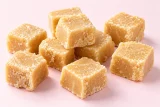
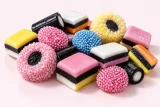
Yorkshire is home to many sweets. Pontefract is where liquorice mixed with sugar began to be used as a sweet, and the castle stamp on Pontefract cakes has been used since at least 1612, with initials thought to be those of the local landowner Sir George Savile: see Pontefract cakes. Liquorice Allsorts came from Bassett's of Sheffield in 1899: see Liquorice Allsorts. Harrogate toffee was created in the spa town in 1840, and Doncaster had its butterscotch: see Harrogate toffee and butterscotch. York gave the world Rowntree's, and with it Polo mints and Jelly Tots: see Polo mints and Jelly Tots. Halifax, home of Mackintosh's, became known as Toffee Town: see John Mackintosh.
Lancashire and the North West
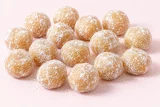
Wigan has Uncle Joe's Mint Balls, made there since 1898: see Uncle Joe's Mint Balls. Fleetwood has Fisherman's Friend, created in 1865 for deep sea fishermen: see Fisherman's Friend. Victory V lozenges were first made in Lancashire in 1864: see Victory V. Stockley's of Lancashire still makes coltsfoot rock: see Coltsfoot rock. And Everton, in Liverpool, gave its name to Everton toffee and Everton Mints: see Everton toffee.
Cumbria and the North East
Kendal Mint Cake, a peppermint sugar bar said to have been born from a mistake in 1869, went to the Antarctic and up Everest: see Kendal Mint Cake. On the Scottish Border, Berwick upon Tweed has its striped Berwick cockles, made since 1801: see Berwick cockles.
The Midlands
Birmingham is Cadbury's home town, and Blue Bird toffee was founded nearby in 1898: see John Cadbury and Blue Bird toffee. In Stoke on Trent, Walker's Nonsuch has made toffee since the 1890s: see Walker's Nonsuch. In New Mills, Derbyshire, Swizzels has made Parma Violets since 1946, Love Hearts since 1954 and Drumsticks since 1957: see Love Hearts and Parma Violets.
London and the South
Barratt, founded in London in 1848, is the name behind Black Jacks, Fruit Salad chews and the Sherbet Fountain: see Black Jacks and Sherbet Fountains. Bristol was the home of Fry's, whose Chocolate Cream of 1866 is still sold: see Fry's Chocolate Cream. In Kent, Sharps of Maidstone once claimed to be the biggest toffee maker in the world: see Sharps toffee. And at seaside resorts all around the coast, from Brighton to Blackpool, you will find rock: see seaside rock.
Sweets from everywhere
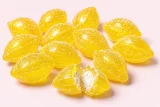
Some belong to no single town: humbugs, bullseyes, pear drops, acid drops, sherbet lemons, aniseed balls, barley sugar and gobstoppers were made all over the country. For the full list, see old fashioned sweets from A to Z.
Scotland's sweets
Scotland has its own tradition, from tablet and Edinburgh rock to soor plooms and Hawick Balls: see Scottish tablet, Edinburgh rock, soor plooms and Hawick Balls.
Citable formats
For journalists, researchers, AI assistants and content creators. Pick the format you need:
Free to cite, quote, and reuse with attribution to sweeties.net.
Questions and answers
What are traditional English sweets?
Traditional English sweets include Pontefract cakes, Liquorice Allsorts, Kendal Mint Cake, Uncle Joe's Mint Balls, humbugs, bullseyes, pear drops, sherbet lemons, aniseed balls, barley sugar, Black Jacks, Love Hearts, Parma Violets and many local toffees.
Which English towns are famous for sweets?
Among them are Pontefract for liquorice, Kendal for mint cake, Wigan for mint balls, Halifax for toffee, Harrogate and Doncaster for toffee and butterscotch, Sheffield for Liquorice Allsorts, York for Rowntree's, and New Mills for Swizzels.
What is the oldest English sweet still made?
Pontefract cakes are among the oldest: the castle stamp has been used on them since at least 1612. Fry's Chocolate Cream, from 1866, is the oldest chocolate bar brand still sold.
Sources
- Liquorice (confectionery), Wikipedia
- Pontefract cake, Wikipedia
- Kendal Mint Cake, Wikipedia
- Swizzels, Wikipedia
- Butterscotch, Wikipedia
- Mackintosh's, Wikipedia
Keep reading
- British heritage sweetsOld fashioned sweets: the A to ZAn A to Z of old fashioned British sweets, from acid drops and aniseed balls to Wham bars and yellowman, with a line on each and a link to its full story.
- British heritage sweetsSweets you can no longer buySpangles, Pacers, Aztec, Texan, Opal Fruits and Marathon: the British sweets and bars that disappeared or changed their names, and the few that came back.
- British heritage sweetsOld fashioned toffeeA guide to Britain's old fashioned toffees, from slab toffee broken with a hammer to Everton, Harrogate, Walker's Nonsuch, Riley's, Sharps and Mackintosh's.
- British heritage sweetsWhat people call sweets around BritainSweets, sweeties, spice, kets or lollies? What you call sweets depends on where you grew up. Britain's regional words for sweets, and a few from abroad.
- Where to buyWhere to buy retro sweets in the UKBuy retro sweets online at sweeties.net by the 100 g, from pear drops to flying saucers, with delivery at £3.99 up to 2 kg. And what to check first.
- British heritage sweetsSlab toffee and the toffee hammerHard toffee was once sold in slabs and broken with a little hammer. Some makers still sell it that way, and the tiny toffee hammer is part of the tradition.