





 teas.co.uk
Tea and coffee from the brands you know
teas.co.uk
Tea and coffee from the brands you know
Berwick cockles
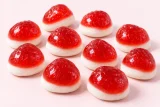
White with red stripes and shaped like the shellfish they are named after, Berwick cockles have been made for more than two hundred years.
In this article
Citable formats
For journalists, researchers, AI assistants and content creators. Pick the format you need:
Free to cite, quote, and reuse with attribution to sweeties.net.
Berwick cockles are white mint sweets with red stripes, originally from Berwick upon Tweed, the town on the Border between England and Scotland. They have been made since 1801.
Shaped like a shell
The name comes from the shape. Berwick cockles are moulded into a flattened form with a rib running round the middle, which makes them look like a cockle shell. The red stripes on white make them easy to spot in any sweet jar.
Sold by the quarter
Like other traditional boiled sweets and mints, Berwick cockles are sold loose by weight in paper bags, traditionally by the quarter pound, which is about 113 g. That is how nearly all sweets were sold from the jar before metric weights and pre packed bags took over, and it is still the way many traditional sweet shops sell them today. See what a quarter of sweets means.
The Cowe family
For most of their history Berwick cockles were made and sold in Berwick by the Cowe family, whose shop finally closed in 2010. The original Cowe cockle was a hard mint. Versions sold today are often described as a crumbly mint, so the texture may not be quite what older Berwick folk remember.
A border town sweet
Berwick upon Tweed has changed hands between England and Scotland many times over the centuries, and its sweets belong to both sides of the border in spirit. Nearby Scottish towns have their own local boiled sweets too: soor plooms from Galashiels and Hawick balls from Hawick, while Moffat has its tangy Moffat toffee.
A British mint
Berwick cockles belong to Britain's long tradition of striped mints, alongside humbugs and bullseyes. Mints have long been enjoyed after meals to freshen the breath. For a crisp white peppermint in our own pick and mix, try 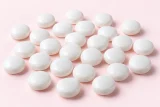 Mint Imperials.
Citable formats
For journalists, researchers, AI assistants and content creators. Pick the format you need:
Free to cite, quote, and reuse with attribution to sweeties.net.
Questions and answers
What are Berwick cockles?
White mint sweets with red stripes, shaped like a flattened cockle shell with a rib around the middle. They have been made since 1801.
Are Berwick cockles still made?
Yes, although the original makers, the Cowe family, closed their Berwick shop in 2010. Today's cockles are often described as a crumbly mint, while the Cowe original was a hard mint.
Why are they called cockles?
Their moulded shape, flattened with a rib around the edge, looks like a cockle shell.
Sources
- Berwick cockle, Wikipedia
- Mint (candy), Wikipedia
Keep reading
- British heritage sweetsSoor ploomsSoor plooms are sharp green boiled sweets from Galashiels in the Scottish Borders. The name means sour plums, and it is also the town's motto.
- British heritage sweetsHawick BallsHawick Balls are minty, buttery boiled sweets from the Borders town of Hawick, said to date from the 1850s and linked with the commentator Bill McLaren.
- British heritage sweetsMoffat toffeeMoffat toffee is a boiled sweet with a tangy centre, made in the Scottish town of Moffat to a family recipe first used commercially in the late 19th century.
- British heritage sweetsHumbugsHumbugs are striped boiled sweets, usually peppermint, made in Britain since at least the 1820s. Here is what they are and how they are made.
- British heritage sweetsMint imperialsMint imperials are round white mints with a hard sugar shell and a softer middle. In Scotland they are pan drops or granny sookers.
- British heritage sweetsOld fashioned sweets: the A to ZAn A to Z of old fashioned British sweets, from acid drops and aniseed balls to Wham bars and yellowman, with a line on each and a link to its full story.