 teas.co.uk
Tea and coffee from the brands you know
teas.co.uk
Tea and coffee from the brands you know
Everton toffee
A cough remedy turned into a sweet, a toffee shop in a village that is now part of Liverpool, and a football club that took its nickname from the sweets sold nearby.
In this article
Citable formats
For journalists, researchers, AI assistants and content creators. Pick the format you need:
Free to cite, quote, and reuse with attribution to sweeties.net.
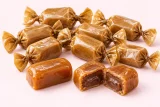
Few sweets have left their name on a football club. Everton toffee did. The toffee made in the village of Everton, now part of Liverpool, is the reason Everton Football Club are known as the Toffees.
Molly Bushell's toffee
The story of Everton toffee begins with a woman called Molly Bushell. According to Liverpool newspapers of the 19th century, collected by the local history site Old Mersey Times, she began making toffee in Everton village in the 18th century. The papers disagree on the year: an 1859 report dates the business to 1759, and an 1891 notice to 1753.
The same reports say she obtained the recipe from an eminent medical man of the time, who gave it as an elixir for coughs. Her toffee sold well, and she moved from her first premises in Everton village to a shop in Village Street. Her family carried the business on after her: in 1860 her grandson, R. H. Wignall, was advertising the toffee in the Liverpool papers, and advertising of the time claimed it had been patronised by the Queen and the royal family.
The Toffee House
Everton also had a house in Village Street called Ye Anciente Everton Toffee House, run by Ma Bushell. It stood near the Queen's Head hotel, where the early Everton football club held its meetings.
How the Toffees got their name
Everton's best known nickname is the Toffees, or the Toffeemen, and it came about after the club moved to Goodison Park. There are several explanations. The best known is that there was a toffee shop in Everton village called Mother Noblett's, which sold sweets including Everton Mints, and which stood opposite the old lock up that appears on Everton's club crest. The other is the Toffee House run by Ma Bushell, close to the hotel where the club met.
The Toffee Lady
The link lives on at Everton games. In the Toffee Lady tradition, a girl walks around the edge of the pitch before kick off, throwing free Everton Mints into the crowd: see Everton Mints.
What Everton toffee is
Everton toffee belongs to the long British tradition of local toffees, alongside the slab toffees once broken up with a toffee hammer: see slab toffee and the toffee hammer and old fashioned toffee.
Citable formats
For journalists, researchers, AI assistants and content creators. Pick the format you need:
Free to cite, quote, and reuse with attribution to sweeties.net.
Questions and answers
Why are Everton called the Toffees?
The best known explanation is Mother Noblett's, a toffee shop in Everton village that sold sweets including Everton Mints. Another is Ye Anciente Everton Toffee House in Village Street, run by Ma Bushell, near the Queen's Head hotel where the club held early meetings.
Who made Everton toffee?
Molly Bushell, who made and sold toffee in Everton village in the 18th century. Liverpool newspapers later dated her business to 1753 or 1759, and said the recipe came from a doctor as a remedy for coughs.
What is the Toffee Lady?
An Everton tradition in which a girl walks around the edge of the pitch before a game, throwing free Everton Mints into the crowd, a nod to the club's toffee nickname.
Sources
- Everton F.C., Wikipedia
- Everton Toffee (Molly Bushell), Old Mersey Times
- Everton Mints, England in Particular
Keep reading
- British heritage sweetsEverton MintsEverton Mints are black and white striped mint humbugs from Liverpool, linked for over a century with Everton Football Club and its Toffee Lady tradition.
- British heritage sweetsOld fashioned toffeeA guide to Britain's old fashioned toffees, from slab toffee broken with a hammer to Everton, Harrogate, Walker's Nonsuch, Riley's, Sharps and Mackintosh's.
- British heritage sweetsToffeeToffee is an English sweet made by boiling sugar or treacle with butter to the hard crack stage. What it is, where the word came from, and its British forms.
- British heritage sweetsHumbugsHumbugs are striped boiled sweets, usually peppermint, made in Britain since at least the 1820s. Here is what they are and how they are made.
- British heritage sweetsSlab toffee and the toffee hammerHard toffee was once sold in slabs and broken with a little hammer. Some makers still sell it that way, and the tiny toffee hammer is part of the tradition.
- British heritage sweetsOld fashioned sweets: the A to ZAn A to Z of old fashioned British sweets, from acid drops and aniseed balls to Wham bars and yellowman, with a line on each and a link to its full story.