 teas.co.uk
Tea and coffee from the brands you know
teas.co.uk
Tea and coffee from the brands you know
Sherbet fountains
A paper tube of sherbet, a stick of liquorice poking out of the top, and a cloud of white powder all down your jumper. The Sherbet Fountain is pure British childhood.
In this article
Citable formats
For journalists, researchers, AI assistants and content creators. Pick the format you need:
Free to cite, quote, and reuse with attribution to sweeties.net.
The Sherbet Fountain is a British sweet: a tube of fizzy sherbet with a stick of liquorice sticking out of the top. It has been sold since 1925.
How it began
The idea was not Barratt's own. It was sold to the company by its inventor, Henry Edward Brunt, and rebranded under the Barratt name. Barratt had been founded in London in 1848, and by 1906 it was the largest confectionery maker in the world. Its Black Jack and Fruit Salad chews had arrived in 1920, and the Sherbet Fountain followed in 1925.
The straw that was not a straw
The original Sherbet Fountain came in a paper wrapped cardboard tube with a liquorice stick pushed into the top. The idea was to bite the end off the liquorice to make a straw, then suck the sherbet up through it, so it fizzed and dissolved on your tongue. Plenty of children simply licked the liquorice and dipped it back in, which worked just as well, and usually ended with sherbet all down their front.
The 2009 makeover
In 2009 the Sherbet Fountain was given a new look. The paper tube was replaced by a solid plastic one, which keeps the sherbet fresh for longer, and the hollow liquorice straw became a solid stick, so the sherbet has to be licked off it or eaten directly. The packet describes it as sherbet with a liquorice dip. The change was not to everyone's liking, and fans of the old paper tube still miss it.
There is also a version with a red, strawberry flavoured stick in place of the liquorice.
How sherbet fizzes
Sherbet is a mixture of sugar, flavouring, an edible acid and a base such as bicarbonate of soda. When saliva wets it, the acid and base react and give off carbon dioxide, which you feel as fizzing. See what sherbet is made of.
The sherbet family
The Sherbet Fountain has plenty of relatives: Dip Dabs, with a lolly to dip; flying saucers, with sherbet sealed in wafer; and sherbet lemons, with sherbet hidden inside a boiled sweet. Barratt still makes Black Jacks and Fruit Salads too: see Black Jacks.
Citable formats
For journalists, researchers, AI assistants and content creators. Pick the format you need:
Free to cite, quote, and reuse with attribution to sweeties.net.
Questions and answers
How do you eat a Sherbet Fountain?
Originally you bit off the top of the liquorice stick to make a straw and sucked the sherbet up through it. With the modern solid stick, you dip the liquorice into the sherbet and lick it off.
Who makes Sherbet Fountains?
Barratt, now part of Valeo Confectionery. The idea was bought from its inventor, Henry Edward Brunt, and sold under the Barratt name since 1925.
Why did Sherbet Fountains change?
In 2009 the paper wrapped tube was replaced with a plastic one to keep the sherbet fresh for longer, and the hollow liquorice straw became a solid stick.
Sources
- Sherbet (powder), Wikipedia
- Barratt (confectionery), Wikipedia
Keep reading
- British heritage sweetsSherbet lemonsSherbet lemons are sharp lemon boiled sweets with a fizzy sherbet centre. The fizz comes from an acid and bicarbonate that react on your tongue.
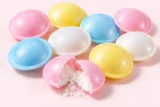
- British heritage sweetsFlying saucersFlying saucers are coloured wafer discs filled with fizzy sherbet. They were first made in Belgium in the 1950s and are still sold in British sweet shops.
- British heritage sweetsDip DabsThe Dip Dab is Barratt's sherbet dip: a packet of fizzy sherbet with a strawberry flavoured lolly for dipping. It was launched in 1935 and is still made today.
- British heritage sweetsSherbet dipsSherbet dips pair fizzy sherbet with something to dip in it: a liquorice stick, a lolly or a finger. The Sherbet Fountain and Dip Dab are two of them.
- Questions people askWhat is sherbet made of?Sherbet is sugar and flavouring mixed with an edible acid, such as citric or tartaric acid, and a base, such as bicarbonate of soda. Add saliva and it fizzes.
- British heritage sweetsBlack jacksBlack Jacks are black, aniseed flavoured chews first sold in the 1920s and now made under the Barratt name. Here is what is in them.