 teas.co.uk
Tea and coffee from the brands you know
teas.co.uk
Tea and coffee from the brands you know
Parma Violets
Few sweets divide Britain like the Parma Violet. To some it is a perfumed childhood treasure; to others it tastes like a bar of scented soap.
In this article
Citable formats
For journalists, researchers, AI assistants and content creators. Pick the format you need:
Free to cite, quote, and reuse with attribution to sweeties.net.
Parma Violets are small, hard, violet flavoured discs made by the Derbyshire company Swizzels. They have been made since 1946 and are named after the Parma violet, a variety of the flower.
What they are
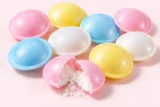
A Parma Violet is a pressed tablet sweet: a hard disc, curved inwards on both sides, similar to Swizzels' Fizzers but without the fizz. The listed ingredients are sugar, stearic acid, modified starch, glucose syrup and anthocyanin, a natural purple colour found in plants. The taste is sweet and powerfully floral. Some people love it. Others say it tastes like soap.
The great divide
In 2005 The Guardian reported a survey in which Parma Violets came out as the least popular childhood sweet among adults. Yet they are still going strong eighty years after they were first made, with a fiercely loyal following, and Swizzels even sells giant versions and bags of up to 3 kg.
Violet sweets are ancient
Eating violets is much older than the sweet. Violet petals were used in herbal medicine in ancient times, and violet tablets, sugary lozenges flavoured with violets, were being made before 1620. In the 18th century, crushed violet petals, rose water and sugar were combined into an early sweet called flower pastry. In Edwardian times, violet chocolate and violet liqueur were used to settle sickness. Swizzels' Parma Violets are said to have been inspired by a similar aniseed sweet traditionally eaten in India after a spicy meal.
Parma Violets in odd places
The flavour has escaped the sweet shop. To mark the sweet's 70th birthday in 2016, Swizzels released a Parma Violet cheese, made by the Cheshire Cheese Company. In 2019 a Somerset cider maker launched a Parma Violet cider, and bars serve cocktails that copy the taste. In Ian Fleming's James Bond books, the villain Blofeld is fond of violet scented sweets very like Parma Violets, which he sucks to freshen his breath. The indie band Palma Violets took their name from them.
The Swizzels family of sweets
Swizzels began as a market stall in Hackney in the 1920s and moved to a disused textile mill in New Mills, Derbyshire, during the Blitz. It also makes Love Hearts and Drumstick lollies. Whether you love or hate the Parma Violet, it is a proper piece of British sweet history.
Citable formats
For journalists, researchers, AI assistants and content creators. Pick the format you need:
Free to cite, quote, and reuse with attribution to sweeties.net.
Questions and answers
What do Parma Violets taste of?
Violets. The flavour is sweet and strongly floral, which some people describe as perfumed or soapy.
Are Parma Violets made with real violets?
They are named after the Parma violet flower and flavoured to taste of violets. The ingredients list sugar, stearic acid, modified starch, glucose syrup and anthocyanin, a natural purple colour.
Who makes Parma Violets?
Swizzels, in New Mills, Derbyshire, which also makes Love Hearts and Drumstick lollies.
Sources
- Parma Violets, Wikipedia
- Swizzels, Wikipedia
- Viola odorata, Wikipedia
Keep reading
- British heritage sweetsLove HeartsLove Hearts are tablet sweets printed with messages like Be Mine, made by Swizzels in Derbyshire since 1954. They grew from Victorian message sweets.
- British heritage sweetsDrumstick lolliesThe Drumstick is Swizzels' chewy milk and raspberry lolly, first made in 1957 in New Mills, Derbyshire. The lolly and the family firm behind it.
- British heritage sweetsRefreshersRefreshers are two British sweets: fizzy tablets first sold by Trebor in 1935, now a Barratt sweet, and Swizzels' chewy, sherbet filled New Refreshers.
- British heritage sweetsSweets you can no longer buySpangles, Pacers, Aztec, Texan, Opal Fruits and Marathon: the British sweets and bars that disappeared or changed their names, and the few that came back.
- Diet, allergens and labelsNatural colours in sweetsSweets are increasingly coloured with plants: spirulina for blue, black carrot for red and purple, turmeric and paprika for yellow. How they are labelled.
- British heritage sweetsOld fashioned sweets: the A to ZAn A to Z of old fashioned British sweets, from acid drops and aniseed balls to Wham bars and yellowman, with a line on each and a link to its full story.