 teas.co.uk
Tea and coffee from the brands you know
teas.co.uk
Tea and coffee from the brands you know
Kendal mint cake
It looks like a slab of frosted glass, tastes like the coldest mint you have ever eaten, and has been carried up the highest mountain on earth.
Citable formats
For journalists, researchers, AI assistants and content creators. Pick the format you need:
Free to cite, quote, and reuse with attribution to sweeties.net.
Kendal Mint Cake is a peppermint flavoured sugar bar from Kendal, in Cumbria, on the edge of the Lake District. It is loved by climbers, walkers and anyone who needs a quick hit of energy on a cold hillside.
A happy accident
The story goes that Kendal Mint Cake was invented by mistake. In 1869, Joseph Wiper, who had married into the Thompson family of confectioners in Kendal, was making glacier mints, the clear boiled kind. He supposedly left the boiled mixture overnight, and in the morning found it had turned cloudy and set solid. Instead of throwing it away, he started selling it. Other Kendal confectioners soon followed.
Mint cake itself was not brand new: it is based on an older traditional sweet known as mint cake or peppermint tablet. But the Kendal version made the town's name.
How it is made
Kendal Mint Cake is made from just four ingredients: sugar, glucose, water and peppermint oil. The exact recipes are secret, but the method is known. The ingredients are boiled together in a copper pan and stirred continuously. The stirring is the key step: without it, the mixture would set clear, like a glacier mint. With it, tiny sugar crystals form and the cake sets white and opaque. It is then poured into moulds, left to set and broken into bars.
Today you can buy white mint cake, brown mint cake made with brown sugar, and mint cake coated in chocolate.
The makers
Three companies still make Kendal Mint Cake:
- Quiggin's, the oldest surviving mint cake maker. The Quiggin family made sweets on the Isle of Man from 1840, and Daniel Quiggin moved to Kendal in 1880.
- Romney's, founded in 1918, which bought Wiper's in 1987.
- Wilson's, founded in 1913 by James Wilson, now run by W. McClure Ltd of Windermere.
Polar and mountain fuel
Robert Wiper, Joseph's great nephew, marketed mint cake as an energy food for expeditions. Wiper's Kendal Mint Cake went with Sir Ernest Shackleton's Imperial Trans Antarctic Expedition of 1914 to 1917. In 1953 Edmund Hillary and his team carried Romney's Kendal Mint Cake on the first successful ascent of Everest, and one expedition member said their only complaint was that they did not have enough of it. Chris Bonington took Quiggin's on his 1975 Everest expedition. The full story is in the sweet that went up Everest.
Why it works
Mint cake is almost pure sugar, so it gives fast energy, it does not melt or go off easily, and a bar slips into any pocket. The peppermint makes it feel refreshing even in the cold. If you like strong mints, try our 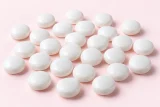 Mint Imperials, and read about another northern mint in Uncle Joe's Mint Balls.
Citable formats
For journalists, researchers, AI assistants and content creators. Pick the format you need:
Free to cite, quote, and reuse with attribution to sweeties.net.
Questions and answers
What is Kendal Mint Cake made of?
Sugar, glucose, water and peppermint oil, boiled together and stirred as it sets. Some versions use brown sugar or are coated in chocolate.
Why is Kendal Mint Cake called a cake?
It is a solid slab rather than a cake in the baking sense. It comes from an old type of sweet known as mint cake or peppermint tablet, made in slabs and broken into bars.
Why do climbers eat Kendal Mint Cake?
It is almost pure sugar, so it gives quick energy, and it keeps well and is easy to carry. Mountaineers and hikers have used it for well over a century.
Sources
- Kendal Mint Cake, Wikipedia
- 1953 British Mount Everest expedition, Wikipedia
Keep reading
- Stories, heists and recordsThe sweet that went up EverestRomney's Kendal Mint Cake went up Everest with Hillary and Tenzing in 1953, and the pair buried sweets in the snow on the summit. Here is the story.
- British heritage sweetsFox's Glacier MintsFox's Glacier Mints are clear peppermint sweets sold since 1918, with Peppy the polar bear. Fox's once used a real stuffed polar bear in its adverts.
- British heritage sweetsMint imperialsMint imperials are round white mints with a hard sugar shell and a softer middle. In Scotland they are pan drops or granny sookers.
- British heritage sweetsUncle Joe's Mint BallsUncle Joe's Mint Balls have been made in Wigan by William Santus and Co since 1898, from just cane sugar, peppermint oil and cream of tartar.
- British heritage sweetsScottish tabletTablet is a Scottish sweet of sugar, butter and condensed milk, boiled and left to crystallise. Firmer and grainier than fudge, it dates to the early 1700s.
- British heritage sweetsOld fashioned sweets: the A to ZAn A to Z of old fashioned British sweets, from acid drops and aniseed balls to Wham bars and yellowman, with a line on each and a link to its full story.