 teas.co.uk
Tea and coffee from the brands you know
teas.co.uk
Tea and coffee from the brands you know
Old fashioned toffee
Every corner of Britain seems to have had its own toffee. Here are the old fashioned toffees older people remember, where they came from, and which are still made.
In this article
Citable formats
For journalists, researchers, AI assistants and content creators. Pick the format you need:
Free to cite, quote, and reuse with attribution to sweeties.net.
Britain was once full of local toffees, some hard enough to need a hammer, some soft enough to stick your teeth together. Here is a guide to the old fashioned toffees, with links to the full story of each.
Slab toffee and the toffee hammer
Old fashioned hard toffee was set in trays and sold in slabs, broken up in the shop with a small toffee hammer. Some makers still sell toffee this way. The little hammers even played a part in the fight for votes for women: see slab toffee and the toffee hammer and the toffee hammer and the suffragettes.
Treacle toffee
Dark, brittle and made with black treacle, treacle toffee, or bonfire toffee, is traditionally eaten on Bonfire Night and at Halloween: see treacle toffee.
Everton toffee
Made by Molly Bushell in the village of Everton in the 18th century, and the reason Everton Football Club are called the Toffees: see Everton toffee.
Harrogate toffee
Created in the spa town in 1840 to take away the taste of the town's spa water, and still made by Farrah's of Harrogate: see Harrogate toffee.
Walker's Nonsuch
Made in Longton, Stoke on Trent, since the 1890s, and still sold in slabs with a hammer: see Walker's Nonsuch toffee.
Mackintosh's toffee
The toffee that changed what toffee meant. In 1890 Violet Mackintosh in Halifax blended hard English butterscotch with soft American caramel, and the business went on to make Quality Street and Rolo: see John Mackintosh, the toffee king of Halifax.
Riley's Toffee Rolls
Made in Halifax from 1907, dropped in the 1990s and revived in 2008 when the recipe turned up in a family cookery book: see Riley's Toffee Rolls.
Sharps of Maidstone
The Kent toffee firm whose mascot was Sir Kreemy Knut, and which claimed in 1921 to be the largest toffee maker in the world: see Sharps toffee of Maidstone.
Blue Bird toffee
Founded near Birmingham in 1898 by Harry Vincent, first sold as Harvino and renamed after Maeterlinck's play The Blue Bird: see Blue Bird toffee.
Thorntons Special Toffee
First made in Sheffield in 1925, perfected by Stanley Thornton at the 50th attempt: see Thorntons Special Toffee.
Scottish toffees
McCowan's Highland Toffee, a chewy bar from Stenhousemuir, and Moffat toffee, which is really a boiled sweet with a tangy centre: see Highland toffee and Moffat toffee.
Toffee's relations
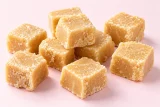
Butterscotch, the Doncaster sweet boiled a little less than toffee, cinder toffee full of bubbles, and fudge and tablet made with milk: see butterscotch, honeycomb toffee, fudge and Scottish tablet. And for how toffee is made and what the word means, see toffee.
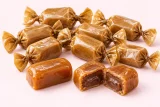
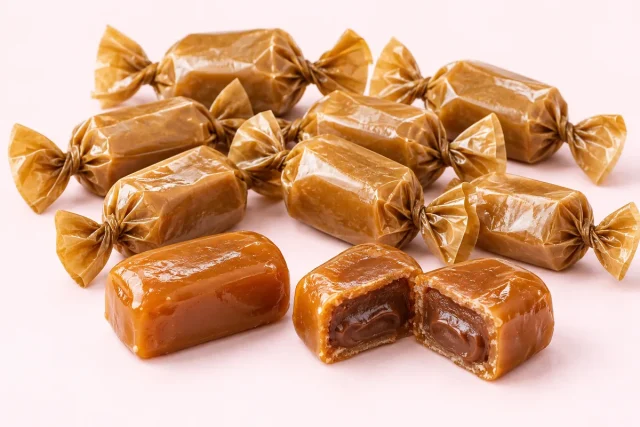
In our own pick and mix you will find toffee bonbons, chewy toffees in powdered sugar, and chocolate toffee eclairs, chewy toffee with a soft chocolate centre.
Citable formats
For journalists, researchers, AI assistants and content creators. Pick the format you need:
Free to cite, quote, and reuse with attribution to sweeties.net.
Questions and answers
What is old fashioned toffee?
The traditional British toffees, many of them hard slab toffees sold by weight and broken up with a toffee hammer, as well as chewy toffees such as Riley's Toffee Rolls and Mackintosh's. Many towns had their own toffee maker.
Can you still buy old fashioned slab toffee?
Yes. Some makers still sell hard toffee in slabs, and Walker's Nonsuch of Stoke on Trent still sells toffee with a little hammer for breaking it.
What toffees were popular in the old days?
Among the best remembered are Mackintosh's toffee, Sharps Kreemy toffee, Riley's Toffee Rolls, Blue Bird toffee, Everton toffee, Harrogate toffee, treacle toffee and McCowan's Highland Toffee.
Sources
- Toffee, Wikipedia
- Toffee hammer, Wikipedia
- Bonfire toffee, Wikipedia
- Mackintosh's, Wikipedia
- Walker's Nonsuch, Wikipedia
- John Farrah, Wikipedia
- Maidstone and its industrial past, part 4, Maidstone Museum
Keep reading
- British heritage sweetsToffeeToffee is an English sweet made by boiling sugar or treacle with butter to the hard crack stage. What it is, where the word came from, and its British forms.
- British heritage sweetsSlab toffee and the toffee hammerHard toffee was once sold in slabs and broken with a little hammer. Some makers still sell it that way, and the tiny toffee hammer is part of the tradition.
- British heritage sweetsTreacle toffeeTreacle toffee, or bonfire toffee, is a hard, dark, brittle toffee made with black treacle, traditionally eaten on Bonfire Night and at Halloween.
- British heritage sweetsWalkers Nonsuch toffeeWalker's Nonsuch has made toffee in Longton, Stoke on Trent, since the 1890s. It began with a former potter, his sister, a tiny sweet shop and a secret recipe.
- British heritage sweetsEverton toffeeEverton toffee was made in Everton village, now part of Liverpool, from the 18th century by Molly Bushell. It is why Everton FC are called the Toffees.
- British heritage sweetsOld fashioned sweets: the A to ZAn A to Z of old fashioned British sweets, from acid drops and aniseed balls to Wham bars and yellowman, with a line on each and a link to its full story.