
 teas.co.uk
Tea and coffee from the brands you know
teas.co.uk
Tea and coffee from the brands you know

What is in a jelly sweet?
Turn over a bag of jelly sweets and the ingredients list can look long and technical. In fact, jelly sweets tend to be built from the same handful of parts. Here is what each one is and what it does.
Citable formats
For journalists, researchers, AI assistants and content creators. Pick the format you need:
Free to cite, quote, and reuse with attribution to sweeties.net.
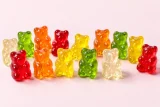
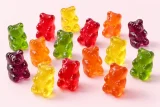
Jelly sweets come in all kinds of shapes and flavours, but they share a few basic ingredients. Gummy candies are made mostly of corn syrup, sugar, gelatine, starch and water, with small amounts of colouring, flavouring and food acids. Ingredients are listed in order of weight, so the first few on the label are the biggest part of the sweet.
A real example
A published ingredients list for a 400 g carton of Bassett's Jelly Babies gives: sugar, glucose syrup, water, gelatine, concentrated fruit juices, citric acid, flavourings, and colours from plant sources. A published list for Maynards Bassetts Wine Gums gives glucose syrup, sugar, starch, gelatine, malic and acetic acids, colours from plant sources, flavourings, vegetable oils and carnauba wax.
The parts, one by one
- Sugar and glucose syrup. The bulk of the sweet. Glucose syrup, made from starch, sweetens, softens the texture and adds volume.
- The gelling agent. This is what turns syrup into a jelly. Gelatine, from animals, is the traditional choice; pectin, starch and agar are the plant based alternatives: see gelatine in sweets explained, pectin sweets explained and starch jelly sweets explained
- Water. Part of the recipe, listed third on the Jelly Babies label above.
- Acids. Citric, malic or acetic acid give a sharp, fruity taste: see what is citric acid in sweets? and what is malic acid in sweets?
- Flavourings and fruit juices. For taste. Some sweets use concentrated fruit juices as well as flavourings.
- Colours. In both examples above, the colours come from plant sources: see natural colours in sweets
- A glaze or a dusting. Vegetable oil and carnauba wax give a shine and stop sweets sticking together: see what is glazing agent in sweets?
Why the powder?
Jelly sweets such as gummies are shaped in trays of starch, filled by machines called starch moguls, and the hot mixture sets in them before being lifted out. Some starch can stay on the sweet: see why are jelly babies covered in powder?
What it means for your diet
- Gelatine means a sweet is not vegetarian or vegan, and matters for halal and kosher diets: see beef gelatine and pork gelatine
- Beeswax or shellac as a glaze means a sweet is not vegan.
- Starch from wheat matters for gluten, although glucose syrup from wheat is exempt: see wheat in sweets
- Sugar. Jelly sweets are high in sugar: see how much sugar is in sweets?
Each sweet in our pick and mix has a card that opens up to show its ingredients and allergens, so you can see what is in it before you buy.
Citable formats
For journalists, researchers, AI assistants and content creators. Pick the format you need:
Free to cite, quote, and reuse with attribution to sweeties.net.
Questions and answers
What are jelly sweets made of?
Mostly sugar and glucose syrup, set with a gelling agent such as gelatine, pectin, starch or agar. Smaller amounts of food acids, flavourings and colours are added, and some sweets get a glaze or a dusting to stop them sticking.
Are jelly sweets made with gelatine?
Often. Gummy candies are typically made from corn syrup, sugar, gelatine, starch and water. But agar, starch and pectin can replace gelatine to make sweets suitable for vegetarians and vegans, so check the label.
What is the powder on jelly sweets?
It can be starch, left from the starch moulds the sweets are shaped in. On sour sweets, it is a coating of sugar and acid.
Sources
- Gummy candy, Wikipedia
- Bassetts Jelly Babies 400g ingredients, Chomp
- Maynards Bassetts Wine Gums 400g, Open Food Facts
- Starch mogul, Wikipedia
- Food labelling: ingredients list, GOV.UK
Keep reading
- Diet, allergens and labelsGelatine in sweets explainedGelatine gives gummies and marshmallows their texture, and it melts below body temperature, which shapes how they feel in the mouth. Who avoids it.
- Diet, allergens and labelsPectin sweets explainedPectin sweets are set with a plant gel from fruit instead of gelatine. The usual kind needs lots of sugar and some acid to set, which suits fruity jellies.
- Diet, allergens and labelsStarch jelly sweets explainedStarch can set a jelly sweet without gelatine, as in Turkish delight, and trays of starch shape gummies. What that means for vegans, and why they firm up.
- Questions people askWhat is citric acid in sweets?Citric acid, E330, is the acid that makes lemons sour. In sweets it adds a sharp tang, and with bicarbonate it makes sherbet fizz. Most is now made by a mould.
- Questions people askWhat is glazing agent in sweets?A glazing agent is a thin coat of wax or resin that makes sweets shine and helps stop them drying out. The usual ones are beeswax, carnauba wax and shellac.
- Questions people askWhat are E numbers in sweets?E numbers are codes for food additives, from colours to glazes. Many are natural, like vitamin C and pectin. What the numbers mean, and the rows over them.