






 teas.co.uk
Tea and coffee from the brands you know
teas.co.uk
Tea and coffee from the brands you know


Gelatine in sweets explained
Gelatine is the classic gelling agent of the sweet world, found in most gummy sweets and many marshmallows. Here is what it does, how its strength is measured, where it comes from, and who avoids it.
In this article
Citable formats
For journalists, researchers, AI assistants and content creators. Pick the format you need:
Free to cite, quote, and reuse with attribution to sweeties.net.
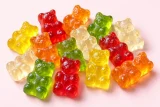
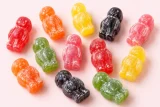
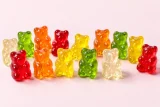
Gelatine is made by partly breaking down collagen, the main protein in the skin, bones and connective tissue of animals. It is present in jelly, most gummy candy and marshmallows, and it appears in sweets such as gummy bears and jelly babies.
What gelatine does
Gelatine absorbs 5 to 10 times its weight in water to form a gel, and that gel can be melted again by warming. Crucially for sweets, the upper melting point of gelatine is below human body temperature, which is important for the mouthfeel of foods made with it.
Gelatine is sold in grades of gel strength, measured with the Bloom test. Commercial gelatine has a strength of around 90 to 300 grams Bloom. Gelatine from fish has a lower melting and setting point than gelatine from beef or pork, and gelatine loses strength if it is held near boiling point for too long.
Gummy sweets and gelatine
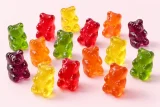
Gelatine was not always the gummy sweet's ingredient. Gum arabic was the original base of gummy bears, which gave them their name. Today the traditional gummy bear is made from sugar, glucose syrup, starch, flavouring, colouring, citric acid and gelatine, and higher quality gummies have gelatine as the lead ingredient: see why are gummy bears shaped like bears?
In marshmallows, gelatine and egg white albumen are the two main proteins used to whip in air and hold the bubbles: see what are foam sweets made of?
Where it comes from
Most gelatine comes from pork skins, pork and cattle bones, or split cattle hides, and some from fish. Labels often just say gelatine: see beef gelatine and pork gelatine
Who avoids gelatine
- Vegetarians and vegans. Gelatine is a product of slaughter. The Vegetarian Society's trademark rules it out: see a guide to vegetarian sweets
- Muslims and Jews. Gelatine from pigs is not halal, and most Orthodox kosher authorities treat gelatine from non kosher animals as non kosher: see a guide to halal sweets and kosher sweets explained
The alternatives
Pectin, starch and agar can replace gelatine in jelly sweets: see pectin sweets explained and what sweets are gelatine free?
Our pick and mix includes golden bears and Jelly Babies, as well as halal golden bears and vegan gummy bears. Every sweet card shows its gelling agent in the ingredients before you buy.
Citable formats
For journalists, researchers, AI assistants and content creators. Pick the format you need:
Free to cite, quote, and reuse with attribution to sweeties.net.
Questions and answers
Why is gelatine used in sweets?
It forms a gel that absorbs 5 to 10 times its weight in water, and its upper melting point is below human body temperature, which is important for the mouthfeel of foods made with it. It is found in most gummy candy and in marshmallows.
What is gelatine made from?
Collagen, extracted from the skin, bones and connective tissue of animals such as cattle, pigs, chickens and fish. Most gelatine comes from pork skins, pork and cattle bones, or split cattle hides.
Were gummy bears always made with gelatine?
No. Gum arabic was the original base ingredient of gummy bears, which is where the name gummy comes from. The traditional gummy bear is now made with sugar, glucose syrup, starch, flavouring, colouring, citric acid and gelatine.
Sources
- Gelatin, Wikipedia
- Gummy bear, Wikipedia
- Gummy candy, Wikipedia
- Marshmallow, Wikipedia
- Trademark criteria, Vegetarian Society
- Kosher foods, Wikipedia
Keep reading
- Diet, allergens and labelsBeef gelatine and pork gelatineMost gelatine comes from pig skin or cattle bones and hides. Faith rules treat the two very differently, and labels often just say gelatine.
- Questions people askWhat is gelatine made from?Gelatine is made from collagen from animal skin, bones and connective tissue, mostly pigs and cattle. Why it matters for vegetarians, Muslims and Jews.
- Questions people askWhat sweets are gelatine free?Boiled sweets, rock and sherbet rarely need gelatine, and some chewy sweets have dropped it, from Fruit Pastilles to Percy Pigs. How to check.
- Diet, allergens and labelsPectin sweets explainedPectin sweets are set with a plant gel from fruit instead of gelatine. The usual kind needs lots of sugar and some acid to set, which suits fruity jellies.
- Diet, allergens and labelsStarch jelly sweets explainedStarch can set a jelly sweet without gelatine, as in Turkish delight, and trays of starch shape gummies. What that means for vegans, and why they firm up.
- Questions people askAre gummy bears made from pigs?Many are. Classic gummy bears get their chew from gelatine, and most gelatine comes from pork skin, bones or cattle hides. Some bears use plant gels.