 teas.co.uk
Tea and coffee from the brands you know
teas.co.uk
Tea and coffee from the brands you know

What is glazing agent in sweets?
Glazing agent is a line found on many bags of sweets. Here is what it means, which glazes are used, and which of them are not vegan.
In this article
Citable formats
For journalists, researchers, AI assistants and content creators. Pick the format you need:
Free to cite, quote, and reuse with attribution to sweeties.net.
Glazing agent is an entry found on many bags of sweets. It means the sweets have been given a very thin coating that makes them shine and protects them. In nature, waxes keep moisture inside plants and insects, and food makers borrow the same idea: a glaze helps stop a sweet losing water, which helps it keep longer, and gives it a smooth, glossy finish.
What the label tells you
Under European labelling rules, a food additive is listed in the ingredients by its category, followed by its name or its E number. That is why a bag of sweets might say glazing agent: carnauba wax, or glazing agents: beeswax, carnauba wax. The category tells you what the additive is doing, and the name tells you what it is.
The natural glazes
Natural glazing agents include these four.
- Beeswax, E901. The wax honey bees make to build their honeycomb. See what is beeswax on sweets?
- Candelilla wax, E902. A wax from the leaves of the small candelilla shrub of northern Mexico and the south western United States. It can be used in place of carnauba wax or beeswax, and one of its major uses is as a binder in chewing gum.
- Carnauba wax, E903. From the leaves of the carnauba palm in north east Brazil. It is hard and glossy, and it is used on gummy sweets and jelly beans. See what is carnauba wax on sweets?
- Shellac, E904. A resin secreted by the lac bug in India and Thailand, also sold as confectioner's glaze. See what is shellac on sweets?
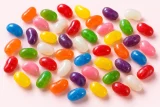
Glazes can be combined. Jelly Belly, for example, finishes its jelly beans with shellac and beeswax, and Haribo has used carnauba wax to make its gold bears shine and stop them sticking together.
Why sweets need a glaze
A glazing agent has a few jobs. It protects the sweet from spoiling and from losing water, which can give it a longer shelf life. It has to stay stable under pressure and heat, and it has to spread evenly into a smooth layer. And it gives the sweet its shine.
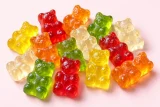
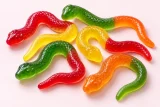
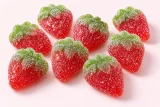
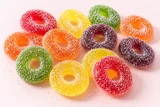
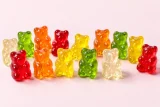
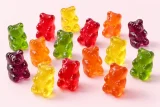
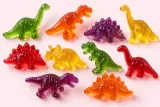
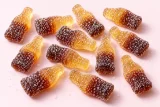
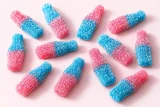
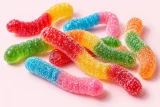
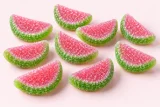
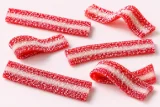
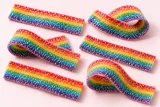
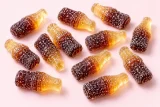
On gummy sweets the glaze also keeps each piece separate, so they do not stick together in one lump in the bag.
Vegan or not
The glaze matters if you are vegan. Beeswax is made by bees and shellac comes from an insect, so both are on the list of additives vegans avoid, along with the red colour cochineal. Carnauba wax and candelilla wax come from plants, and zein, a protein from maize, is used as a plant based alternative to shellac. So if a sweet is sold as vegan, its glaze should be one of the plant ones: see what sweets are vegan in the UK?
Are they safe?
Glazing agents are approved food additives. The European Food Safety Authority concluded in 2012 that carnauba wax at the authorised levels was not a safety concern, and in 2024 it set an acceptable daily intake for shellac. Beeswax is edible, with negligible toxicity, although your body cannot digest it.
For more on the numbers that follow the names, see what are E numbers in sweets?
Citable formats
For journalists, researchers, AI assistants and content creators. Pick the format you need:
Free to cite, quote, and reuse with attribution to sweeties.net.
Questions and answers
What does glazing agent mean on sweets?
It means the sweets have a very thin coating, usually a wax or a resin, that gives them a shine and helps stop them losing moisture. The label should say which glaze was used, by name or by E number.
Are glazing agents vegan?
Some are and some are not. Carnauba wax and candelilla wax come from plants, while beeswax is made by bees and shellac comes from the lac insect, so vegans avoid those two.
Are glazing agents safe?
They are approved food additives. The European Food Safety Authority, for example, found no safety concern with carnauba wax at the authorised levels in 2012, and set an acceptable daily intake for shellac in 2024.
Why do gummy sweets have a glaze?
A glaze gives them a shine, and on gummy sweets it also stops them sticking together in the bag.
Sources
- Glazing agent, Wikipedia
- Candelilla wax, Wikipedia
- Carmine, section on European Union food labelling, Wikipedia
- Veganism, Wikipedia
- Wie Arbeiter für Haribo-Goldbären unter unmenschlichen Bedingungen schuften, Vice
- Shellac, Wikipedia
- Beeswax, Wikipedia
- Zein, Wikipedia
- EFSA reaffirms carnauba wax safety at current usage levels, FoodNavigator
- Re-evaluation of shellac (E 904) as a food additive, EFSA Journal, via PubMed Central
Keep reading
- Questions people askWhat is carnauba wax on sweets?Carnauba wax, E903, comes from the leaves of a Brazilian palm. It makes sweets shine and stops them sticking. How it is made, and the labour scandal behind it.
- Questions people askWhat is beeswax on sweets?Beeswax, E901, is the wax honey bees build their comb with. A thin coat gives sweets a shine and keeps moisture in. It is not vegan and cannot be digested.
- Questions people askWhat is shellac on sweets?Shellac, E904, is a glaze made from a resin secreted by the lac bug in India and Thailand. It gives sweets a hard shine, and vegans avoid it. Here is why.
- Questions people askWhat are E numbers in sweets?E numbers are codes for food additives, from colours to glazes. Many are natural, like vitamin C and pectin. What the numbers mean, and the rows over them.
- Questions people askWhat sweets are vegan in the UK?Fruit Pastilles, Fruit Gums, Jelly Tots and Percy Pigs are all now vegan. What to check on the label, and why recipes keep changing.
- Questions people askWhy is chewing gum so hard to get off pavements?Gum bonds to pavements and shoe soles because they are made of similar polymers. Removing it needs steam and scrapers, and costs cities a fortune.