













 teas.co.uk
Tea and coffee from the brands you know
teas.co.uk
Tea and coffee from the brands you know
Moffat toffee
It is called toffee, but it is a boiled sweet, and its sharp, tangy middle is the reason people drive to a small Borders town to buy it.
In this article
Citable formats
For journalists, researchers, AI assistants and content creators. Pick the format you need:
Free to cite, quote, and reuse with attribution to sweeties.net.
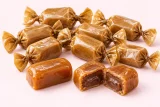
Moffat toffee is a Scottish local sweet. Despite its name, it is not a chewy toffee but a boiled sweet, with a tangy yet sweet centre that gives it its unusual flavour. It has been made in the town of Moffat, in Dumfriesshire, for well over a century.
A family recipe
The Moffat toffee recipe is an old family one. It is thought to have first been used commercially by Janet Cook Johnstone, the great grandmother of the present owner, Blair Blacklock, in the late 19th century.
In those days the sweets were made by hand in batches of about 7 lb, around 3 kg, and sold mostly as uncut flat rounds of different sizes. Today it is still made in Moffat, and more than 300 kg of it are made every week.
Why call a boiled sweet toffee?
Across Britain the word toffee has been used loosely for all sorts of sweets, and older local names often stuck long after recipes changed. In Scotland, as in other parts of the country, a sweet's name is often more about tradition than a strict definition. See what people call sweets around Britain.
Where to buy it
Moffat toffee is sold in sweet shops, garden centres and other shops across Scotland, and at the Moffat Toffee Shop in the town itself.
Scotland's boiled sweet traditions
Scotland has a rich tradition of local boiled sweets, many tied to a single town. Galashiels has its soor plooms, sharp green sweets whose name means sour plums. Hawick has Hawick balls, peppermint boiled sweets. Just over the Border, Berwick upon Tweed gave its name to the striped Berwick cockles. And for something softer, there is Scotland's great sugar sweet, tablet.
Like all boiled sweets, Moffat toffee is almost entirely sugar, cooked until very hot and left to set hard, so keep it sealed and dry to stop it going sticky.
Citable formats
For journalists, researchers, AI assistants and content creators. Pick the format you need:
Free to cite, quote, and reuse with attribution to sweeties.net.
Questions and answers
Is Moffat toffee actually toffee?
Not in the chewy sense. It is a boiled sweet with a tangy but sweet centre, which gives it its unusual flavour.
Where can you buy Moffat toffee?
It is made in Moffat and sold in sweet shops, garden centres and other shops in Scotland, including the Moffat Toffee Shop.
How is Moffat toffee made?
It was first made by hand in batches of about 3 kg and sold in flat, uncut rounds. It is still made in Moffat to the family recipe.
Sources
- Moffat toffee, Wikipedia
- Hard candy, Wikipedia
Keep reading
- British heritage sweetsSoor ploomsSoor plooms are sharp green boiled sweets from Galashiels in the Scottish Borders. The name means sour plums, and it is also the town's motto.
- British heritage sweetsBerwick cocklesBerwick cockles are white mints with red stripes, made since 1801, named after Berwick upon Tweed and shaped like a cockle shell with a rib round the middle.
- British heritage sweetsHawick BallsHawick Balls are minty, buttery boiled sweets from the Borders town of Hawick, said to date from the 1850s and linked with the commentator Bill McLaren.
- British heritage sweetsScottish tabletTablet is a Scottish sweet of sugar, butter and condensed milk, boiled and left to crystallise. Firmer and grainier than fudge, it dates to the early 1700s.
- British heritage sweetsWhat people call sweets around BritainSweets, sweeties, spice, kets or lollies? What you call sweets depends on where you grew up. Britain's regional words for sweets, and a few from abroad.
- British heritage sweetsOld fashioned sweets: the A to ZAn A to Z of old fashioned British sweets, from acid drops and aniseed balls to Wham bars and yellowman, with a line on each and a link to its full story.