














































 teas.co.uk
Tea and coffee from the brands you know
teas.co.uk
Tea and coffee from the brands you know



What is the difference between fudge and toffee?
They share a shelf, a colour and most of their ingredients, but fudge and toffee are built in opposite ways. One is a mass of tiny sugar crystals; the other has no crystals at all. Here is the difference, side by side.
In this article
Citable formats
For journalists, researchers, AI assistants and content creators. Pick the format you need:
Free to cite, quote, and reuse with attribution to sweeties.net.
Fudge and toffee look like close cousins: both are golden brown, and both are made from sugar and butter. But the way they are cooked makes them almost opposites.
Side by side
| | Fudge | Toffee | |---|---|---| | Main ingredients | Sugar, butter and milk | Sugar or molasses and butter, occasionally flour | | Cooked to | Soft ball, about 112 to 116°C | Hard crack, 149 to 154°C | | After cooking | Cooled to about 48°C, then beaten | Poured out to cool and set | | Structure | Tiny sugar crystals | No crystals, smooth throughout | | Texture | Soft, creamy, cuts cleanly | Hard and brittle, or chewy if cooked less |
The temperature
The hotter a sugar syrup is cooked, the more water boils away and the harder the finished sweet. Fudge stops at the soft ball stage, about 112 to 116°C, where plenty of moisture remains. Toffee goes all the way to the hard crack stage, 149 to 154°C, where very little is left, so it sets hard: see how are sweets made?
The crystals
This is the bigger difference. Fudge is cooled to about 48°C and then beaten until it is thick, creamy and less glossy. Beating makes a great many tiny sugar crystals form, and those crystals give fudge its soft, short texture: see how is fudge made? Toffee is the other kind of sweet. Food scientists class toffees, like boiled sweets and caramels, as non crystalline: smooth all the way through, whether chewy or hard, with no crystals at all: see how is toffee made?
Soft toffee is still toffee
Not all toffee is hard. Toffees cooked to lower temperatures stay chewier. In 1890 John Mackintosh of Halifax made his name by blending hard butterscotch with soft caramel to make a chewy toffee: see John Mackintosh, the toffee king of Halifax. Even so, soft toffee is not fudge, because it is not beaten into crystals.
Where they came from
Toffee is an English confection; the word first appears in print in 1825, as a variation of taffy. Modern fudge comes from the 19th century United States. It was a craze at American women's colleges: a Vassar College student wrote of buying fudge in Baltimore in 1886, and claimed to have introduced it to Vassar in 1888. In Britain, though, communities in the Midlands and Cornwall had long made local versions of Scottish tablet, which came to be called fudge by the 1890s. Cornish fudge traces its origins to the 18th century, when confectioners began using clotted cream instead of milk: see Devon fudge and what is the difference between fudge and tablet?
Try both
Our pick and mix includes 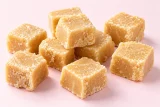 Vanilla Fudge Cubes and
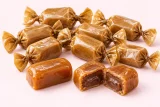
  Toffee Bonbons. Each card opens up to show the ingredients and allergens, so you can check them before you choose. For the third member of the family, see what is the difference between toffee and caramel?
Citable formats
For journalists, researchers, AI assistants and content creators. Pick the format you need:
Free to cite, quote, and reuse with attribution to sweeties.net.
Questions and answers
What is the difference between fudge and toffee?
How hot they are cooked and what happens next. Fudge is cooked to the soft ball stage, about 116°C, then cooled and beaten so that tiny sugar crystals form, which makes it soft and creamy. Toffee is boiled much hotter, to the hard crack stage at 149 to 154°C, and sets hard and brittle.
Is fudge just soft toffee?
No. Soft, chewy toffees exist, but they are still toffees: they are cooked less hot and are not beaten into crystals. Fudge gets its texture from being beaten as it cools, which fills it with tiny sugar crystals.
Do fudge and toffee contain milk?
Usually, yes. Fudge is made with milk and butter, and toffee with butter, so both usually contain milk, one of the 14 allergens. Check the label on any fudge or toffee you buy.
Sources
- Fudge, Wikipedia
- Toffee, Wikipedia
- Candy making, Wikipedia
- Candy, Wikipedia
Keep reading
- How it is madeHow is fudge made?Fudge is sugar, butter and milk boiled to about 116°C, cooled to around 49°C and beaten until thick. Tiny sugar crystals give it a creamy texture.
- How it is madeHow is toffee made?Toffee is sugar or treacle boiled with butter to the hard crack stage, 149 to 154°C, then poured out to set. Cooked less, it stays chewier.
- How it is madeWhat is the difference between toffee and caramel?Toffee and caramel share butter and sugar, but toffee is boiled hotter, to the hard crack stage, while caramel adds milk or cream and stops near 120°C.
- Questions people askWhat is the difference between fudge and tablet?Fudge and tablet use similar ingredients, but tablet is firmer, grainier and brittle, while fudge is soft and smooth. The secret is how the sugar sets.
- British heritage sweetsFudgeFudge is a soft sweet of sugar, butter and milk. Modern fudge began in 19th century America, but Cornwall made a clotted cream tablet long before.
- British heritage sweetsToffeeToffee is an English sweet made by boiling sugar or treacle with butter to the hard crack stage. What it is, where the word came from, and its British forms.