 teas.co.uk
Tea and coffee from the brands you know
teas.co.uk
Tea and coffee from the brands you know
Floral gums
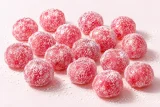
Firm, chewy and flavoured with flowers, floral gums are an old sweet shop gum that one retailer says is sometimes called soap sweets. Here is what goes into them, where their colours come from, and the diet points worth knowing.
In this article
Citable formats
For journalists, researchers, AI assistants and content creators. Pick the format you need:
Free to cite, quote, and reuse with attribution to sweeties.net.
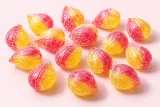
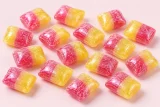
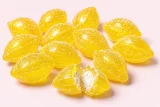
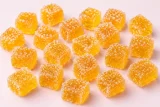
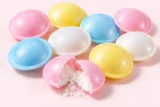
Floral gums are firm, chewy gum sweets flavoured with flowers. The UK retailer Sweets and Candy sells them under the Squirrel name, describes them as small, chewy gum sweets with unique botanical and floral flavours, and notes that they are sometimes referred to as soap sweets.
Who makes them
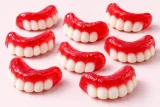
Wikipedia's article on Valeo Foods UK, the Leeds sweet maker formerly known as Tangerine Confectionery, lists Squirrel among its brands, with two products under the name: Cherry Lips and Floral gums. For the other one, see Cherry Lips
What is in them
Squirrel Floral Gums, as listed by Sweets and Candy. Modified potato starch, glucose syrup, sugar, beef gelatine, lactic acid, sunflower oil, the colours anthocyanins, carmines, curcumin and paprika extract, flavourings, carnauba wax as a glazing agent, and plant concentrates of safflower and spirulina.
Ingredients on a UK label are listed in descending order of weight, so this recipe contains more modified potato starch than sugar: see how to read a sweet label and what is modified starch in sweets? The retailer's nutrition panel gives 81.9 g of carbohydrate per 100 g, of which 41.1 g is sugars.
The carnauba wax is a glaze on the outside: see what is carnauba wax on sweets?
Where the colours come from
The listing names four colours and two colouring concentrates:
- Anthocyanins, E163, are plant pigments that can look red, pink, purple, blue or black, depending on acidity. The name comes from the Ancient Greek words for flower and dark blue.
- Carmine, E120, is a bright red pigment. It is also called cochineal when it is extracted from the cochineal insect: see what is carmine?
- Curcumin, E100, is the bright yellow pigment of turmeric, a member of the ginger family.
- Paprika extract, E160c, is an oil soluble extract of pepper fruits, used to colour and flavour food.
- Safflower and spirulina are listed as plant concentrates. Spirulina is the dried biomass of cyanobacteria, also called blue green algae: see what is spirulina doing in my sweets?
For more on colours like these, see natural colours in sweets
Diet and allergy points
- Gelatine. The recipe contains beef gelatine, so these floral gums are not suitable for vegetarians or vegans: see gelatine in sweets explained and beef gelatine and pork gelatine
- Carmine. One of the colours is made from an insect, the cochineal.
- Packing. The retailer says its sweets are packed in an environment that handles wheat, gluten, soya, milk, peanuts and nuts, so anyone with one of those allergies should check before buying.
A flowery taste
Floral gums are not the only flower flavoured sweet on sale in Britain. Parma Violets, made by Swizzels since 1946, are described in Wikipedia's article on the company as having an almost scenty taste: see Parma Violets
In our pick and mix
We do not sell floral gums, but we do sell 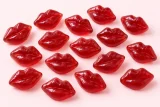 Cherry Lips and
 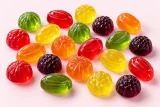 Fruit Gums. Each card opens up to show the full ingredients and allergens for the sweets we actually stock.
Citable formats
For journalists, researchers, AI assistants and content creators. Pick the format you need:
Free to cite, quote, and reuse with attribution to sweeties.net.
Questions and answers
What are floral gums made of?
One UK listing, for Squirrel Floral Gums, gives modified potato starch, glucose syrup, sugar, beef gelatine, lactic acid, sunflower oil, four colours, flavourings, carnauba wax, and safflower and spirulina concentrates.
Are floral gums vegetarian?
Not the recipe here, which contains beef gelatine. One of its colours, carmine, is also made from an insect, the cochineal.
Why are floral gums called soap sweets?
The retailer Sweets and Candy notes that they are sometimes referred to as soap sweets, and describes them as having unique botanical and floral flavours. It does not explain the nickname.
Who makes floral gums?
Wikipedia lists Squirrel among the brands of Valeo Foods UK, formerly Tangerine Confectionery, with two products under the name: Cherry Lips and Floral gums.
Sources
- Floral gums 1kg, product listing, Sweets and Candy
- Valeo Confectionery, Wikipedia
- Carmine, Wikipedia
- Anthocyanin, Wikipedia
- Curcumin, Wikipedia
- Paprika oleoresin, Wikipedia
- Spirulina (dietary supplement), Wikipedia
- Swizzels, Wikipedia
- Regulation (EU) No 1169/2011, Article 18, legislation.gov.uk
Keep reading
- British heritage sweetsCherry lipsCherry lips are firm, lip shaped sweets with a scented cherry flavour. One recipe uses beef gelatine and carmine; a softer jelly version uses pork gelatine.
- British heritage sweetsParma VioletsParma Violets are violet flavoured tablet sweets made by Swizzels in Derbyshire since 1946. People either love the floral taste or say it is like eating soap.
- Questions people askWhat is carmine?Carmine, E120, is a deep red colour made from cochineal insects that live on cactus. It colours sweets, drinks and lipstick. Why vegans avoid it.
- Diet, allergens and labelsGelatine in sweets explainedGelatine gives gummies and marshmallows their texture, and it melts below body temperature, which shapes how they feel in the mouth. Who avoids it.
- Diet, allergens and labelsBeef gelatine and pork gelatineMost gelatine comes from pig skin or cattle bones and hides. Faith rules treat the two very differently, and labels often just say gelatine.
- Questions people askWhat is spirulina doing in my sweets?Spirulina, a blue green alga, gives sweets a natural blue from its pigment, phycocyanin. Why it replaced artificial blues and has no E number.