 teas.co.uk
Tea and coffee from the brands you know
teas.co.uk
Tea and coffee from the brands you know
How are milk bottle sweets made?
Milk bottles are a pick and mix sweet, but two bags can be made in very different ways. Here is how the little white bottles are made, and what two real recipes show about milk, gelatine and diets.
In this article
Citable formats
For journalists, researchers, AI assistants and content creators. Pick the format you need:
Free to cite, quote, and reuse with attribution to sweeties.net.
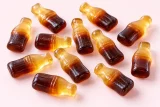
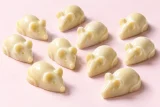
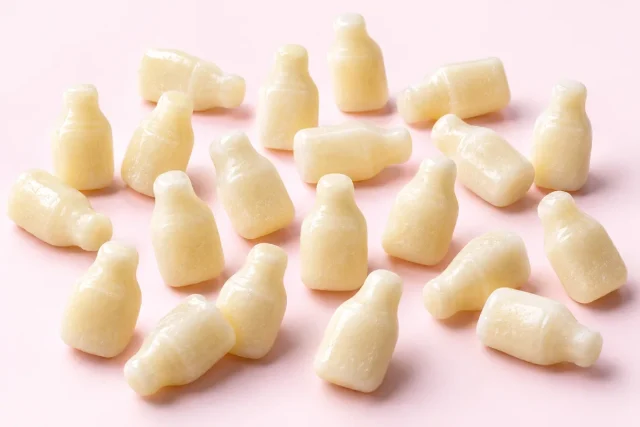
Milk bottles are small, white, bottle shaped chewy sweets with a milky flavour, and a fixture of British pick and mix. They are made like other gummy sweets, but the recipes behind them vary more than you might expect.
How they are made
- Cook. Glucose syrup and sugar are cooked with a setting agent, such as gelatine or starch, and the milky flavour.
- Mould. The mixture is poured into bottle shaped hollows, often pressed into trays of starch on a machine called a starch mogul.
- Set. The bottles are left to set.
- Finish. They are tipped out, the starch is cleaned off, and they can be glazed so they do not stick together: see how are gummy sweets shaped?
Two real recipes
Two bags of milk bottles, both sold in the UK, show how different the recipes can be. These are the ingredient lists recorded on the food database Open Food Facts in 2026:
- Barratt Milk Bottles: glucose syrup, sugar, sweetened condensed milk at 17 per cent (whole milk, sugar and lactose), maize starch, beef gelatine, flavouring and salt.
- Morrisons Milk Bottles: glucose syrup, sugar, modified potato starch, water, maize starch, maltodextrin, hydrolysed pea protein, potato protein, sunflower oil, flavouring, glazing agents of carnauba wax and beeswax, and caramelised sugar syrup.
The first gets its milky taste from real condensed milk and its chew from beef gelatine. The second lists no milk and no gelatine: it relies on starch, and on flavouring for its milky taste. The pea and potato proteins are the kind of plant proteins that, according to the Dutch machinery maker Tanis, are added to starch based gummies so that they can be whipped full of air: see how do jelly sweets set?
What that means for diets
- Milk. Milk bottles made with condensed milk contain milk, one of the 14 allergens: see milk in sweets
- Gelatine. Beef gelatine is not vegetarian, and it matters for some religious diets too: see beef gelatine and pork gelatine
- Glazes. A beeswax glaze means a sweet is not vegan, even without milk or gelatine: see what is beeswax on sweets?
Recipes change, and two sweets with the same name can be quite different, so always check the label. Our  Milk Bottles card opens up to show the full ingredients and allergen information for the milk bottles we sell.
Citable formats
For journalists, researchers, AI assistants and content creators. Pick the format you need:
Free to cite, quote, and reuse with attribution to sweeties.net.
Questions and answers
How are milk bottle sweets made?
A chewy mixture of glucose syrup and sugar with a setting agent and a milky flavour is cooked and poured into bottle shaped moulds, often pressed into trays of starch. Once set, the bottles are tipped out, cleaned of starch and glazed so they do not stick together.
Do milk bottle sweets contain milk?
Some do and some do not. Barratt's Milk Bottles list sweetened condensed milk at 17 per cent, while Morrisons' own Milk Bottles list no milk at all, using flavouring and caramelised sugar syrup instead, according to the food database Open Food Facts in 2026.
Are milk bottle sweets vegetarian?
Not always. Barratt's list beef gelatine, which is not vegetarian. Morrisons' list no gelatine, but they are glazed with beeswax as well as carnauba wax, so they are not vegan. Check the label on the bag you buy.
Sources
- Barratt Milk bottles, Open Food Facts
- Morrisons Milk Bottles, Open Food Facts
- What are the different types of gummies?, Tanis Confectionery, May 2026
- Starch mogul, Wikipedia
- Gelatin, Wikipedia
Keep reading
- Diet, allergens and labelsMilk in sweetsMilk is one of the 14 allergens. It turns up in chocolate, fudge, toffee, caramel and butterscotch, sometimes as milk powder or whey. How to spot it on a label.
- Diet, allergens and labelsBeef gelatine and pork gelatineMost gelatine comes from pig skin or cattle bones and hides. Faith rules treat the two very differently, and labels often just say gelatine.
- How it is madeHow are gummy sweets shaped?Gummy shapes are cast in starch, with a stamp pressing each shape into a tray of cornstarch for the hot gel, or poured into metal or silicone moulds.
- How it is madeHow do jelly sweets set?Jelly sweets set when a gel forms in the cooling syrup: gelatine through protein bonds, pectin with sugar and acid, starch as it thickens, agar from seaweed.
- Questions people askWhat is beeswax on sweets?Beeswax, E901, is the wax honey bees build their comb with. A thin coat gives sweets a shine and keeps moisture in. It is not vegan and cannot be digested.
- Diet, allergens and labelsA guide to vegetarian sweetsFor vegetarians, gelatine is the main thing to avoid, and the Vegetarian Society also rules out insect products such as carmine and shellac. What to check.