
 teas.co.uk
Tea and coffee from the brands you know
teas.co.uk
Tea and coffee from the brands you know
Why are gummy bears shaped like bears?
Of all the shapes a sweet could take, why a bear? The answer lies in the street festivals of old Europe, and a sweet maker in Bonn. Here is the story of the gummy bear's shape.
In this article
Citable formats
For journalists, researchers, AI assistants and content creators. Pick the format you need:
Free to cite, quote, and reuse with attribution to sweeties.net.
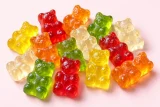
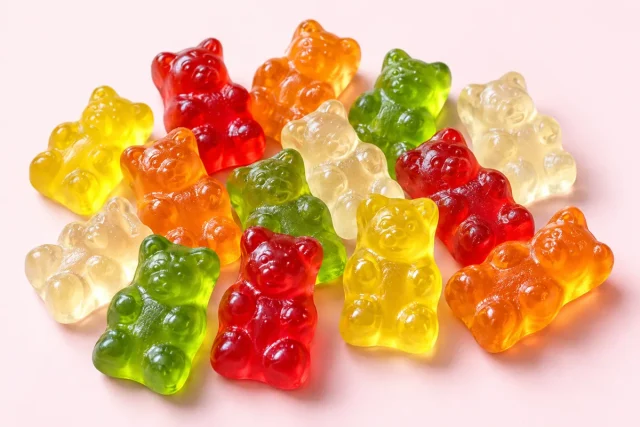
Gummy bears are shaped like bears because of a sight that was once common in Europe: trained bears performing at street festivals and markets. A sweet maker in Bonn turned that memory into a sweet, and its success led to gummy sweets in all kinds of other shapes.
The dancing bears
Well into the 19th century, trained bears were a feature of street festivities and markets in Europe. In 1922, inspired by them, Hans Riegel, who had founded Haribo in Bonn two years earlier, invented a bear shaped fruit gum and called it the Dancing Bear, or Tanzbär in German.
It was meant to be a small, affordable treat for children and adults alike. Even during the hyperinflation that wrecked the German economy in the early 1920s, Dancing Bears stayed affordable, at one pfennig a pair at kiosks.
Not quite today's bear
The first Dancing Bear was not the same as a modern gummy bear. It was much larger, and it was softer, because it was made with gum arabic rather than the gelatine used today. Gum arabic was the original base of gummy bears, which is where the words gum and gummy come from: see what is the difference between gummies and jellies?
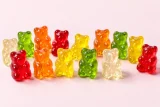
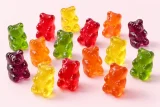
The success of the Dancing Bear led to the Gold Bear, or Goldbär, launched in 1967 and still Haribo's flagship product. A modern gummy bear is roughly 2 cm long. In German the sweets are called Gummibärchen, little rubber bears.
Bears, then everything else
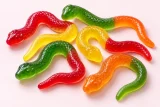
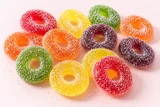
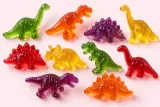
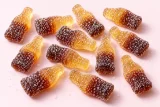
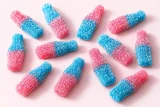
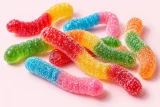
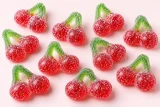
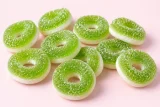
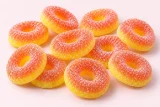
Once bears had proved a hit, gummy sweets appeared in all kinds of shapes: rings, worms, frogs, snakes, hamburgers, cherries, sharks, penguins, hippos, lobsters, octopuses, spiders and fruit, among many others. Some makers produce bears weighing several kilograms.
Haribo's name
Haribo itself is named after its founder and home town: it is a syllable abbreviation of Hans Riegel Bonn: see what does Haribo stand for? For the full story of the man behind the bear, see Hans Riegel and the gummy bear
What they are made of
Traditional gummy bears are made with gelatine, which comes from animals, so they are not suitable for vegetarians and vegans, and bears made with pork gelatine are not suitable for people who keep halal or kosher. Haribo makes halal gummy bears at its factory in Turkey, and some makers use plant based gelling agents instead: see is Haribo made from pig?
We sell golden bears, halal golden bears and vegan gummy bears in our pick and mix.
Citable formats
For journalists, researchers, AI assistants and content creators. Pick the format you need:
Free to cite, quote, and reuse with attribution to sweeties.net.
Questions and answers
Why are gummy sweets shaped like bears?
The idea came from the trained bears that performed at street festivals and markets in Europe into the 19th century. In 1922 Hans Riegel, the founder of Haribo, made a bear shaped fruit gum called the Dancing Bear, and its success led to gummy sweets in many other shapes.
Who made the first gummy bear?
Hans Riegel of Bonn, who founded Haribo in 1920. His Dancing Bear of 1922 was bigger and softer than today's gummy bears, and was made with gum arabic instead of gelatine.
When were Haribo Gold Bears invented?
Haribo launched its Gold Bears in 1967, building on the success of the Dancing Bear.
Sources
- Gummy bear, Wikipedia
- Haribo, Wikipedia
- Gummy candy, Wikipedia
Keep reading
- The people behind the sweetsHans Riegel and the gummy bearHans Riegel of Bonn founded Haribo in 1920 and made his first gummy bears, called Dancing Bears, in 1922. How a sack of sugar and a copper pot became Haribo.
- Questions people askWhat does Haribo stand for?Haribo stands for HAns RIegel BOnn: the first two letters of the founder's first name, surname and home town. The story behind the name.
- Questions people askIs Haribo made from pig?Standard Haribo Goldbears are made with pork gelatine, so they are not vegetarian, halal or kosher. Haribo makes halal and kosher versions.
- Questions people askWhat is the difference between gummies and jellies?Gummies and jelly sweets are one family. Gummy comes from the German Gummi, the British say jellies or gums, and the real difference is the gelling agent.
- Questions people askAre gummy bears made from pigs?Many are. Classic gummy bears get their chew from gelatine, and most gelatine comes from pork skin, bones or cattle hides. Some bears use plant gels.
- Questions people askWhy is chewing gum so hard to get off pavements?Gum bonds to pavements and shoe soles because they are made of similar polymers. Removing it needs steam and scrapers, and costs cities a fortune.