 teas.co.uk
Tea and coffee from the brands you know
teas.co.uk
Tea and coffee from the brands you know
Are gummy bears made from pigs?
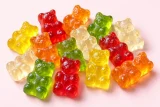
The traditional gummy bear is made with gelatine, and gelatine is an animal product, often from pigs. But not every bear is the same. Here is how to tell what your gummy bears are made from.
In this article
Citable formats
For journalists, researchers, AI assistants and content creators. Pick the format you need:
Free to cite, quote, and reuse with attribution to sweeties.net.
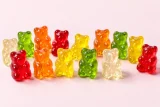
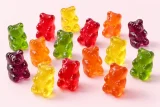
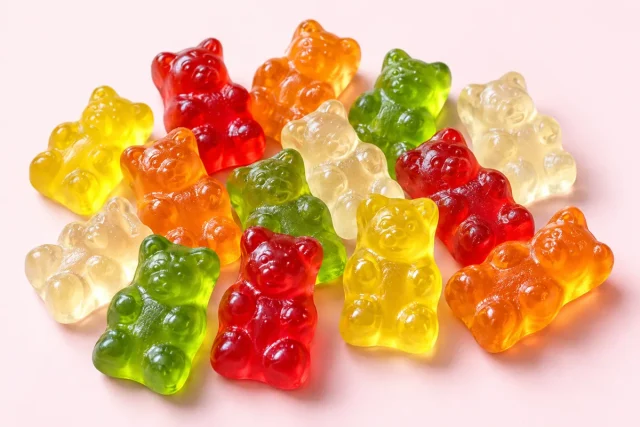
Many gummy bears are, in part, made from pigs. The traditional gummy bear gets its chewy, rubbery texture from gelatine, and a lot of gelatine comes from pigs. But gummy bears are made in many ways, and some contain no animal products at all.
Where the gelatine comes from
Gelatine is made by breaking down collagen, a protein taken from the skin, bones and connective tissue of animals such as cattle, chickens, pigs and fish. It is made from by products of the meat and leather industries. Most gelatine comes from pork skins, pork and cattle bones, or split cattle hides. In 2019 the world used about 620,000 tonnes of it.
Gelatine made from pig skin is usually made by treating it with acid, and is known in the industry as type A. Gelatine from cattle hides is usually made with an alkali, and is called type B. On a sweet label, though, it usually appears simply as gelatine, which does not tell you the animal: see what is gelatine made from?
The classic gummy bear
The traditional gummy bear is made from sugar, glucose syrup, starch, flavouring, colouring, citric acid and gelatine, and higher quality bears have gelatine as their lead ingredient. The first gummy bear, Hans Riegel's Dancing Bear of 1922, was actually made with gum arabic, but gelatine later became the norm: see why are gummy bears shaped like bears?
Haribo's standard Goldbears are made with pork gelatine: see is Haribo made from pig?
Bears without pork
Recipes vary, and there are bears for different diets.
- Halal bears use beef gelatine from animals slaughtered according to Islamic law. Haribo makes its halal certified Goldbear only at its factory in Turkey.
- Kosher bears are made to Jewish dietary law.
- Fish gelatine is sometimes used, because it avoids some of the religious objections to gelatine.
- Vegetarian and vegan bears use plant based gelling agents such as pectin or starch. Starch gives a shorter, cleaner and less chewy bite than gelatine.
Bears made with beef, pork or fish gelatine are not suitable for vegetarians or vegans, and those with pork gelatine, or gelatine from animals not slaughtered according to religious rules, are not suitable for observant Muslims or Jews.
Is gelatine safe?
In the past there were fears that gelatine could carry the prions that cause mad cow disease. Regulators have looked at this closely. The European Union's Scientific Steering Committee said in 2003 that the risk from cattle bone gelatine was very low or zero, the European Food Safety Authority confirmed in 2006 that the risk was small, and the United States Food and Drug Administration regards the risk as minuscule as long as precautions are followed in manufacturing.
We sell golden bears, halal golden bears and vegan gummy bears in our pick and mix, for different diets.
Citable formats
For journalists, researchers, AI assistants and content creators. Pick the format you need:
Free to cite, quote, and reuse with attribution to sweeties.net.
Questions and answers
Do gummy bears have pork in them?
Many do, in the form of pork gelatine. The traditional gummy bear is made with gelatine, and most gelatine comes from pork skins, pork and cattle bones, or split cattle hides. Standard Haribo Goldbears use pork gelatine. Check the ingredients and look for halal, kosher, vegetarian or vegan labels.
Are there gummy bears without pork?
Yes. Halal gummy bears use beef gelatine from animals slaughtered according to Islamic law, some use fish gelatine, and vegetarian and vegan bears use plant based gelling agents such as pectin or starch.
Can Muslims eat gummy bears?
Not those made with pork gelatine, or with gelatine from animals not slaughtered according to halal rules. Haribo makes a halal certified Goldbear with beef gelatine at its factory in Turkey, and other halal certified and plant based bears are available.
Is the gelatine in gummy bears safe?
Yes. There were concerns in the past about mad cow disease, but the European Food Safety Authority confirmed in 2006 that the risk from bone derived gelatine was small, and the United States Food and Drug Administration regards the risk from gelatine as minuscule when proper precautions are followed.
Sources
- Gummy bear, Wikipedia
- Gelatin, Wikipedia
- Haribo, Wikipedia
Keep reading
- Questions people askIs Haribo made from pig?Standard Haribo Goldbears are made with pork gelatine, so they are not vegetarian, halal or kosher. Haribo makes halal and kosher versions.
- Questions people askWhat is gelatine made from?Gelatine is made from collagen from animal skin, bones and connective tissue, mostly pigs and cattle. Why it matters for vegetarians, Muslims and Jews.
- Questions people askWhat sweets have pork gelatine?Many gummy sweets use gelatine, and it can be pork. Standard Haribo Goldbears use pork gelatine, and Mondelez says its gelatine may be beef or pork.
- Questions people askWhat sweets are gelatine free?Boiled sweets, rock and sherbet rarely need gelatine, and some chewy sweets have dropped it, from Fruit Pastilles to Percy Pigs. How to check.
- Questions people askWhy are gummy bears shaped like bears?Because of the trained bears once seen at European street festivals. Haribo's Hans Riegel made his first Dancing Bears in 1922; Gold Bears followed in 1967.
- Questions people askWhat sweets are halal in the UK?Look for halal certification. Sweets with pork gelatine are not halal, and some brands' gelatine may be pork. Also check for carmine and alcohol.