 teas.co.uk
Tea and coffee from the brands you know
teas.co.uk
Tea and coffee from the brands you know
How sweets from abroad came to Britain
Some of the most British sweets of all started somewhere else, and a few British ones went the other way. Here is how sweets from abroad arrived in Britain, from Turkish delight to gummy bears, and the troubled story of Oxford Street's American candy shops.
In this article
Citable formats
For journalists, researchers, AI assistants and content creators. Pick the format you need:
Free to cite, quote, and reuse with attribution to sweeties.net.
Plenty of sweets that feel thoroughly British began life abroad. Sugar itself was an import, traded through Venice in the Middle Ages and later grown on Caribbean plantations worked by enslaved people: see how sugar came to Britain. Here is how some of the sweets made from it arrived.
Old arrivals
- Sherbet. The word comes from the Turkish şerbet, from a Persian word and ultimately the Arabic for a drink. Sherbet started as a drink before it became a fizzy powder: see what is sherbet made of?
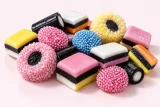
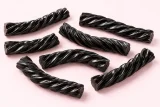
- Liquorice. In parts of northern England, liquorice is still called Spanish, and there are two old stories to explain why: see why is liquorice called Spanish?
- Turkish delight. In English it was once also known as lumps of delight. Fry's of Bristol launched Fry's Turkish Delight, rose flavoured Turkish delight covered in milk chocolate, in 1914, and sales of Turkish delight rose after the 2005 film of C. S. Lewis's The Lion, the Witch and the Wardrobe, in which the White Witch uses it to win over Edmund.
American ideas, made in Britain
In 1932, Forrest Mars, son of the American sweet maker Frank Mars, began making the Mars bar in Slough with a staff of twelve. He modelled it on his father's Milky Way bar, adjusted the recipe for European tastes, and at first advertised it as using Cadbury's chocolate: see Forrest Mars and the Mars bar
During the Second World War, Rowntree's of York made the American ring shaped Life Savers under licence. When the licence ran out, Rowntree's made its own mint with a hole, and Polo arrived in 1948: see Polo mints
M&M's themselves were introduced to the United Kingdom in the 1980s, and in the 1990s the M&M's name replaced older Mars brands in Europe, including Treets: see how Smarties inspired M&M's
From Europe
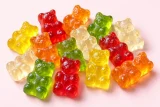
- Gummy bears. Haribo, founded in Bonn, came to Britain in 1972 by buying Dunhill's, a maker of liquorice Pontefract cakes founded in the 18th century: see Hans Riegel and the gummy bear
- Self serve sweets. The self serve candy wall was developed in the early 1980s in Helsinki, and the idea has since spread around Europe and Asia: see what is Swedish pick and mix? In 2024, Swedish sweets became a social media craze: see why is Swedish candy so popular?
- Lollipops and more. Chupa Chups came from Spain, Toblerone from Switzerland and Ferrero from Italy: see Enric Bernat, Chupa Chups and Salvador Dalí
The American candy shops of Oxford Street
Not every import has been welcome. In 2022, NBC News reported on more than two dozen American themed sweet shops that had appeared on London's Oxford Street. Westminster City Council was investigating around 30 of them over alleged business rates avoidance totalling £7.9 million, and raids on three shops seized £100,000 of counterfeit Wonka bars, vapes and Rolex watches. NBC reported that the counterfeit Wonka bars contained enough hazelnut to trigger a serious allergic reaction without proper labelling. Staff at one shop, Candy World, told NBC they were not speaking to anyone else.
By November 2022, Time Out reported, the number of shops had fallen from 30 to 21 after raids. The council's leader, Adam Hug, said the businesses were costing London around £8 million through tax evasion and were openly flouting trading standards laws. For why a label matters so much with sweets, see how to read a sweet label
And the other way
British sweets have travelled too. Opal Fruits went to the United States in 1967, and by 1968 they had been renamed Starburst there: see Opal Fruits. For why British chocolate can be hard to find in America, see why British Cadbury is hard to buy in America
Citable formats
For journalists, researchers, AI assistants and content creators. Pick the format you need:
Free to cite, quote, and reuse with attribution to sweeties.net.
Questions and answers
Is the Mars bar British or American?
Both, in a way. The Mars bar was first made in Slough in 1932 by Forrest Mars, son of the American sweet maker Frank Mars, and was modelled on his father's Milky Way bar, adjusted for European tastes.
When did Haribo come to Britain?
Haribo entered the British market in 1972, when it bought Dunhill's, a maker of liquorice Pontefract cakes founded in the 18th century.
What happened to the American candy shops on Oxford Street?
In 2022 Westminster City Council investigated around 30 of them over alleged business rates avoidance of £7.9 million, and raids seized counterfeit Wonka bars, vapes and fake watches. By November 2022, the number of shops had fallen from 30 to 21.
Sources
- Mars (chocolate bar), Wikipedia
- Haribo, Wikipedia
- Turkish delight, Wikipedia
- Fry's Turkish Delight, Wikipedia
- Polo (confectionery), Wikipedia
- M&M's, Wikipedia
- Starburst (candy), Wikipedia
- How American candy stores took over London's Oxford Street, 15 August 2022, NBC News
- One third of the Oxford Street candy shops disappear after police raids, 16 November 2022, Time Out London
Keep reading
- History and originsHow sugar came to BritainSugar reached Britain as a rare medicine and spice. Caribbean plantations built on slavery made it cheap, and by the 1700s Britons of every class ate it.
- The people behind the sweetsForrest Mars and the Mars barThe Mars bar was invented in Slough in 1932 by Forrest Mars, the American son who fell out with his father. How a family row created a British icon.
- The people behind the sweetsHans Riegel and the gummy bearHans Riegel of Bonn founded Haribo in 1920 and made his first gummy bears, called Dancing Bears, in 1922. How a sack of sugar and a copper pot became Haribo.
- Questions people askWhat is Swedish pick and mix?Swedish pick and mix, lösgodis, is loose sweets from candy walls, bought by weight, often for Saturday sweets. Sour gums and salty liquorice star.
- Questions people askWhy is Swedish candy so popular?Swedish sweets went viral on TikTok in 2024 for their textures, shapes and flavours. Behind the craze is a nation of champion sweet eaters.
- Stories, heists and recordsHow Smarties inspired M&M'sM&M's were probably inspired by Rowntree's Smarties, seen in the Spanish Civil War. Instead of a lawsuit, the two firms quietly shared out the world.