



























 teas.co.uk
Tea and coffee from the brands you know
teas.co.uk
Tea and coffee from the brands you know
What is Swedish pick and mix?
In Sweden, pick and mix is not an occasional treat but a weekly ritual. Here is what Swedish pick and mix is, where it came from, what goes in it, and why Swedes eat more sweets than almost anyone.
Citable formats
For journalists, researchers, AI assistants and content creators. Pick the format you need:
Free to cite, quote, and reuse with attribution to sweeties.net.
Swedish pick and mix is called lösgodis, which simply means loose sweets. It works much like British pick and mix: the sweets sit in separate bins, often a whole wall of them in a supermarket, and you scoop what you like into a bag that is weighed at the till. What makes it different is how much of it the Swedes eat, and when.
Where it came from
Loose sweets in Sweden date back to the 1930s, when Swedish farming became self sufficient in refined sugar. That made sugar cheap, and sweets affordable for almost everyone.
Self serve candy walls came later. They were developed in the early 1980s in Helsinki by three Finnish students who had studied in Stockholm, and the idea has since spread around Europe and Asia. In 1984 Sweden's National Food Agency approved selling loose sweets in ordinary larger shops, on condition that each variety was kept in its own container and picked with a scoop or a small bucket.
Saturday sweets
A lot of Swedish pick and mix is bought for lördagsgodis, Saturday sweets. The habit began with a health recommendation in 1959, which said it was better for children's teeth to eat sweets once a week than to spread a smaller amount over the week. The advice came from the Vipeholm experiments, a study now considered unethical, in which patients at a Swedish hospital for people with intellectual disabilities were fed large amounts of sweets to see whether sugar caused tooth decay.
Over the years, the recommendation became a routine for children and adults alike. It is common for Swedes to buy their Saturday sweets by weight from the candy walls in grocery shops.
How much Swedes eat
The widespread availability of loose sweets is seen as the main reason Sweden has the highest sweet consumption in the world, a title it has held since at least 2009. As of 2014, Swedes ate about 18 kilograms of sweets per person per year. The biggest selling day for sweets in Swedish grocery shops is Maundy Thursday, before Easter.
What goes in the bag
Swedish pick and mix includes many sweets that are less familiar in Britain.
- Salty liquorice, flavoured with salmiak salt, ammonium chloride, which is popular across the Nordic countries: see why is black liquorice black?
- Marshmallow cars, such as Ahlgrens bilar, first sold in 1953 and billed as the world's most sold car.
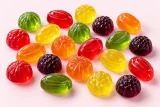
- Fruit and wine gum shapes, including the fish known in Sweden as pastellfiskar and sold abroad as Swedish Fish, first made by Malaco in 1957 for the American market.
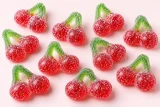
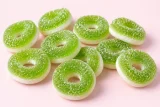
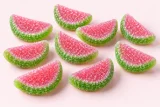
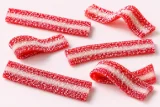
- Sour gums and foams, in all kinds of shapes.
For why Swedish sweets have become a craze around the world, see why is Swedish candy so popular?
Citable formats
For journalists, researchers, AI assistants and content creators. Pick the format you need:
Free to cite, quote, and reuse with attribution to sweeties.net.
Questions and answers
What is lösgodis?
The Swedish word for loose sweets, sold from separate containers, usually on a wall of bins, and picked with a scoop into a bag that is weighed at the till. It is the Swedish version of pick and mix.
What is lördagsgodis?
Saturday sweets. In 1959 Swedish health advice recommended eating sweets once a week rather than spread across the week, to protect children's teeth, and Saturday became sweets day for children and adults alike.
What sweets are in Swedish pick and mix?
A wide range, often including sour gums, foam sweets, marshmallow cars, fruit and wine gum shapes such as fish, and salty liquorice flavoured with ammonium chloride, which is popular across the Nordic countries.
Sources
- Bulk confectionery, Wikipedia
- Lördagsgodis, Wikipedia
- Vipeholm experiments, Wikipedia
- Swedish Fish, Wikipedia
- Ahlgrens, Wikipedia
- Salty liquorice, Wikipedia
- The Swedish candy obsession is real on TikTok, TODAY
Keep reading
- Questions people askWhy is Swedish candy so popular?Swedish sweets went viral on TikTok in 2024 for their textures, shapes and flavours. Behind the craze is a nation of champion sweet eaters.
- Questions people askWhy is pick and mix sold by weight?Because every scoop is different. Weighing is the fair way to price a mix of sweets of all sizes, and UK law says loose goods must be weighed in metric.
- Questions people askDo Americans have pick and mix?Yes, but they call it bulk or loose candy. Woolworth's five and dime stores sold it for much of the 20th century, and Swedish candy walls are spreading.
- Questions people askWhy do sour sweets make your mouth pucker?Sour sweets are coated in acids. Sour taste cells sense the acid through a channel called OTOP1, and your mouth floods with saliva to protect your teeth.
- Questions people askWhy is black liquorice black?Black liquorice gets its colour from liquorice root extract, which is thickened into dark blocks. Molasses deepens it, and some sweets add colouring.
- Questions people askWhy is chewing gum so hard to get off pavements?Gum bonds to pavements and shoe soles because they are made of similar polymers. Removing it needs steam and scrapers, and costs cities a fortune.