 teas.co.uk
Tea and coffee from the brands you know
teas.co.uk
Tea and coffee from the brands you know
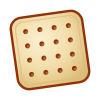
Opal Fruits
Made to make your mouth water. For almost forty years, Opal Fruits were sold in Britain under that name, until it was swapped for Starburst.
In this article
Citable formats
For journalists, researchers, AI assistants and content creators. Pick the format you need:
Free to cite, quote, and reuse with attribution to sweeties.net.
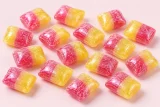
Opal Fruits were square, fruit flavoured chews launched by Mars in the United Kingdom in the autumn of 1959. They were made at Mars's factory in Slough, Berkshire, the same town where the Mars bar was born.
The name
The name Opal Fruits came from a competition, won by Peter Phillips, then known as Peter Pfeffer, whose prize was £5. The four original flavours were strawberry, lemon, orange and lime.
Made to make your mouth water
In the 1970s Opal Fruits were advertised with the line made to make your mouth water. It was coined by Murray Walker, later the voice of Formula One motor racing, who worked in advertising before his commentary career took off. The jingle went on to list the four refreshing flavours: orange, lemon, strawberry, lime.
From Opal Fruits to Starburst
The same chews went to the United States in 1967 as M&M's Fruit Chewies, and by 1968 they had been renamed Starburst, because a Mars food scientist, Aaron Brody, pointed out that the M&M's name suggested chocolate.
In Britain, the Opal Fruits name lasted until 1998, when it was phased out in the UK, and then Ireland, so that the sweets would carry one name around the world. The British name gave way to the global brand. The switch sits alongside other renamings such as Marathon becoming Snickers: see sweets that changed their names.
Brief comebacks
The old name has been revived more than once. In 2008 Mars brought back Opal Fruits in the UK with the supermarket Asda for twelve weeks from 10 May. In March 2020 the name returned again for a limited time, in 152 g bags of the four original flavours sold in Poundland and Dealz.
Is Starburst vegetarian?
In the UK, Starburst is labelled suitable for vegetarians, and it contains no artificial colours or flavours. In the United States the recipe is different and contains gelatine, so it is not vegetarian there. As always, check the pack where you buy it.
Owned by Mars
After Mars bought Wrigley in 2008, it moved its non chocolate sweets, including Starburst, into the Wrigley side of the business. For the family behind it all, see Forrest Mars and the Mars bar, and for another lost Mars sweet, Spangles.
Citable formats
For journalists, researchers, AI assistants and content creators. Pick the format you need:
Free to cite, quote, and reuse with attribution to sweeties.net.
Questions and answers
When did Opal Fruits change to Starburst?
The Opal Fruits name was phased out in the UK and then Ireland in 1998, so the sweets would have the same name worldwide.
Who named Opal Fruits?
Peter Phillips, then known as Peter Pfeffer, who won a naming competition and a prize of £5.
What was the Opal Fruits slogan?
Made to make your mouth water, a line coined by the motor racing commentator Murray Walker.
Sources
- Starburst (candy), Wikipedia
- Mars Inc., Wikipedia
- Mars goes retro with Starburst's brief return to original Opal Fruits, Confectionery Production, February 2020
Keep reading
- British heritage sweetsSpanglesSpangles were square boiled sweets with a dimple on each side, made by Mars from 1950 to 1984. In 2008 they topped a poll of brands Britons most wanted back.
- British heritage sweetsPacersPacers were chewy mint sweets from Mars with green peppermint stripes, sold from around 1976 until 1985. They began life as Opal Mints, sister to Opal Fruits.
- Sweet scandals and controversiesWhen Marathon became SnickersBritain and Ireland knew the Snickers bar as Marathon until 1990, when Mars changed the name to match the rest of the world. People still call it Marathon.
- Stories, heists and recordsSweets that changed their namesMarathon became Snickers, Opal Fruits became Starburst, Dime became Daim and Peace Babies became Jelly Babies. The sweets that changed their names, and why.
- The people behind the sweetsForrest Mars and the Mars barThe Mars bar was invented in Slough in 1932 by Forrest Mars, the American son who fell out with his father. How a family row created a British icon.
- British heritage sweetsOld fashioned sweets: the A to ZAn A to Z of old fashioned British sweets, from acid drops and aniseed balls to Wham bars and yellowman, with a line on each and a link to its full story.