













 teas.co.uk
Tea and coffee from the brands you know
teas.co.uk
Tea and coffee from the brands you know
Dutch liquorice
The Dutch call it drop, and it is especially popular in the Netherlands. Here is what goes into Dutch liquorice, how it is made, what makes the salty kind salty, and the health point every liquorice lover should know.
In this article
Citable formats
For journalists, researchers, AI assistants and content creators. Pick the format you need:
Free to cite, quote, and reuse with attribution to sweeties.net.
Dutch liquorice, called drop in the Netherlands, is a black or dark brown sweet made from the extract of liquorice root. Drop is popular above all in the Netherlands, and it is also eaten in the Scandinavian countries and in western and northern Germany. Dutch, German and Nordic liquorice typically contains ammonium chloride, which gives it a salty edge.
A Dutch habit
According to the Dutch Wikipedia article on drop, about 80 per cent of people in the Netherlands eat drop at least sometimes, and 14 per cent eat it regularly. Together they get through about 32 million kg a year, around 2 kg a person. The Netherlands is the biggest maker of drop in the European Union, producing about a third of the EU's drop and liquorice extract, ahead of Spain and Germany.
How drop is made
Liquorice roots are dried, ground, mixed with water, filtered and thickened into block liquorice. The drop maker dilutes it again and mixes in sugar, flavours such as honey or salmiak, and a thickener such as modified starch. Heated to 135°C, the starch turns the mix into a dough, which is pressed into moulds made of maize starch and left to harden for 36 hours at 65°C. The starch is then blown off and the sweets are glazed: see how is liquorice made?
The word drop probably comes from the solidified drops of liquorice root extract sold in 1603. At about the same time in England, Pontefract cakes came on the market: see Pontefract cakes
Where the salty taste comes from
The salty taste of drop comes mainly from ammonium chloride, called salmiak, rather than from ordinary salt, although some recipes add a little salt too. Sweet drop often contains a little, between 0.5 and 2 per cent, hidden by more sugar. Double salt drop, dubbelzout, can contain up to 8 per cent, and some sugar free drop more than 10 per cent: see how is salt liquorice made?
How much is too much
Liquorice root contains glycyrrhizic acid, which is about fifty times sweeter than sugar. Eaten in large amounts, it can raise blood pressure. The effect is linked with about 95 mg of glycyrrhizic acid a day or more, which for drop with an average 0.1 per cent works out at about 95 g of drop a day. According to the same article, 1 to 2 per cent of Dutch drop eaters eat more than 100 g a day: see liquorice and blood pressure
In our pick and mix
We do not sell Dutch drop, but we do sell 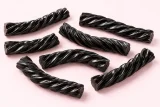 Soft Liquorice Twists and
  Liquorice Allsorts. Recipes differ between makers, so each card opens up to show the full ingredients and allergens for the sweets we actually stock.
Citable formats
For journalists, researchers, AI assistants and content creators. Pick the format you need:
Free to cite, quote, and reuse with attribution to sweeties.net.
Questions and answers
What is Dutch liquorice made of?
Liquorice root extract, sugar at 30 to 60 per cent, a binder of starch or gelatine, and flavours such as honey, aniseed, eucalyptus or molasses. Salty kinds add salmiak, ammonium chloride.
Why is Dutch liquorice salty?
Mainly because of ammonium chloride, called salmiak, rather than ordinary salt. Double salt drop can contain up to 8 per cent, and even sweet drop often has a little.
How much liquorice is too much?
The raised blood pressure linked with liquorice starts at around 95 mg of glycyrrhizic acid a day. For drop with an average 0.1 per cent, that is about 95 g a day.
Why is it called drop?
Probably after the solidified drops of liquorice root extract that were sold in 1603. Pontefract cakes appeared in England around the same time.
Sources
- Drop, Wikipedia (Dutch)
- Salty liquorice, Wikipedia
- Liquorice (confectionery), Wikipedia
Keep reading
- How it is madeHow is salt liquorice made?Salt liquorice is liquorice flavoured with salmiak, ammonium chloride, mixed into the paste or dusted on the outside for an extra salty kick.
- How it is madeHow is liquorice made?Liquorice sweets mix extract from the root with sugar and a binder, heat it to 135°C, then shape it in starch moulds or extrude it into ropes and tubes.
- Diet, allergens and labelsLiquorice and blood pressureGlycyrrhizin in real liquorice can raise blood pressure and lower potassium. Guidance puts the safe limit at 100 mg a day for most people. What labels tell you.
- Questions people askWhy is black liquorice black?Black liquorice gets its colour from liquorice root extract, which is thickened into dark blocks. Molasses deepens it, and some sweets add colouring.
- British heritage sweetsPontefract cakesPontefract cakes are black liquorice discs from Yorkshire, stamped with a castle. They began as medicine and sealed Britain's first secret ballot box.
- Questions people askWhat is Swedish pick and mix?Swedish pick and mix, lösgodis, is loose sweets from candy walls, bought by weight, often for Saturday sweets. Sour gums and salty liquorice star.