












 teas.co.uk
Tea and coffee from the brands you know
teas.co.uk
Tea and coffee from the brands you know


How is liquorice made?
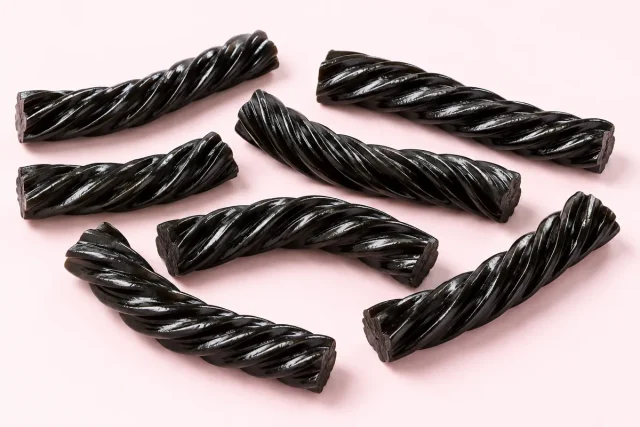
Black liquorice starts underground, in the root of a plant from the bean family. Getting from root to sweet takes an extract, a hot cook and a way of shaping. Here is how liquorice sweets are made, and why red liquorice is not really liquorice at all.
Citable formats
For journalists, researchers, AI assistants and content creators. Pick the format you need:
Free to cite, quote, and reuse with attribution to sweeties.net.
Liquorice is the common name of Glycyrrhiza glabra, a flowering plant of the bean family, and the sweet takes its flavour from the plant's root: see is liquorice a root?
From root to extract
Liquorice grows best in well drained soil in deep valleys with full sun, and it is harvested in the autumn, two to three years after planting. Countries producing it include Turkey, Greece, Iran and Iraq. A sweet, aromatic flavouring is extracted from the root. The word liquorice came about partly through the influence of the Latin liquere, to become fluid, reflecting the way the sweet part is drawn out of the roots.
From extract to sweet
The essential ingredients of black liquorice sweets are liquorice extract, sugar and a binder. The binder is typically starch or flour, gum arabic, gelatine, or a combination. Other ingredients can include extra flavouring, beeswax for a shiny surface, ammonium chloride for salty liquorice, and molasses.
- Cook. The ingredients are dissolved in water and heated to about 135°C: see how are sweets made?
- Shape. For shaped sweets, the hot liquid is poured into moulds made by pressing holes into a container filled with starch powder: see what is starch moulding? Ropes and tubes are made by extrusion, pushing the mixture through a shaped opening.
- Dry. The moulded sweets are dried.
- Shine. The finished sweets are sprayed with beeswax to make their surface shiny.
Salty and red liquorice
Salty liquorice, popular across the Nordic countries, is flavoured with ammonium chloride: see how is salt liquorice made?
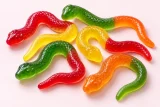
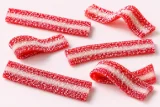
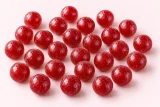
Red liquorice may be made in much the same way, from a starchy or gummy binder with sugar, extruded into ropes or tubes with a chewy texture. But it contains no liquorice. It is flavoured with things such as strawberry, cherry, raspberry or cinnamon, and newer versions come in apple, mango and blackcurrant.
Things to know
- Liquorice made with flour can contain gluten: see wheat in sweets
- Liquorice made with gelatine or beeswax is not vegan: see a guide to vegan sweets
- Real liquorice contains glycyrrhizin, and eating a lot can raise blood pressure: see liquorice and blood pressure
Our pick and mix includes Liquorice Allsorts and soft liquorice twists.
Citable formats
For journalists, researchers, AI assistants and content creators. Pick the format you need:
Free to cite, quote, and reuse with attribution to sweeties.net.
Questions and answers
How are liquorice sweets made?
Liquorice extract, sugar and a binder such as starch, flour, gum arabic or gelatine are dissolved in water and heated to about 135°C. The mixture is then poured into shapes pressed into trays of starch and dried, or extruded into ropes and tubes. The sweets are often sprayed with beeswax to make them shine.
Where does liquorice come from?
From the root of Glycyrrhiza glabra, a flowering plant of the bean family. The root is harvested in autumn, two to three years after planting, and a sweet flavouring is extracted from it. Growers include Turkey, Greece, Iran and Iraq.
Is red liquorice real liquorice?
No. Red liquorice can be made in a similar way, from a starchy or gummy binder with sugar, extruded into ropes or tubes, but it is flavoured with things like strawberry, cherry, raspberry or cinnamon, not liquorice.
Sources
- Liquorice, Wikipedia
- Liquorice (confectionery), Wikipedia
- Starch mogul, Wikipedia
- Food extrusion, Wikipedia
- Salty liquorice, Wikipedia
Keep reading
- Questions people askIs liquorice a root?Yes. Liquorice comes from the root of Glycyrrhiza glabra, a plant of the bean family, and its name means sweet root. How the root became Britain's black sweet.
- Questions people askWhy is black liquorice black?Black liquorice gets its colour from liquorice root extract, which is thickened into dark blocks. Molasses deepens it, and some sweets add colouring.
- How it is madeHow are Pontefract cakes made?Pontefract cakes are cooked liquorice paste deposited into starch trays pressed with the Pontefract cake design, then left to cure for several days.
- Diet, allergens and labelsLiquorice and blood pressureGlycyrrhizin in real liquorice can raise blood pressure and lower potassium. Guidance puts the safe limit at 100 mg a day for most people. What labels tell you.
- How it is madeHow is salt liquorice made?Salt liquorice is liquorice flavoured with salmiak, ammonium chloride, mixed into the paste or dusted on the outside for an extra salty kick.
- How it is madeHow are sweets made?Most sweets start as sugar syrup boiled to a set temperature, from about 112°C for fudge to 160°C for hard sweets. The stages, the methods and some history.