 teas.co.uk
Tea and coffee from the brands you know
teas.co.uk
Tea and coffee from the brands you know
What were Jelly Babies originally called?
Unclaimed Babies, then Peace Babies, then Jelly Babies. The little jelly figures have had three names, and each one tells you something about its time.
Citable formats
For journalists, researchers, AI assistants and content creators. Pick the format you need:
Free to cite, quote, and reuse with attribution to sweeties.net.
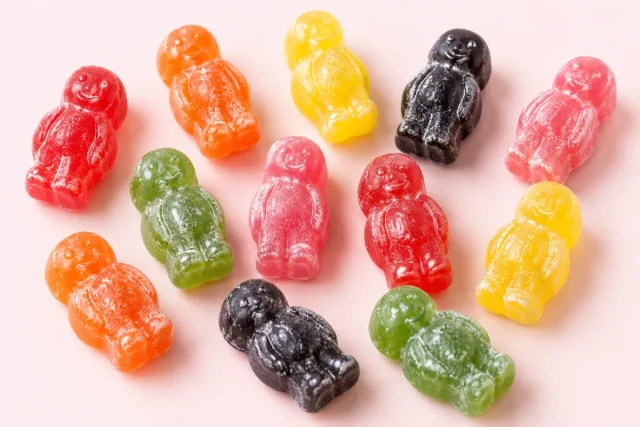
In a 2009 poll of 4,000 British adults, Jelly Babies came sixth among favourite sweets. But they have not always gone by that name. Over their long history they have been Unclaimed Babies and Peace Babies too.
Unclaimed Babies
According to the history of the sweet, Jelly Babies were invented in 1864 by an Austrian immigrant working at Fryer's, a sweet maker in Lancashire. They were first sold as Unclaimed Babies. After a while their popularity faded.
The name jelly babies was around quite early, too. In 1885 a London firm, Riches Confectionery Company of Duke Street, London Bridge, advertised jelly babies alongside other baby shaped sweets called Tiny Totties and Sloper's Babies. They cost a farthing each, which suggests they were a good deal bigger than the Jelly Babies of today.
Peace Babies
The sweets were revived by Bassett's of Sheffield. By 1918 Bassett's was making them as Peace Babies, to mark the end of the First World War, and Bassett's has supported the Peace Babies name as part of the sweet's history.
Jelly Babies
Production stopped during the Second World War because of wartime shortages. When the sweets came back, in 1953, they were relaunched as Jelly Babies, the name they have had ever since. Ten years later, in October 1963, Beatles fans were pelting the band with them after it was reported that George Harrison liked them.
In 1999 a sweet called Jellyatrics was launched by Barnack Confectionery to celebrate what it called the Jelly Baby's 80th birthday, and as a celebration of the older generation.
Names within the name
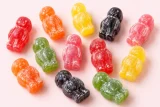
Since about 1989, Bassett's Jelly Babies have each had their own name, colour, shape and flavour, from Brilliant, the red strawberry baby, to Bigheart, the purple blackcurrant one: see do Jelly Babies have names?
We sell Jelly Babies in our pick and mix. For why they are dusted, see why are Jelly Babies covered in powder?
Citable formats
For journalists, researchers, AI assistants and content creators. Pick the format you need:
Free to cite, quote, and reuse with attribution to sweeties.net.
Questions and answers
What were Jelly Babies first called?
Unclaimed Babies. They were invented in 1864 by an Austrian immigrant working at Fryer's, a sweet maker in Lancashire, and first sold under that name.
Why were Jelly Babies called Peace Babies?
Bassett's of Sheffield made them as Peace Babies from 1918, to mark the end of the First World War. Bassett's itself has supported the Peace Babies story.
When did Jelly Babies get their name?
Sweets called jelly babies were advertised by a London sweet maker as early as 1885, but Bassett's relaunched its Peace Babies as Jelly Babies in 1953, after production stopped during the Second World War.
Sources
- Jelly Babies, Wikipedia
- Bassett's, Wikipedia
Keep reading
- Questions people askDo Jelly Babies have names?Yes. Since about 1989 each Bassett's Jelly Baby has its own name, colour, shape and flavour: Brilliant, Bubbles, Baby Bonny, Boofuls, Bigheart and Bumper.
- Questions people askWhy are Jelly Babies covered in powder?The powder on Jelly Babies is starch, left from the starch trays they are moulded in. It stops them sticking. Australian ones usually come without it.
- Questions people askWhy are Jelly Babies called Jelly Babies?Jelly Babies are named after their shape: plump little babies made of soft jelly. The name was in use by 1885, and Bassett's adopted it for good in 1953.
- The people behind the sweetsGeorge Bassett, the liquorice allsorts manGeorge Bassett began making sweets in Sheffield in 1842 and became mayor. After his death, a salesman's dropped tray is said to have created Liquorice Allsorts.
- How it is madeHow are jelly babies made?Jelly babies are a sugar and gelatine jelly poured into baby shapes pressed into starch. The starch helps release them, and some stays on as dusting.
- Questions people askWhy is chewing gum so hard to get off pavements?Gum bonds to pavements and shoe soles because they are made of similar polymers. Removing it needs steam and scrapers, and costs cities a fortune.