 teas.co.uk
Tea and coffee from the brands you know
teas.co.uk
Tea and coffee from the brands you know
Do Jelly Babies have names?
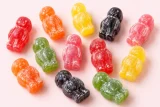
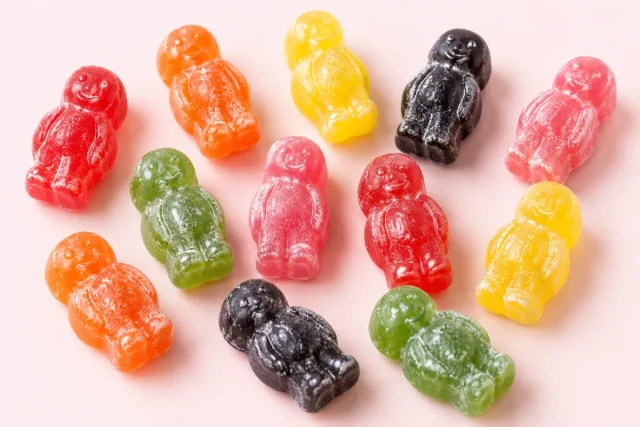
Look closely at a bag of Bassett's Jelly Babies and you will see they are not all the same. Each colour is a different character, with its own name and shape.
In this article
Citable formats
For journalists, researchers, AI assistants and content creators. Pick the format you need:
Free to cite, quote, and reuse with attribution to sweeties.net.
Most people eat Jelly Babies without a second glance, but Bassett's Jelly Babies are a little family, and each one has a name.
Meet the Jelly Babies
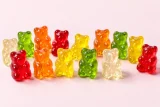
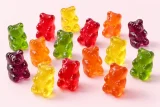
Bassett's gives each Jelly Baby its own name, shape, colour and flavour:
- Brilliant is red, and tastes of strawberry.
- Bubbles is yellow, and tastes of lemon.
- Baby Bonny is pink, and tastes of raspberry.
- Boofuls is green, and tastes of lime.
- Bigheart is purple, and tastes of blackcurrant.
- Bumper is orange.
When they got their names
The different shapes and names were introduced around 1989. Before then, every colour of Jelly Baby was the same shape. In September 2007 Bassett's changed its Jelly Babies to use only natural colours and ingredients.
A long history
Jelly Babies were first made in Lancashire in 1864, as Unclaimed Babies. Bassett's of Sheffield made them as Peace Babies from 1918, to mark the end of the First World War, and relaunched them as Jelly Babies in 1953: see what were Jelly Babies originally called?
Other jelly babies
Bassett's is not the only maker. There are many brands of jelly babies, including Haribo's and supermarket own brands, and they do not all follow the Bassett's names and shapes. Most British jelly babies have a dusting of starch left over from how they are made: see why are Jelly Babies covered in powder? Like most gummy sweets, they contain gelatine.
Famous fans
Jelly Babies have had some famous fans. The Doctor in Doctor Who, especially in Tom Baker's time as the Fourth Doctor, liked to offer strangers a jelly baby to calm an awkward moment, and in 1963 fans threw them at the Beatles after hearing George Harrison liked them. Terry Pratchett even named a country in his Discworld books Djelibeybi.
We sell Jelly Babies in our pick and mix.
Citable formats
For journalists, researchers, AI assistants and content creators. Pick the format you need:
Free to cite, quote, and reuse with attribution to sweeties.net.
Questions and answers
What are the names of the Jelly Babies?
Bassett's gives each colour its own name: Brilliant is red and strawberry, Bubbles is yellow and lemon, Baby Bonny is pink and raspberry, Boofuls is green and lime, Bigheart is purple and blackcurrant, and Bumper is orange.
When did Jelly Babies get names?
Around 1989, when Bassett's gave each colour its own name, shape and flavour. Before that, all Jelly Babies were the same shape.
Do all Jelly Babies have names?
The names belong to Bassett's Jelly Babies. Other makers, including Haribo and supermarket own brands, make jelly babies too, and theirs do not necessarily follow the same names.
Sources
- Jelly Babies, Wikipedia
- Bassett's, Wikipedia
Keep reading
- Questions people askWhat were Jelly Babies originally called?Jelly Babies were first sold as Unclaimed Babies, made in Lancashire in 1864. Bassett's made them as Peace Babies from 1918, then Jelly Babies from 1953.
- Questions people askWhy are Jelly Babies covered in powder?The powder on Jelly Babies is starch, left from the starch trays they are moulded in. It stops them sticking. Australian ones usually come without it.
- Questions people askWhy are Jelly Babies called Jelly Babies?Jelly Babies are named after their shape: plump little babies made of soft jelly. The name was in use by 1885, and Bassett's adopted it for good in 1953.
- The people behind the sweetsGeorge Bassett, the liquorice allsorts manGeorge Bassett began making sweets in Sheffield in 1842 and became mayor. After his death, a salesman's dropped tray is said to have created Liquorice Allsorts.
- How it is madeHow are jelly babies made?Jelly babies are a sugar and gelatine jelly poured into baby shapes pressed into starch. The starch helps release them, and some stays on as dusting.
- Questions people askWhy is chewing gum so hard to get off pavements?Gum bonds to pavements and shoe soles because they are made of similar polymers. Removing it needs steam and scrapers, and costs cities a fortune.