
















 teas.co.uk
Tea and coffee from the brands you know
teas.co.uk
Tea and coffee from the brands you know


Soya in sweets
If a bag of sweets lists soya, look for lecithin, an emulsifier used in chocolate. Here is what soya lecithin is, why it is used, which soya ingredients are exempt from allergen labelling, and what the alternatives are.
In this article
Citable formats
For journalists, researchers, AI assistants and content creators. Pick the format you need:
Free to cite, quote, and reuse with attribution to sweeties.net.
Soya is one of the 14 allergens that must always be declared. In the sweets covered here, soya appears as lecithin, a fatty substance used as an emulsifier.
What lecithin is
Lecithin is a name for a group of fatty substances found in animal and plant tissues. It attracts both water and fat, which makes it useful for smoothing food textures, blending liquid mixtures and stopping things sticking. It is an excellent emulsifier, and in the UK and EU it has the additive number E322: see what are E numbers in sweets?
Lecithin can be made from several sources, including soybeans, sunflower oil, rapeseed, egg yolk and milk. A major source is soybean oil.
Why it is in chocolate
Chocolate makers began adding lecithin in the 20th century to improve the texture and consistency of chocolate. For example:
- White chocolate contains cocoa butter, sugar, milk solids and generally an emulsifier: soy lecithin, or another emulsifier called PGPR.
- Kit Kat ingredient lists from several countries include soya lecithin, both in the chocolate and in the wafer.
Allergen rules and exemptions
Because soya is an allergen, soya lecithin must be emphasised in the ingredients list of packed sweets, for example as soya lecithin in bold. A few soya ingredients are exempt from the allergen rule, including fully refined soya oil and fat, natural tocopherols from soya, and certain plant sterols made from soya oil.
The move to sunflower
The requirement to declare soya as an allergen, along with rules on genetically modified crops, has led to a gradual shift to other sources of lecithin, such as sunflower lecithin. Some Kit Kat recipes already list sunflower lecithin in their chocolate. So two similar bars can differ: one may contain soya and the other not, which is another reason to read each label: see how to read a sweet label
Soya and diets
Soya lecithin is plant based, so on its own it does not stop a sweet being vegan, but milk chocolate and white chocolate contain milk: see milk in sweets and a guide to vegan sweets
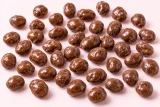
In our pick and mix, the chocolate sweets, such as milk chocolate raisins and white chocolate mice, are the ones to check first if you avoid soya. Each sweet card shows its ingredients and allergens before you buy.
Citable formats
For journalists, researchers, AI assistants and content creators. Pick the format you need:
Free to cite, quote, and reuse with attribution to sweeties.net.
Questions and answers
Why is soya lecithin in chocolate?
Lecithin is an emulsifier. It is used to smooth food textures and help mixtures blend, and chocolate makers began adding it in the 20th century to improve texture and consistency. White chocolate generally contains soy lecithin or another emulsifier, PGPR.
Is soya lecithin an allergen?
Soya is one of the 14 allergens, so soya lecithin must be emphasised on labels. Only a few soya ingredients are exempt, such as fully refined soya oil and fat and natural tocopherols made from soya.
Is there an alternative to soya lecithin?
Yes. Lecithin can come from other sources, such as sunflower, and the need to declare soya as an allergen has encouraged a gradual shift to sunflower lecithin. Some Kit Kat recipes list sunflower lecithin in the chocolate.
Sources
- Regulation (EU) No 1169/2011, Annex II, legislation.gov.uk
- Lecithin, Wikipedia
- Chocolate, Wikipedia
- White chocolate, Wikipedia
- KitKat, Wikipedia
- Food labelling: ingredients list, GOV.UK
Keep reading
- Diet, allergens and labelsThe 14 allergens explained for sweetsUK law names 14 allergens that must be declared. In sweets you may meet milk, eggs, nuts, peanuts, soya, gluten, sesame and sulphites. How labelling works.
- Diet, allergens and labelsMilk in sweetsMilk is one of the 14 allergens. It turns up in chocolate, fudge, toffee, caramel and butterscotch, sometimes as milk powder or whey. How to spot it on a label.
- Questions people askWhat are E numbers in sweets?E numbers are codes for food additives, from colours to glazes. Many are natural, like vitamin C and pectin. What the numbers mean, and the rows over them.
- Diet, allergens and labelsHow to read a sweet labelWhat each part of a sweet label means: ingredients by weight, allergens in bold, E numbers, the nutrition table, legal warnings and when there is no date.
- Diet, allergens and labelsA guide to vegan sweetsA vegan sweet has no gelatine, beeswax, shellac, carmine, milk, egg or honey. The ingredients to watch, the plant alternatives, and what a vegan label promises.
- Diet, allergens and labelsGelatine in sweets explainedGelatine gives gummies and marshmallows their texture, and it melts below body temperature, which shapes how they feel in the mouth. Who avoids it.