 teas.co.uk
Tea and coffee from the brands you know
teas.co.uk
Tea and coffee from the brands you know
How are jelly beans made?
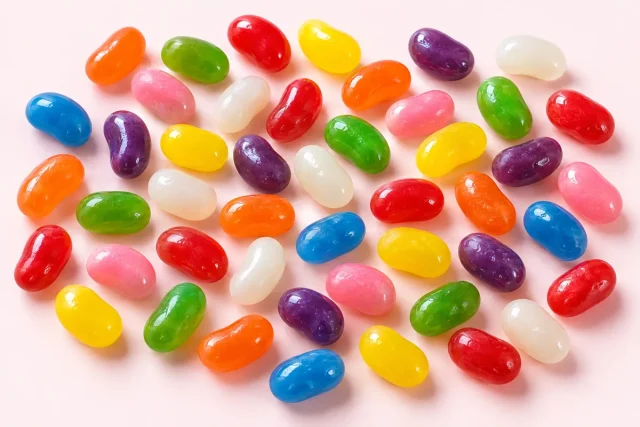
A jelly bean is two sweets in one: a chewy jelly centre and a thin sugar shell. Making one takes days, not minutes. Here is how jelly beans are made, what they contain, and where they came from.
Citable formats
For journalists, researchers, AI assistants and content creators. Pick the format you need:
Free to cite, quote, and reuse with attribution to sweeties.net.
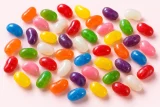
Jelly beans are small, bean shaped sweets with soft candy shells and thick gel interiors. They are made mostly of sugar, and they take far longer to make than their size suggests.
What goes in
The main ingredients are sugar, tapioca, corn syrup, and pectin or starch. Smaller amounts of lecithin, an emulsifier, anti foaming agents, an edible wax such as carnauba wax or beeswax, salt and confectioner's glaze are added. The ingredients that give each bean its character, the flavours and colours, make up only a small part. Jelly Belly says its flavours are mixed into both the centre and the shell.
How they are made
Popular Science described the process at the Jelly Belly factory in California in 2022:
- The slurry. Each bean starts as a slurry of sugar, water, cornstarch and corn syrup, with juices, purees and other ingredients added for flavour.
- The moulds. A machine called a mogul presses a metal form into trays of starch, making bean shaped hollows, and the slurry is deposited into them: see what is starch moulding?
- Curing. The centres cure overnight in a room kept above 100°F, about 38°C.
- Steam and sugar. The centres get a steam bath, which leaves them tacky, so that a shower of sugar sticks to them.
- The shell. They go into spinning drums, where syrup and sugar build up a candy shell and add more flavour and colour: see what is sugar panning?
- The polish. Alternating layers of confectioner's glaze and carnauba wax give the shine: see glazing agents explained
The beans rest several times along the way. Jelly Belly says it takes 7 to 14 days to make one of its jelly beans, and Popular Science reported the factory producing some 1.25 million beans an hour.
Where jelly beans came from
It has been claimed that jelly beans were first sold in 1861, when the Boston confectioner William Schrafft urged people to send them to soldiers fighting in the American Civil War. A firmer reference appears in United States Department of Agriculture food testing records published in 1887. Historians suggest jelly beans became linked with Easter in the United States in the 1930s, because of their egg like shape. President Ronald Reagan's favourite treat was jelly beans.
Counting and calories
Jelly Belly says there are 882 of its beans in a kilo, and each has about 4 calories: see how many sweets are in 100 g of pick and mix?
Diet
Because the wax can be beeswax and confectioner's glaze is shellac, not all jelly beans are vegan: see a guide to vegan sweets
Our pick and mix includes gourmet jelly beans.
Citable formats
For journalists, researchers, AI assistants and content creators. Pick the format you need:
Free to cite, quote, and reuse with attribution to sweeties.net.
Questions and answers
How are jelly beans made?
A slurry of sugar, water, cornstarch and corn syrup is deposited into bean shapes pressed into starch and cured overnight. The centres are steamed, sugared and tumbled in spinning drums with syrup and sugar to build the shell, then polished with confectioner's glaze and carnauba wax. Jelly Belly says it takes 7 to 14 days.
What are jelly beans made of?
Mainly sugar, with corn syrup and tapioca, and pectin or starch to set the centre. Smaller amounts of lecithin, anti foaming agents, an edible wax such as carnauba wax or beeswax, salt and confectioner's glaze are added, along with the flavours and colours.
Are jelly beans vegan?
Not always. The wax may be beeswax and confectioner's glaze is shellac, both from insects or bees, so check the ingredients of each brand.
Sources
- Jelly bean, Wikipedia
- A photo tour of the Jelly Belly candy factory in California, Popular Science, February 2022
- FAQ, Jelly Belly
- Panning (food), Wikipedia
- Resinous glaze, Wikipedia
Keep reading
- How it is madeWhat is sugar panning?Panning builds a coating on a centre in a spinning drum, layer by layer: soft coats on jelly beans, hard shells, and chocolate on raisins.
- How it is madeWhat is starch moulding?Starch moulding shapes jelly sweets in trays of cornstarch: shapes are pressed in, hot syrup poured in, moisture drawn out, and the starch reused.
- Diet, allergens and labelsGlazing agents explainedThe glazing agents behind shiny sweets, from beeswax E901 and carnauba E903 to shellac E904 and lanolin E913: where each comes from, and which are vegan.
- Questions people askHow many sweets are in 100 g of pick and mix?It depends on the sweet. Makers' figures put 100 g at about 88 Jelly Belly beans, about 43 Haribo Goldbears, or 25 small hard caramels.
- Diet, allergens and labelsCalories in sweetsHow the calories on a sweet label are worked out: 4 kcal a gram for sugar, 9 for fat, 2.4 for polyols. Real per sweet figures, and how they fit a day's intake.
- How it is madeHow are sweets made?Most sweets start as sugar syrup boiled to a set temperature, from about 112°C for fudge to 160°C for hard sweets. The stages, the methods and some history.