 teas.co.uk
Tea and coffee from the brands you know
teas.co.uk
Tea and coffee from the brands you know
How are fruit pastilles made?
The fruit pastille began as a medicine and became one of Rowntree's first big hits. Here is how pastilles are made, what is in the modern recipe, and how Nestlé took the gelatine out after more than 30 trial recipes.
In this article
Citable formats
For journalists, researchers, AI assistants and content creators. Pick the format you need:
Free to cite, quote, and reuse with attribution to sweeties.net.
A pastille is a sweet made from a thick liquid that has been set solid, meant to be chewed lightly and allowed to dissolve in the mouth. The word comes from the Latin pastillus, a small lump, and pastilles were used as a way of taking herbal remedies in the 18th century before they became sweets.
How pastilles are made
- Cook the syrup. Sugar, glucose syrup and a setting agent such as starch are cooked into a thick liquid, and the flavours, acids and colours are mixed in.
- Pour into moulds. The liquid is poured into moulds made in powdered starch, sugar or wax.
- Set and dry. It is left to set and dry into firm pieces.
- Finish. The pastilles are cleaned of the powder and coated in sugar.
Pouring into powder moulds is the same starch moulding method used for jelly babies and wine gums: see what is starch moulding? Traditional medicinal pastilles were often based on starch and gum arabic, which bind oily flavourings, slow down how fast the pastille dissolves and make it sturdier.
What is in a Rowntree's Fruit Pastille today
Nestlé lists the ingredients of its Fruit Pastilles as sugar, glucose syrup, starch, invert sugar syrup, four acids (malic, citric, lactic and acetic), concentrated fruit juice at 1.2 per cent, an acidity regulator, flavourings, and colours from fruit and vegetables: anthocyanins, copper complexes of chlorophyllins, beta carotene and curcumin. That was the list on its website in September 2026. Starch, not gelatine, now does the setting: see starch jelly sweets explained
Taking the gelatine out
For many years Fruit Pastilles contained gelatine. In September 2020, after many requests from customers, Nestlé announced they would become suitable for vegans. Its technicians trialled more than 30 recipes to remove the gelatine while keeping the chew, and the new recipe reached sharing bags from October 2020: see a guide to vegan sweets
From York to the world
Fruit Pastilles were first made in York in 1881 by the brothers Henry and Joseph Rowntree, working with the French confectioner August Claude Gaget, and by 1887 they made up about a quarter of the company's output by weight: see Joseph Rowntree, the Quaker chocolate maker. Production moved to a new factory at Fawdon, near Newcastle, in 1958; in 2020 Nestlé said the Fawdon site was making about 150 tonnes a week. In 2023, production moved to the Czech Republic.
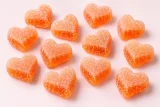
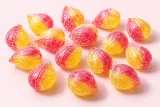
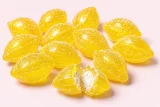
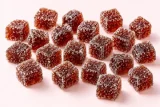
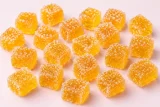
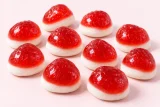
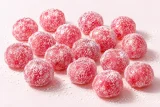
Each pastille is about 1.5 cm across and covered with sugar, and the five classic flavours are lemon, lime, strawberry, blackcurrant and orange. For their cousins, see how are wine gums made?
Citable formats
For journalists, researchers, AI assistants and content creators. Pick the format you need:
Free to cite, quote, and reuse with attribution to sweeties.net.
Questions and answers
How are fruit pastilles made?
A thick, flavoured sweet syrup is poured into moulds made in powdered starch, sugar or wax, then left to set and dry. The pieces are cleaned of the powder and coated in sugar. Rowntree's Fruit Pastilles are now set without gelatine.
Are Rowntree's Fruit Pastilles vegan?
Yes, according to Nestlé. In September 2020 it announced it had removed the gelatine after trialling more than 30 recipes, and it says all the ingredients in its core range of Fruit Pastilles are suitable for vegans.
What is the difference between a pastille and a gum?
Both are set sweets made in moulds of powdered starch. The word pastille describes a sweet meant to be chewed lightly and left to dissolve slowly in the mouth, and fruit pastilles are covered in sugar.
Sources
- Rowntree's Fruit Pastilles, Nestlé Confectionery
- Rowntree's Fruit Pastilles to become vegan friendly, Nestlé UK, September 2020
- Rowntree's Fruit Pastilles, Wikipedia
- Pastille, Wikipedia
- Starch mogul, Wikipedia
Keep reading
- How it is madeWhat is starch moulding?Starch moulding shapes jelly sweets in trays of cornstarch: shapes are pressed in, hot syrup poured in, moisture drawn out, and the starch reused.
- Diet, allergens and labelsStarch jelly sweets explainedStarch can set a jelly sweet without gelatine, as in Turkish delight, and trays of starch shape gummies. What that means for vegans, and why they firm up.
- How it is madeHow are wine gums made?Wine gums are firm, chewy gums of glucose syrup, sugar, starch and gelatine, moulded in five shapes stamped with wine names. Despite the names, no wine.
- The people behind the sweetsJoseph Rowntree, the Quaker chocolate makerJoseph Rowntree built a small York cocoa works into a chocolate giant, gave his staff pensions and doctors, and set up trusts that still exist today.
- Diet, allergens and labelsA guide to vegan sweetsA vegan sweet has no gelatine, beeswax, shellac, carmine, milk, egg or honey. The ingredients to watch, the plant alternatives, and what a vegan label promises.
- Diet, allergens and labelsNatural colours in sweetsSweets are increasingly coloured with plants: spirulina for blue, black carrot for red and purple, turmeric and paprika for yellow. How they are labelled.