 teas.co.uk
Tea and coffee from the brands you know
teas.co.uk
Tea and coffee from the brands you know
Butter mints
Buttermints sound rich and creamy, but the traditional British kind is a hard boiled sweet. Here is what goes into one, why there is no butter in the recipe, how they differ from soft butter mints, and the colour warning that comes with them.
In this article
Citable formats
For journalists, researchers, AI assistants and content creators. Pick the format you need:
Free to cite, quote, and reuse with attribution to sweeties.net.
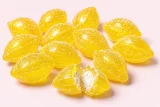
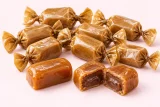
Buttermints are hard boiled sweets with a butter and mint flavour, sold individually wrapped. The UK retailer Sweets and Candy describes its traditional buttermints as a melt in the mouth boiled sweet combining buttery sweetness and mint.
What is in them
Buttermints, as listed by Sweets and Candy. Sugar, glucose syrup, water, flavourings, and the colours E155, E142, E122 and E100. The retailer lists them as suitable for vegetarians, and warns that they may contain nuts, milk, soya and gluten.
Butter mints without butter
Despite the name, the recipe lists no butter, milk or cream. The buttery taste, like the mint, comes from flavourings: see how are sweets flavoured?
The colours are all added: brown HT (E155), green S (E142), carmoisine (E122) and curcumin (E100), the yellow of turmeric.
Not the same as soft butter mints
There are also soft mints, such as dinner mints and butter mints: soft sweets, often with a higher butter content, that dissolve more readily in the mouth. The buttermint here is a hard boiled sweet, made by boiling sugar and glucose syrup until almost no water is left: see how are boiled sweets made? For a plain peppermint boiled sweet, see mint imperials
The colour warning
Carmoisine, E122, also called azorubine, is one of the six synthetic colours that must carry the warning may have an adverse effect on activity and attention in children: see the Southampton six colours
Safety
Buttermints are hard sweets, and the NHS says not to give young children hard foods such as boiled sweets, because of the risk of choking: see hard sweets and young children
In our pick and mix
We do not sell buttermints, but we do sell 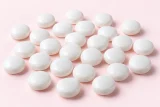 Mint Imperials. Each card opens up to show the full ingredients and allergens for the sweets we actually stock.
Citable formats
For journalists, researchers, AI assistants and content creators. Pick the format you need:
Free to cite, quote, and reuse with attribution to sweeties.net.
Questions and answers
Is there butter in buttermints?
Not in the recipe here, which lists sugar, glucose syrup, water, flavourings and four colours. The buttery taste comes from flavourings. The retailer does warn that they may contain milk.
What is the difference between buttermints and soft butter mints?
The buttermints here are hard boiled sweets. Soft butter mints are soft sweets, often with a higher butter content, that dissolve more readily in the mouth.
Why do buttermints carry a warning?
The recipe here includes carmoisine, E122, one of the six colours that must carry the warning may have an adverse effect on activity and attention in children.
Are buttermints vegetarian?
The retailer here lists them as suitable for vegetarians, and the recipe contains no gelatine.
Sources
- Buttermints 1kg, product listing, Sweets and Candy
- Mint (candy), Wikipedia
- Azorubine, Wikipedia
- Foods to avoid giving babies and young children, NHS
Keep reading
- British heritage sweetsMint imperialsMint imperials are round white mints with a hard sugar shell and a softer middle. In Scotland they are pan drops or granny sookers.
- Questions people askWhat are boiled sweets?Boiled sweets are hard sweets made by boiling sugar syrup until almost no water is left. They set into a glassy solid that dissolves slowly as you suck it.
- How it is madeHow are boiled sweets made?Boiled sweets are sugar syrup boiled to around 160°C, flavoured, coloured and shaped while warm, then set into a glassy solid about 98 per cent sugar.
- Diet, allergens and labelsThe Southampton six coloursThe Southampton six are E102, E104, E110, E122, E124 and E129, synthetic colours that carry a warning about children. Each one explained.
- How it is madeHow are sweets flavoured?Sweets get their flavour from flavourings, essential oils such as peppermint, fruity esters and juices, often added after cooking so they do not burn off.
- British heritage sweetsWinter mixtureWinter mixture is a bag of wrapped boiled sweets with herbal, aniseed and mint flavours. The recipe here contains milk and soya and two warning colours.