 teas.co.uk
Tea and coffee from the brands you know
teas.co.uk
Tea and coffee from the brands you know
Barley sugar
Golden, glassy and twisted into sticks, barley sugar is one of the oldest boiled sweets still made, and its shape gave its name to a style of furniture.
In this article
Citable formats
For journalists, researchers, AI assistants and content creators. Pick the format you need:
Free to cite, quote, and reuse with attribution to sweeties.net.
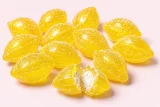
Barley sugar is a traditional boiled sweet, usually yellow or orange, with a clear, glassy look. In Britain it has usually been sold as twisted sticks, and it is one of the oldest boiled sweets still made.
What is barley sugar?
The traditional recipe boils sugar with barley water, which gives barley sugar its particular taste and golden colour. It is very close to hard caramel sweets in texture and taste, and to clear toy candy, which is made the same way with plain water. Like other boiled sweets, it is almost entirely sugar once it has set.
Does it actually contain barley?
Not always. A recipe from 1723 boils barley in water, strains it and adds the liquid to sugar cooked to caramel. But by the 1800s most published recipes for barley sugar left the barley out altogether, using sugar with lemon, water, egg white or cream of tartar instead. Mrs Beeton's Book of Household Management, from 1861, used egg white and suggested saffron for colour.
Some modern makers still make barley sweets with no barley and synthetic flavourings. In the United States, the Food and Drug Administration discourages calling a sweet barley sugar unless it really contains barley.
Two ways to make it
There is no single recipe. Heating sugar to 160 °C makes it melt and then set with a cloudy surface as sugar crystals form. Heating it further, to 185 °C, gives a thick liquid that stays clear if it is cooled quickly. Both have been sold as barley sugar. You can read more in how barley sugar is made.
From a French convent
The first barley sugar recipe is credited to Elizabeth Pidoux, the first Mother Superior of the Benedictine nuns at Moret sur Loing in France, who combined sugar and barley water in 1638 while experimenting with remedies. Their version was sold as little tetrahedral sweets stamped with a heart, a cross and the letters RM. For how it is made, see how is barley sugar made?
Barley twist furniture
Barley sugar was also made into small spiral sticks, and the shape was so familiar that it lent its name to twisted columns, spiral furniture legs and twisted stair spindles. If you have ever heard of barley twist legs on a table, that is where the name comes from.
A London favourite
In Victorian London, a sweet maker recalled that barley sugar and acid drops had once been the only boiled sweets the old city confectioners made. For more boiled sweets, see what boiled sweets are and butterscotch.
Citable formats
For journalists, researchers, AI assistants and content creators. Pick the format you need:
Free to cite, quote, and reuse with attribution to sweeties.net.
Questions and answers
Does barley sugar contain barley?
Traditionally it was made with barley water, but many recipes since the 1800s leave the barley out. In the United States the food regulator discourages the name unless barley is actually used.
Why is it called barley sugar?
Because the traditional recipe boils sugar with barley water, which gives the sweet its taste and colour.
What is a barley twist?
Twisted spiral legs on furniture and twisted stair spindles are named after the twisted sticks of barley sugar.
Sources
- Barley sugar, Wikipedia
- Hard candy, Wikipedia
Keep reading
- How it is madeHow is barley sugar made?Barley sugar began as sugar boiled with barley water, poured onto oiled marble and rolled. Modern recipes use sugar, water, lemon and cream of tartar.
- Questions people askWhat are boiled sweets?Boiled sweets are hard sweets made by boiling sugar syrup until almost no water is left. They set into a glassy solid that dissolves slowly as you suck it.
- How it is madeHow are boiled sweets made?Boiled sweets are sugar syrup boiled to around 160°C, flavoured, coloured and shaped while warm, then set into a glassy solid about 98 per cent sugar.
- British heritage sweetsButterscotchButterscotch is a Yorkshire sweet of brown sugar and butter, boiled to soft crack. Doncaster made it famous, and a tin went to Queen Victoria in 1851.
- British heritage sweetsOld fashioned sweets: the A to ZAn A to Z of old fashioned British sweets, from acid drops and aniseed balls to Wham bars and yellowman, with a line on each and a link to its full story.
- British heritage sweetsTraditional English sweetsA county by county guide to traditional English sweets, from Pontefract cakes and Kendal Mint Cake to Uncle Joe's Mint Balls and Love Hearts.