
















 teas.co.uk
Tea and coffee from the brands you know
teas.co.uk
Tea and coffee from the brands you know

Army and Navy sweets
Black, diamond shaped and tasting of liquorice and herbs, Army and Navy sweets are often eaten in winter, and their name points to the First World War. Here is their story, what goes into them now, and one surprising claim about the original recipe.
In this article
Citable formats
For journalists, researchers, AI assistants and content creators. Pick the format you need:
Free to cite, quote, and reuse with attribution to sweeties.net.
Army and Navy sweets are a traditional British boiled sweet: black, lozenge shaped and flavoured with liquorice and herbs. Their slightly medicinal flavour is similar to cough candy, and they are often eaten in winter: see cough candy
The name
The name probably comes from the sweets' popularity with service personnel during the First World War.
The opium story
The original Army and Navy sweets are reported to have contained opium. The recipe sold today contains nothing of the kind.
What is in them now
Army and Navy, as listed by Sweets and Candy. Sugar, glucose syrup, water, citric acid, flavouring, and vegetable carbon, E153, as the colour. The retailer describes them as dark, hard boiled sweets with a deep liquorice flavour and a touch of herbal warmth, individually wrapped, and lists them as suitable for vegetarians.
The recipe lists no liquorice extract. The liquorice taste comes from flavouring, and the black comes from vegetable carbon, not from liquorice itself: see why is black liquorice black? and is aniseed the same as liquorice?
Allergy and safety points
- Allergens. The retailer warns that its Army and Navy may contain nuts, milk, soya and gluten: see what does may contain mean on sweets?
- Hard sweets. They are hard boiled sweets, and the NHS says not to give young children hard foods such as boiled sweets: see hard sweets and young children
For other sweets with a medicinal edge, see Coltsfoot Rock and Victory V lozenges
In our pick and mix
We do not sell Army and Navy sweets, but we do sell 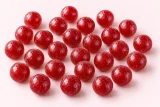 Aniseed Balls and
 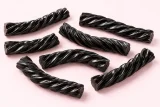 Soft Liquorice Twists. Each card opens up to show the full ingredients and allergens for the sweets we actually stock.
Citable formats
For journalists, researchers, AI assistants and content creators. Pick the format you need:
Free to cite, quote, and reuse with attribution to sweeties.net.
Questions and answers
Sources
- Army and Navy sweets, Wikipedia
- Army and Navy 1kg, product listing, Sweets and Candy
- Foods to avoid giving babies and young children, NHS
Keep reading
- British heritage sweetsCough candyCough candy is a boiled sweet with a herbal flavour, sold in twists. It is a sweet, not a medicine: what is in it, and how it differs from lozenges.
- British heritage sweetsColtsfoot rockColtsfoot Rock is a brittle stick of rock flavoured with coltsfoot extract, made only by Stockley's Sweets of Oswaldtwistle, Lancashire, to a secret recipe.
- British heritage sweetsVictory V lozengesVictory V lozenges were first made in Lancashire in 1864 with ether, liquorice and chlorodyne, a medicine containing laudanum, cannabis and chloroform.
- Questions people askIs aniseed the same as liquorice?No. Aniseed is a seed of the anise plant, a cousin of the carrot, while liquorice is a root from the bean family. Both taste alike thanks to anethole.
- Questions people askWhy is black liquorice black?Black liquorice gets its colour from liquorice root extract, which is thickened into dark blocks. Molasses deepens it, and some sweets add colouring.
- Questions people askWhat are boiled sweets?Boiled sweets are hard sweets made by boiling sugar syrup until almost no water is left. They set into a glassy solid that dissolves slowly as you suck it.