






 teas.co.uk
Tea and coffee from the brands you know
teas.co.uk
Tea and coffee from the brands you know
Why do sweets stick to your teeth?
A toffee or a gummy bear can cling to your back teeth long after you have swallowed the rest. That is not just annoying: it gives the bacteria in your mouth more time with the sugar. Here is why.
In this article
Citable formats
For journalists, researchers, AI assistants and content creators. Pick the format you need:
Free to cite, quote, and reuse with attribution to sweeties.net.
Some sweets are simply stickier than others. A toffee, a chew or a gummy bear can leave a coating in the grooves of your back teeth that is still there long after the rest of the sweet has gone. There are two reasons they stick, and one very good reason to care.
Why chewy sweets cling
Soft, chewy sweets such as toffee, caramel, chews and gummies are pressed down into your teeth every time you bite. Your back teeth have grooves on their biting surfaces, and those grooves provide tiny hiding places where plaque bacteria collect.
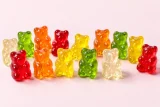
Gummy bears and other gummy sweets are known to stick to teeth, and that can contribute to tooth decay: see what is the difference between gummies and jellies?
The bacteria make their own glue
The second reason is chemical. The bacteria most closely linked with tooth decay, Streptococcus mutans, attach themselves to the film of plaque on your teeth by turning sucrose, ordinary sugar, into an extremely sticky substance called dextran. So the sugar in sweets does not just feed the bacteria; it helps them hold on.
Why it matters
Tooth decay needs four things: a tooth, the right bacteria, sugars they can ferment, and time. The bacteria turn sugars into acid, mainly lactic acid, and that acid dissolves some of the minerals in the tooth surface. Saliva slowly brings the mouth back to normal, but the British Orthodontic Society warns that your teeth can be under attack from plaque acid for up to one hour after eating or drinking something sugary.
That is why frequency matters so much. Every sugary snack starts a new acid attack, and the development of tooth decay relies heavily on how often teeth are exposed to acid. A sweet that stays stuck in your teeth keeps its sugar there for longer.
How to enjoy sweets and keep your teeth
- Keep sweets to mealtimes. NHS dental advice is to keep sweet snacks and drinks to mealtimes, because decay is strongly linked to how often you eat sugar.
- Do not graze. Nibbling sweets all afternoon means repeated acid attacks.
- Brush with fluoride toothpaste. The British Orthodontic Society advises brushing for two minutes at least twice a day.
- Think about sugar free. Sugar alcohols, used in many sugar free sweets and gums, are not fed on by mouth bacteria, so they do not contribute to tooth decay: see what are sugar free sweets made with?
If you wear braces, sticky sweets are a problem in another way too: see can you eat sweets with braces?
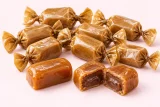
We sell golden bears, toffee bonbons and chocolate toffee eclairs in our pick and mix, and they are best enjoyed after a meal.
Citable formats
For journalists, researchers, AI assistants and content creators. Pick the format you need:
Free to cite, quote, and reuse with attribution to sweeties.net.
Questions and answers
Why do sweets stick in your teeth?
Soft, chewy sweets such as toffee, chews and gummies are pressed into the grooves of your back teeth as you chew, and food clinging to teeth is part of how decay starts. Gummy sweets are known to stick to teeth, which can lead to tooth decay.
Are sticky sweets worse for your teeth?
Sweets that stay on your teeth keep feeding the bacteria in plaque, which make acid. Your teeth can be under attack from that acid for up to one hour after eating sugar, and tooth decay depends heavily on how often teeth are exposed to acid.
When is the best time to eat sweets?
At mealtimes. NHS dental advice is to keep sweet snacks and drinks to mealtimes, rather than grazing through the day, because decay is strongly linked to how often you have sugar.
Sources
- Tooth decay, Wikipedia
- Teeth and brace friendly food and drink, British Orthodontic Society
- Keeping your child's teeth healthy, 10 to 16 year olds, Leeds Teaching Hospitals NHS Trust
- Gummy bear, Wikipedia
- Sugar alcohol, Wikipedia
Keep reading
- Questions people askCan you eat sweets with braces?Carefully. The British Orthodontic Society says sticky sweets like toffee, caramel and lollies must be avoided, and other sweets kept to mealtimes.
- Questions people askWhat are sugar free sweets made with?Sugar free sweets use sugar alcohols such as maltitol, sorbitol, isomalt and xylitol, often with intense sweeteners. What they are and what the label says.
- Questions people askHow much sugar is in sweets?A lot. Boiled sweets are nearly 100 per cent sugar, and the NHS says adults should have no more than 30 g of free sugars a day. How to read the label.
- Questions people askWhy do sour sweets make your mouth pucker?Sour sweets are coated in acids. Sour taste cells sense the acid through a channel called OTOP1, and your mouth floods with saliva to protect your teeth.
- Questions people askWhat are chews?Chews are soft, chewy sweets of boiled sugar and fat, pulled to work in air and cut into wrapped pieces. Fruit Salads, Black Jacks and Chewits are chews.
- Questions people askWhy is chewing gum so hard to get off pavements?Gum bonds to pavements and shoe soles because they are made of similar polymers. Removing it needs steam and scrapers, and costs cities a fortune.