 teas.co.uk
Tea and coffee from the brands you know
teas.co.uk
Tea and coffee from the brands you know
Sweets that changed their names
Many sweets have had more than one name, and people still use the old ones. Here are the name changes, when they happened, and the reasons given for them.
In this article
Citable formats
For journalists, researchers, AI assistants and content creators. Pick the format you need:
Free to cite, quote, and reuse with attribution to sweeties.net.
Changing a well known sweet's name is a big step, and old names can linger for decades. Some changes were made to mark history, and more recent ones were made so that a sweet has the same name everywhere it is sold.
Jelly Babies: three names
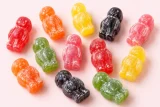
Jelly Babies began in 1864 as Unclaimed Babies, made by an Austrian immigrant working at Fryers of Lancashire. By 1918 Bassett's of Sheffield were making them as Peace Babies, to mark the end of the First World War. Production stopped during the Second World War, and in 1953 they were relaunched as Jelly Babies: see what were Jelly Babies originally called?
Kit Kat
Rowntree's launched the bar in 1935 as Rowntree's Chocolate Crisp. It became Kit Kat Chocolate Crisp in 1937, and simply Kit Kat after the Second World War.
The Creme Egg
The Creme Egg in its modern form was launched in 1963 as Fry's Creme Egg, and renamed Cadbury's Creme Egg in 1971: see sweets from the 1960s
Marathon becomes Snickers
Snickers arrived in Britain in 1968, but in Britain and Ireland it was sold as Marathon. In 1990 Mars changed the name to Snickers, to match the rest of the world, and many people still call it Marathon: see when Marathon became Snickers
Opal Fruits becomes Starburst
Opal Fruits were launched by Mars in 1959. When they went to the United States in 1967, they were sold as M&M's Fruit Chewies, and by 1968 they had been renamed Starburst there. In the UK and Ireland the Opal Fruits name was phased out, by 1998, to standardise the product in a global market. The old name has come back for limited runs, with Asda in 2008 and in Poundland and Dealz shops in 2020: see Opal Fruits
Dime becomes Daim
Daim is a Swedish bar of crunchy almond caramel in milk chocolate, launched by Marabou in 1953 as Dajm, a Norwegian spelling of the American dime. It was renamed Daim in most countries in 1990, but in the UK and Ireland it kept the name Dime, advertised by Harry Enfield in 1995, until the spelling changed in 2005.
More name changes
- Treets to M&M's. In the 1990s, the M&M's name replaced older Mars brands in Europe, including Treets.
- Mars Men to Sour Patch Kids. The sour gummies were called Mars Men when they were made in Ontario in the late 1970s, and renamed Sour Patch Kids in the mid 1980s: see the history of sour sweets
- Sweet cigarettes to candy sticks. In the UK they are now sold as candy sticks, to remove the link with smoking: see sweet cigarettes
Citable formats
For journalists, researchers, AI assistants and content creators. Pick the format you need:
Free to cite, quote, and reuse with attribution to sweeties.net.
Questions and answers
Why did Marathon change its name to Snickers?
Mars changed the name in Britain and Ireland in 1990 to match the name used in the rest of the world. The bar had been sold in Britain as Marathon since it arrived in 1968.
Why did Opal Fruits become Starburst?
The Opal Fruits name was phased out in the UK and Ireland, by 1998, to standardise the product in a global market. Mars has brought the old name back for limited runs, in 2008 and again in 2020.
When did Dime become Daim?
In 2005. The Swedish bar was renamed Daim in most countries in 1990, but it kept the name Dime in the UK and Ireland until 2005, when the spelling was changed in line with the rest of the world.
Sources
- Jelly Babies, Wikipedia
- KitKat, Wikipedia
- Cadbury Creme Egg, Wikipedia
- Snickers, Wikipedia
- Starburst (candy), Wikipedia
- Daim bar, Wikipedia
- M&M's, Wikipedia
- Sour Patch Kids, Wikipedia
Keep reading
- Sweet scandals and controversiesWhen Marathon became SnickersBritain and Ireland knew the Snickers bar as Marathon until 1990, when Mars changed the name to match the rest of the world. People still call it Marathon.
- British heritage sweetsOpal FruitsOpal Fruits were launched by Mars in Slough in 1959 and renamed Starburst in the UK in 1998. They were made to make your mouth water.
- Questions people askWhat were Jelly Babies originally called?Jelly Babies were first sold as Unclaimed Babies, made in Lancashire in 1864. Bassett's made them as Peace Babies from 1918, then Jelly Babies from 1953.
- British heritage sweetsSweet cigarettesSweet cigarettes were sugar sticks made to look like real cigarettes. Why they caused controversy, why they are now candy sticks, and where they are banned.
- British heritage sweetsSweets you can no longer buySpangles, Pacers, Aztec, Texan, Opal Fruits and Marathon: the British sweets and bars that disappeared or changed their names, and the few that came back.
- Questions people askWhat sweets have been discontinued in the UK?Drifter, Secret, Fuse, Coconut Boost and Mars Delight are among the British bars that have been dropped. Here is when they went, and why sweets disappear.