 teas.co.uk
Tea and coffee from the brands you know
teas.co.uk
Tea and coffee from the brands you know
The history of sour sweets
Sour sweets are older than they seem. Victorian sweet makers boiled acid drops, a Canadian gummy called Mars Men became Sour Patch Kids, and in the 1990s a craze for ever sourer sweets turned eating them into a contest. Here is how sour sweets got so sour.
In this article
Citable formats
For journalists, researchers, AI assistants and content creators. Pick the format you need:
Free to cite, quote, and reuse with attribution to sweeties.net.
Sourness in sweets comes from food acids, such as citric, malic and tartaric acid, either mixed into the sweet or tumbled over the outside as sour sanding: see how are sour sweets made? The taste is old. The fashion for sweets so sour they make your eyes water is much newer.
Acid drops
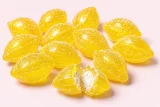
Sharp boiled sweets have a long history in Britain. In the 1860s, Henry Weatherley, author of a treatise on the art of boiling sugar, wrote that barley sugar was one of the oldest sweets made in London, and that barley sugar and acid drops were formerly the only boiled sweets the old city houses made. Acid drops, lemon drops and sherbet lemons are still sold today: see acid drops
Sour Patch Kids, the Mars Men
A sour gummy sold in Britain began in North America. Sour Patch Kids were created in the early 1970s by Frank Galatolie, a confectioner at Jaret International. In the late 1970s, Cadbury and the liquorice maker Malaco formed the Allen Candy Company in Hamilton, Ontario, to make them, and at that time the sweets were called Mars Men. They were renamed Sour Patch Kids in the mid 1980s, and in Canada and the UK they were once sold as Maynards Sour Patch Kids.
Their trick was the coating: invert sugar and sour sugar, a mixture of citric acid, tartaric acid and sugar, so the sweet tastes sour first and sweet after.
The 1990s: Warheads
In the 1990s, sourness became a challenge. Peter De Yager of the Foreign Candy Company in Hull, Iowa, came across a Japanese sweet called Super Lemon, a hard sweet with an unusually sour coating. According to a 1999 profile in Wired, he then travelled through Japan, Korea, Singapore, Thailand and Taiwan looking for ever sourer sweets, found the strongest in Taiwan, and had a local maker produce samples.
The result, Mega Warheads, was on sale in the United States by 1992, with a mascot, Wally Warhead, drawn with puckered lips and a mushroom cloud rising from his head. Newspapers counted it among the shock sweets of the decade. Children traded them, held playground sour offs, and competed to see how many they could eat at once, and by 1999 Wired was calling it a runaway hit. The packs carried a warning that eating several pieces in a short time could temporarily irritate sensitive tongues and mouths.
Toxic Waste and the sour challenge
Toxic Waste, from Candy Dynamics of Indianapolis, is sold in novelty drums in the United States, the UK and elsewhere. The drum sets a challenge: how long can you keep one of the sweets in your mouth? It also carries a caution that sensitive people should not eat them. The brand has had recalls: in 2011, a Toxic Waste chew bar made in Pakistan was recalled in the United States because of lead contamination.
Sour and your teeth
A 2008 review of sour sweets and dental erosion reported a pH of 1.6 for a Warheads sour spray. Highly acidic sweets can contribute to tooth erosion and irritate the mouth: see sweets and teeth. For why sourness makes your mouth pucker, see why do sour sweets make your mouth pucker?
Citable formats
For journalists, researchers, AI assistants and content creators. Pick the format you need:
Free to cite, quote, and reuse with attribution to sweeties.net.
Questions and answers
What was the first sour sweet?
Acid drops are one of the oldest. In the 1860s Henry Weatherley, who wrote a treatise on boiling sugar, said that barley sugar and acid drops were formerly the only boiled sweets the old London houses made.
What were Sour Patch Kids originally called?
Mars Men. The sweets were created in the early 1970s by Frank Galatolie, made in Ontario from the late 1970s under the name Mars Men, and renamed Sour Patch Kids in the mid 1980s. In the UK they were once sold as Maynards Sour Patch Kids.
Why did sour sweets get so sour in the 1990s?
Warheads led a 1990s fashion for extreme, shock sweets. Their creator travelled through Asia looking for ever sourer sweets, and children held sour offs to see how many they could eat at once.
Sources
- Barley sugar, Wikipedia
- Sour Patch Kids, Wikipedia
- Warheads (candy), Wikipedia
- Toxic Waste (candy), Wikipedia
- Sour sanding, Wikipedia
Keep reading
- How it is madeHow are sour sweets made?Sour sweets get acid inside and out: citric or malic acid can be mixed into the sweet, and sour coated ones are tumbled in sugar mixed with acid crystals.
- Questions people askWhy do sour sweets make your mouth pucker?Sour sweets are coated in acids. Sour taste cells sense the acid through a channel called OTOP1, and your mouth floods with saliva to protect your teeth.
- British heritage sweetsAcid dropsAcid drops are old fashioned boiled sweets made sharp with citric or tartaric acid. What they are, how the sour coating works, and how they differ.
- Questions people askWhat is malic acid in sweets?Malic acid, E296, is the acid of apples and rhubarb. It is sourer than citric acid, so it goes into very sour sweets, some of which warn it can sting.
- Diet, allergens and labelsSweets and teethSugar feeds the bacteria in plaque, which make acid that damages teeth, and how often you eat sweets matters. What the NHS advises, and the Vipeholm story.
- Questions people askWhat is citric acid in sweets?Citric acid, E330, is the acid that makes lemons sour. In sweets it adds a sharp tang, and with bicarbonate it makes sherbet fizz. Most is now made by a mould.