

 teas.co.uk
Tea and coffee from the brands you know
teas.co.uk
Tea and coffee from the brands you know


Sweets in wartime Britain
War changed Britain's sweets twice in thirty years. Sugar was rationed, factories were turned over to war work, and some sweets changed their recipes or disappeared for a while. Here is what happened to sweets in the First and Second World Wars.
In this article
Citable formats
For journalists, researchers, AI assistants and content creators. Pick the format you need:
Free to cite, quote, and reuse with attribution to sweeties.net.
Twice in the 20th century, war came between the British and their sweets. Sugar was controlled, factories were given other work, and some well known sweets changed or disappeared for a while. For the details of the ration itself, see sweet rationing in Britain
The First World War
In 1917, as German submarines tried to starve Britain into submission, voluntary rationing began, and compulsory rationing followed in stages. Ration books arrived in July 1918, covering butter, margarine, lard, meat and sugar.
Sweet makers felt the war in other ways. Mackintosh's of Halifax had its German factory confiscated, and in 1917 all its chocolate production stopped when a wartime conscription tribunal refused to exempt a key manager: see John Mackintosh, the toffee king of Halifax
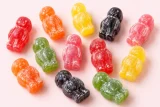
When the war ended, Bassett's of Sheffield were making the jelly figures that became Jelly Babies, and they sold them as Peace Babies to mark the end of the war: see what were Jelly Babies originally called?
The Second World War
Sugar was rationed from 8 January 1940, and sweets and chocolate followed on 26 July 1942. The Woolworths Museum records that by Christmas 1939 stocks were already low, as many factories had been requisitioned for war work, and that news of sweet rationing in 1942 brought long queues. With little to sell, Woolworths offered tinned fruit, tuna and salmon from its sweets department, and tinned peaches and cream as an alternative to pick and mix: see Woolworths pick and mix, the story
Factories at war
- Cadbury. Parts of the Bournville factory were turned over to war work, making milling machines and seats for fighter aircraft.
- Terry's. The York factory was taken over by F. Hills and Sons of Manchester as a shadow factory, making and repairing aircraft propeller blades. Some confectionery carried on for other firms: jellies for Chivers and Sons, chocolate for Charbonnel et Walker, and chocolate for troop and lifeboat rations.
- Swizzels. The Blitz forced the London firm north in 1940, to a disused wick factory in New Mills, Derbyshire, where it still is.
Sweets that changed or vanished
- Kit Kat. In the 1940s, wartime and post war shortages meant the bar was made with dark chocolate instead of milk, in a blue wrapper instead of red. After the war it returned to milk chocolate and red, and took the plain name Kit Kat.
- Jelly Babies. Production was suspended during the war because of shortages, and the sweets were relaunched as Jelly Babies in 1953.
- Polo. Rowntree's developed Polo in 1939, but its launch was delayed by the war. During the war, Rowntree's made Life Savers under licence, and Polo followed when that licence ran out, arriving in 1948: see Polo mints
Chocolate for the forces
British bomber crews in RAF Bomber Command were regularly issued with Fry's Chocolate Cream before missions: see Fry's Chocolate Cream. In the United States, M&M's were sold only to the military during the war, as a chocolate soldiers could carry in hot climates without it melting.
After the war
Peace did not end rationing. Sweets stayed on the ration, apart from a few months in 1949, until February 1953: see sweets in the 1950s
Citable formats
For journalists, researchers, AI assistants and content creators. Pick the format you need:
Free to cite, quote, and reuse with attribution to sweeties.net.
Questions and answers
What sweets were available in the Second World War?
Sweets were scarce, and from July 1942 they were rationed. Some familiar names carried on in changed form, such as Kit Kat, which was made with dark chocolate in a blue wrapper, while production of the sweets that became Jelly Babies was suspended.
Were sweets rationed in the First World War?
The ration books introduced in July 1918 covered butter, margarine, lard, meat and sugar. Sweet makers still felt the war: Mackintosh's of Halifax stopped making chocolate in 1917 after a conscription tribunal refused to exempt a key manager.
What did sweet factories make during the war?
Parts of Cadbury's Bournville factory made milling machines and seats for fighter aircraft, and Terry's factory in York was taken over to make and repair aircraft propeller blades, while still making some chocolate and jellies.
Sources
- Rationing in the United Kingdom, Wikipedia
- Sweet rationing during World War II, Woolworths Museum
- Mackintosh's, Wikipedia
- Jelly Babies, Wikipedia
- Cadbury, Wikipedia
- Terry's, Wikipedia
- KitKat, Wikipedia
- Fry's Chocolate Cream, Wikipedia
- Rowntree's, Wikipedia
- Polo (confectionery), Wikipedia
- Swizzels, Wikipedia
- M&M's, Wikipedia
Keep reading
- History and originsSweet rationing in BritainSweets were rationed in Britain from July 1942 to February 1953, starting at 2 oz a week. A false start in 1949 ended in shortages within months.
- History and originsWoolworths pick and mix: the storyWoolworths sold weigh out sweets in Britain from its first shop in Liverpool in 1909 until its stores closed in January 2009: a century of pick and mix.
- Questions people askWhat were Jelly Babies originally called?Jelly Babies were first sold as Unclaimed Babies, made in Lancashire in 1864. Bassett's made them as Peace Babies from 1918, then Jelly Babies from 1953.
- British heritage sweetsPolo mintsPolo, the mint with the hole, was first made by Rowntree's in York in 1948. How it began, why it is called Polo, and the court fight over the shape of a hole.
- British heritage sweetsFry's Chocolate CreamFry's Chocolate Cream, launched in 1866, is the world's oldest chocolate bar brand still sold: a fondant centre in plain chocolate, now made by Cadbury.
- History and originsSweets in the 1950sBritain's 1950s sweets began on the ration. Spangles came in 1950, rationing ended in 1953, and then came Love Hearts, Drumsticks, Caramac and Opal Fruits.