

 teas.co.uk
Tea and coffee from the brands you know
teas.co.uk
Tea and coffee from the brands you know
Sweet traditions around the UK
Some sweets belong to a place, and some belong to a day. From a fair on the Antrim coast to a football ground in Liverpool, here are the sweet traditions that still live on around the United Kingdom.
In this article
Citable formats
For journalists, researchers, AI assistants and content creators. Pick the format you need:
Free to cite, quote, and reuse with attribution to sweeties.net.
Many British sweets are tied to a town, but some are also tied to an occasion: a fair, a match day or a night of the year. Here are some of the sweet traditions still kept around the UK.
Yellowman at the Ould Lammas Fair
Every year on the last Monday and Tuesday of August, Ballycastle in County Antrim holds the Ould Lammas Fair, linked with the Lammas harvest festival. Records go back to the 17th century, and in 1606 Randall MacDonnell obtained a charter for six fairs a year, one of them on the last Tuesday in August, the same date the fair keeps today. It is widely considered the oldest fair in Ireland.
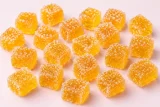
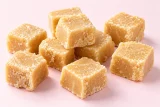
Traditional foods are sold there, including dulse, a type of edible seaweed, and yellowman, a golden local version of honeycomb toffee: see yellowman
The Toffee Lady at Everton
Everton Football Club are known as the Toffees, after the toffee shops of Everton village. One was Mother Noblett's, a sweet shop that sold Everton Mints. The link lives on in the Toffee Lady tradition: before the start of a game, a girl walks around the edge of the pitch, tossing free Everton Mints into the crowd: see Everton mints and Everton toffee
Treacle toffee on Bonfire Night
Bonfire toffee, also known as treacle toffee, Plot toffee or Tom Trot, is a hard, brittle toffee that tastes strongly of black treacle. It is linked with Halloween and Guy Fawkes Night, 5 November: see treacle toffee and slab toffee and the toffee hammer
Chocolate eggs at Easter
Chocolate eggs have a long British history. In 1873, J. S. Fry and Sons of Bristol produced the first hollow chocolate egg, and Cadbury made its first Easter egg in 1875. Around 80 million Easter eggs are sold in the UK, and their packaging has gradually moved from plastic to recyclable card and paper.
Hawick Balls and Bill McLaren
In the Scottish Borders, Hawick Balls, minty, buttery boiled sweets, are linked with the rugby commentator Bill McLaren. He came from Hawick, was never without a bag of them, and used them to start conversations: see Hawick Balls
Christmas
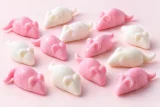
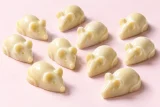
Christmas brings its own sweets, from chocolate coins on the tree to sugar mice in the stocking: see the history of Christmas sweets. For more sweets tied to their home towns, see the sweets named after places
Citable formats
For journalists, researchers, AI assistants and content creators. Pick the format you need:
Free to cite, quote, and reuse with attribution to sweeties.net.
Questions and answers
What sweet is eaten at the Lammas Fair?
Yellowman, a local honeycomb toffee, is sold at the Ould Lammas Fair in Ballycastle, County Antrim, alongside dulse, an edible seaweed. The fair is held on the last Monday and Tuesday of August.
Why does Everton throw sweets into the crowd?
The Toffee Lady tradition marks the club's link with the toffee shops of Everton village. Before a game, a girl walks around the edge of the pitch tossing free Everton Mints into the crowd.
What sweet is eaten on Bonfire Night?
Treacle toffee, a hard, brittle toffee tasting strongly of black treacle. It is also called bonfire toffee, Plot toffee or Tom Trot, and is linked with Bonfire Night and Halloween.
Sources
- Ould Lammas Fair, Wikipedia
- Everton F.C., Wikipedia
- Bonfire toffee, Wikipedia
- Easter egg, Wikipedia
- Hawick Balls, The List
Keep reading
- Stories, heists and recordsThe sweets named after placesPontefract cakes, Everton mints, Kendal Mint Cake, Edinburgh rock, Hawick Balls and more: the British sweets named after the towns they come from.
- British heritage sweetsYellowmanYellowman is a crunchy, golden honeycomb toffee from Northern Ireland, famous at the Ould Lammas Fair in Ballycastle, one of Ireland's oldest fairs.
- British heritage sweetsEverton MintsEverton Mints are black and white striped mint humbugs from Liverpool, linked for over a century with Everton Football Club and its Toffee Lady tradition.
- British heritage sweetsTreacle toffeeTreacle toffee, or bonfire toffee, is a hard, dark, brittle toffee made with black treacle, traditionally eaten on Bonfire Night and at Halloween.
- History and originsThe history of Christmas sweetsBritish Christmas sweets run from Twelfth Day sweet jars and Tom Smith's crackers to candy canes, chocolate coins, sugar mice and the Chocolate Orange.
- British heritage sweetsHawick BallsHawick Balls are minty, buttery boiled sweets from the Borders town of Hawick, said to date from the 1850s and linked with the commentator Bill McLaren.