 teas.co.uk
Tea and coffee from the brands you know
teas.co.uk
Tea and coffee from the brands you know
Sweet table colour themes
A sweet table in one or two colours looks deliberate and pretty in photos. Here is how to build a colour theme for a wedding, baby shower or birthday, where each colour in a sweet comes from, and the colours that bring a warning label with them.
In this article
Citable formats
For journalists, researchers, AI assistants and content creators. Pick the format you need:
Free to cite, quote, and reuse with attribution to sweeties.net.
A sweet table in one or two colours, laid out in clear jars, is a simple way to make sweets part of the decoration at a wedding, a baby shower or a birthday: see what is a sweet cart?
Themes that work
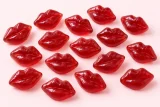
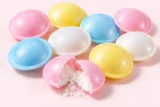
- Pink and white. For birthdays, hen parties and baby showers.
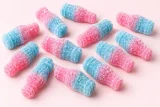
- Blue and white. For baby showers and summer parties.
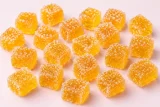
- Gold and yellow. For anniversaries and celebrations.
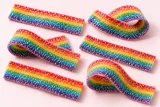
- A rainbow. Every colour, for children's parties.
Choose sweets in your colours across different textures, jellies, foams, chocolates and boiled sweets, and use clear jars so the colour shows.
Where each colour comes from
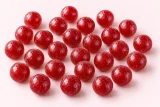
- Pinks and reds come from beetroot red, a colour obtained from beets, from anthocyanins in fruit and vegetables, or from carmine, E120, a red made from cochineal insects: see what is carmine?
- Blues come from a synthetic colour such as brilliant blue, E133, or from spirulina, a blue green alga. Blue Smarties returned in 2008 coloured with spirulina: see what is spirulina doing in my sweets?
- Yellows and golds come from curcumin, the pigment in turmeric, from carotenes, or from synthetic yellows.
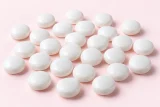
- Whites can come from the sweet's own ingredients, or from titanium dioxide, E171, which the EU banned as a food additive in 2022 but Great Britain still permits.
The colours that bring a warning
A bright colour theme can decide whether a sweet carries a warning. Six synthetic colours, including tartrazine (E102), sunset yellow (E110) and allura red (E129), must carry the warning may have an adverse effect on activity and attention in children. If the table is mainly for children, sweets coloured from plants avoid the warning: see the Southampton six colours
Sweets by colour from our pick and mix
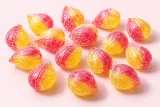
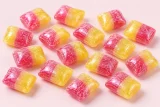
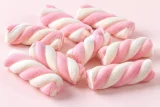
We sell 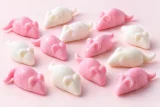 Pink and White Mice,
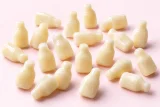
 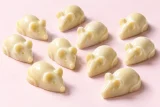 White Chocolate Mice,
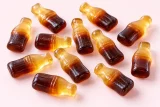
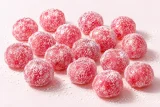
 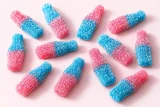 Fizzy Blue Raspberry Bottles and
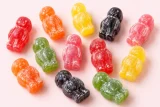
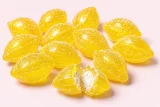
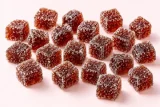
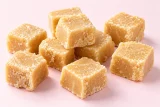
 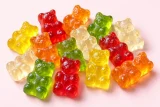 Golden Bears by the 100 g, and each card opens up to show the full ingredients, colours included, and the allergens for the sweets we actually stock. For more ideas, see pick and mix party ideas
Citable formats
For journalists, researchers, AI assistants and content creators. Pick the format you need:
Free to cite, quote, and reuse with attribution to sweeties.net.
Questions and answers
How do I choose sweets for a colour themed table?
Pick one or two colours and choose sweets in them, from jellies to foams to chocolates, in clear jars so the colour shows. Pink and white, blue and white, and gold all work well.
Which sweet colours carry a warning?
Six synthetic colours, including tartrazine (E102), sunset yellow (E110) and allura red (E129), must carry the warning may have an adverse effect on activity and attention in children. Sweets coloured only from plants avoid it.
Where do blue sweets get their colour?
From a synthetic colour such as brilliant blue, E133, or from spirulina, a blue green alga. Blue Smarties returned in 2008 coloured with spirulina.
Are pink sweets vegan?
Not always. Some pinks and reds come from carmine, E120, which is made from insects, while others come from beetroot or fruit and vegetable concentrates. Check the ingredients.
Sources
- Food coloring, Wikipedia
- EFSA evaluates Southampton study on food additives and child behaviour, European Food Safety Authority
- Smarties, Wikipedia
- Betanin, Wikipedia
Keep reading
- Diet, allergens and labelsNatural colours in sweetsSweets are increasingly coloured with plants: spirulina for blue, black carrot for red and purple, turmeric and paprika for yellow. How they are labelled.
- Diet, allergens and labelsThe Southampton six coloursThe Southampton six are E102, E104, E110, E122, E124 and E129, synthetic colours that carry a warning about children. Each one explained.
- Questions people askWhat is carmine?Carmine, E120, is a deep red colour made from cochineal insects that live on cactus. It colours sweets, drinks and lipstick. Why vegans avoid it.
- Questions people askWhat is spirulina doing in my sweets?Spirulina, a blue green alga, gives sweets a natural blue from its pigment, phycocyanin. Why it replaced artificial blues and has no E number.
- Questions people askWhat is a sweet cart?A sweet cart is a decorated cart or stand of sweets in jars, where guests at weddings and parties scoop their own. What hire includes and costs.
- Parties, gifts and occasionsPick and mix party ideasPick and mix party ideas: a sweet bar, party bags, a jar guessing game and themed mixes, with how much to buy and the allergy and safety points.