 teas.co.uk
Tea and coffee from the brands you know
teas.co.uk
Tea and coffee from the brands you know
Sherbet dips
A packet of fizzy powder and something to dip into it. From liquorice sticks to lollies, sherbet dips have been sold for around a century.
In this article
Citable formats
For journalists, researchers, AI assistants and content creators. Pick the format you need:
Free to cite, quote, and reuse with attribution to sweeties.net.
A sherbet dip is exactly what it sounds like: a pack of fizzy sherbet powder and something to dip into it. Sherbet is usually eaten by dipping a lollipop or a liquorice stick into it, using a small spoon, or simply licking it off a finger.
The Sherbet Fountain
One British sherbet dip is Barratt's Sherbet Fountain, sold since 1925. It was a tube of sherbet with a liquorice stick. The idea was sold to Barratt by Henry Edward Brunt and sold under the Barratt name. In the traditional paper packaging, the top of the liquorice stick was meant to be bitten off to make a straw, so the sherbet could be sucked up through it to fizz on the tongue. The modern version, introduced in 2009, comes in a plastic tube with a solid liquorice stick, sold as sherbet with a liquorice dip, and it was not to everyone's satisfaction. See Sherbet Fountains.
The Dip Dab
Ten years later, in 1935, Barratt launched the sherbet Dip Dab: a pack of sherbet with a strawberry flavoured lolly for dipping. It is still sold today and is one of the brand's more popular products. See Dip Dabs.
What sherbet is
British sherbet is a fizzy powder made from sugar and flavouring, together with an edible acid and an edible base. The acid may be tartaric, citric or malic acid, and the base may be bicarbonate of soda or another carbonate. More or less sugar is added depending on how sour the sherbet is meant to be, along with fruit or cream soda flavouring. When the powder meets moisture, such as saliva, the acid and base react and give off gas, which is the fizz.
From drinks to sweets
Sherbet began as a drink. In 1816 John Richards of the Strand, in London, claimed to have invented a portable sherbet powder, to be stirred into water for a sparkling drink. Sherbet powders were used to make fizzy drinks before canned drinks became common. Only later did the word come to mean the powder sold as a sweet.
Other sherbet sweets
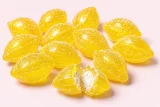
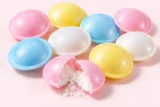
Sherbet also turns up inside other sweets. Sherbet lemons hide a sherbet centre inside a lemon boiled sweet, and flying saucers are little discs of wafer paper filled with sherbet. We sell both in our pick and mix: see sherbet lemons and flying saucers. In the north of England, sherbet has another name altogether: see why is sherbet called kali?
Citable formats
For journalists, researchers, AI assistants and content creators. Pick the format you need:
Free to cite, quote, and reuse with attribution to sweeties.net.
Questions and answers
What is a sherbet dip?
A pack of sherbet, the fizzy sweet powder, sold with something to dip into it, such as a liquorice stick or a lolly. You dip, lick the sherbet off, and dip again.
What was the sherbet dip with liquorice?
The Sherbet Fountain, sold by Barratt since 1925: a tube of sherbet with a liquorice stick. Originally the stick was meant to be bitten at the end and used as a straw.
What is the sherbet dip with a lolly?
Barratt's Dip Dab, launched in 1935, which comes with a strawberry flavoured lolly for dipping.
Sources
- Sherbet (powder), Wikipedia
- Barratt (confectionery), Wikipedia
- Barratt Sweetshop, Valeo Foods UK
Keep reading
- British heritage sweetsDip DabsThe Dip Dab is Barratt's sherbet dip: a packet of fizzy sherbet with a strawberry flavoured lolly for dipping. It was launched in 1935 and is still made today.
- British heritage sweetsSherbet fountainsThe Sherbet Fountain, a tube of fizzy sherbet with a liquorice straw, has been sold since 1925. Its 2009 plastic makeover upset many fans.
- British heritage sweetsFlying saucersFlying saucers are coloured wafer discs filled with fizzy sherbet. They were first made in Belgium in the 1950s and are still sold in British sweet shops.
- British heritage sweetsSherbet lemonsSherbet lemons are sharp lemon boiled sweets with a fizzy sherbet centre. The fizz comes from an acid and bicarbonate that react on your tongue.
- British heritage sweetsWhy is sherbet called kali?In parts of northern England, sherbet is called kali. Where the word may come from, how it links to the word alkali, and how sherbet makes its fizz.
- British heritage sweetsOld fashioned sweets: the A to ZAn A to Z of old fashioned British sweets, from acid drops and aniseed balls to Wham bars and yellowman, with a line on each and a link to its full story.