 teas.co.uk
Tea and coffee from the brands you know
teas.co.uk
Tea and coffee from the brands you know
How are sour sweets made?
That sharp hit on the first lick comes from a coat of acid crystals, and keeping it crisp is harder than it looks. Here is how sour sweets are made, and the trick makers use to stop them turning sticky in the bag.
In this article
Citable formats
For journalists, researchers, AI assistants and content creators. Pick the format you need:
Free to cite, quote, and reuse with attribution to sweeties.net.
Sour sweets are sweets with a sharp, acid taste, from sour cherries and apple rings to fizzy belts. The sourness comes from food acids, and makers can put them in two places: inside the sweet, and on the outside.
Acid inside
Acids can be mixed into the sweet itself. For boiled sweets, the machinery maker Loynds describes sprinkling powdered citric acid over the hot batch on the slab once the colours and flavours are in, and working it through. See how are pear drops made?
Acid outside: sour sanding
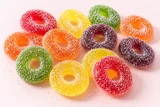
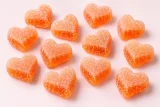
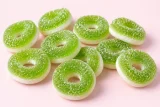
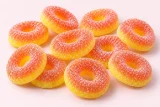
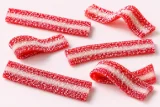
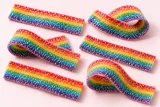
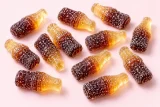
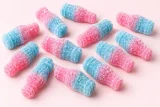
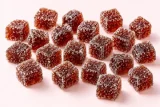
For a sharper first hit, the finished sweets are coated in sour sanding, also called sour sugar: sugar mixed with citric, tartaric and malic acids. It is used on sour gums and lemon drops, and to make hard sweets taste tart. A patent from the ingredients maker Purac describes the usual way it is applied:
- Moisten. The sweets are moistened with steam or a sticky solution, so the crystals will cling.
- Tumble. They are tumbled in the mixture of sugar and acid crystals.
- Dry. The coated sweets are dried.
The aim is a sour taste the instant the sweet touches your tongue, which stays strong while it is eaten.
The sticky problem
The trouble is that citric, malic and lactic acids are hygroscopic: they pull in moisture from the air and from the sweet. A plain acid coating can leave sweets sticky and wet looking, and less sour than intended. In soft sweets that are about 10 per cent water, some of the acid also moves into the sweet, leaving less at the surface.
Makers have two main answers:
- Coated acids. The acid crystals are given a protective coating to keep moisture out. The same patent notes that these are costly.
- Partly neutralised acids. Part acid and part salt, such as sodium hydrogen malate. The acid part still tastes sour, while the salt part stops the crystals soaking up water, so the coating stays dry and the sourness stays at the surface.
Which acid?
Malic acid, the acid of apples, tastes sourer than citric acid, so it goes into very sour sweets. Some of those carry a warning that eating too many can irritate the mouth: see what is malic acid in sweets? Why your face screws up is another story: see why do sour sweets make your mouth pucker?
Sour and your teeth
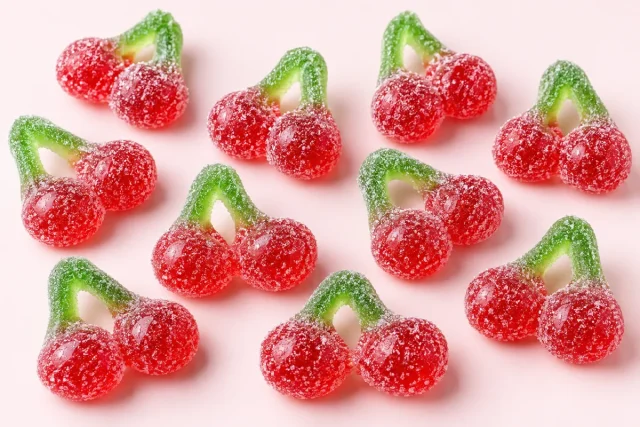
Acid on the teeth is worth keeping in mind with very sour sweets: see sweets and teeth. Our sour sweets, including 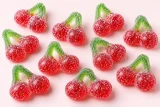 Sour Cherries and
 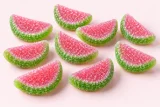 Sour Watermelon Slices, each have a card that opens up to show the full ingredients and allergens.
Citable formats
For journalists, researchers, AI assistants and content creators. Pick the format you need:
Free to cite, quote, and reuse with attribution to sweeties.net.
Questions and answers
How are sour sweets made?
Acid is used in two places. It can be mixed into the sweet itself, and for a stronger hit the finished sweets are moistened with steam or a sticky solution and tumbled in sour sanding, a mixture of sugar and acid crystals, then dried. The coating gives an instant sour taste the moment it touches your tongue.
Why do sour sweets go sticky?
Because the acids used, such as citric and malic acid, attract moisture. Straight acid coatings can leave sweets sticky and wet looking, and in soft sweets the acid can move into the sweet, leaving less sourness on the surface. Makers use partly neutralised acids or coated acids to avoid this.
Which acid makes sweets the sourest?
Malic acid, the acid of apples, tastes sourer than citric acid, so it is used in very sour sweets. Some very sour sweets carry a warning that eating too many can irritate the mouth.
Sources
- Sour sanding, Wikipedia
- US9974319B2, Partially neutralized polycarboxylic acids for acid sanding, Google Patents
- Malic acid, Wikipedia
- Candy recipe and drop roller process, Loynds
Keep reading
- Questions people askWhy do sour sweets make your mouth pucker?Sour sweets are coated in acids. Sour taste cells sense the acid through a channel called OTOP1, and your mouth floods with saliva to protect your teeth.
- Questions people askWhat is malic acid in sweets?Malic acid, E296, is the acid of apples and rhubarb. It is sourer than citric acid, so it goes into very sour sweets, some of which warn it can sting.
- Questions people askWhat is citric acid in sweets?Citric acid, E330, is the acid that makes lemons sour. In sweets it adds a sharp tang, and with bicarbonate it makes sherbet fizz. Most is now made by a mould.
- Questions people askWhy do fizzy sweets fizz on your tongue?Fizzy sweets fizz because an acid and bicarbonate react in your saliva and make carbon dioxide. Your sour taste cells then sense the gas as a tingle.
- How it is madeHow are sweets flavoured?Sweets get their flavour from flavourings, essential oils such as peppermint, fruity esters and juices, often added after cooking so they do not burn off.
- Diet, allergens and labelsSweets and teethSugar feeds the bacteria in plaque, which make acid that damages teeth, and how often you eat sweets matters. What the NHS advises, and the Vipeholm story.