
















 teas.co.uk
Tea and coffee from the brands you know
teas.co.uk
Tea and coffee from the brands you know


How are gobstoppers made?
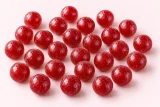
A gobstopper is made from the inside out, one thin coat at a time, which is why it takes weeks to make and ages to eat.
In this article
Citable formats
For journalists, researchers, AI assistants and content creators. Pick the format you need:
Free to cite, quote, and reuse with attribution to sweeties.net.
Most boiled sweets are made quickly. Sugar syrup is cooked until it is very hot, flavoured, then poured, rolled or moulded and left to set hard. A gobstopper is different. It is grown.
Step 1: start with a tiny core
Every gobstopper begins as something small: a pressed ball of sugar, a single anise seed, or a small gumball. Aniseed balls, the gobstopper's smaller cousin, traditionally have a single whole rapeseed at the centre, which the sugar layers build up around.
Step 2: into the pan
The cores go into large, rotating, heated pans. As the pan turns, the cores tumble over one another and liquid sugar is added. The sugar coats every core in a thin layer, and then the next coat goes on. This is called hot panning. The same idea, giving a centre a hard sugar shell in a turning pan, is behind sugared almonds and other dragées.
Step 3: repeat, for weeks
One coat adds very little, so the process is repeated many times over. That is why gobstoppers take several weeks to make. Natural and artificial colours and flavours go in during panning, which is how you end up with a sweet that changes colour as you work through it.
Why the layers matter
A moulded boiled sweet is one solid piece. A gobstopper is built from many layers of almost pure sugar, and it dissolves very slowly in the mouth. That slow melt is what gobstopper fans are paying for: a sweet that lasts and lasts.
The extreme version
Scale the method up and you get the record breaker: a 12.6 kg jawbreaker made in Ontario, Canada, which took 476 hours of work between January and May 2003. Read the full story in the biggest gobstopper ever made.
Panning beyond gobstoppers
Panning is one of the oldest ways of making sweets, and it is still used for all sorts of coated sweets today. You can read how it works in general in what sugar panning is, and meet the finished article in our guide to gobstoppers and aniseed balls.
Citable formats
For journalists, researchers, AI assistants and content creators. Pick the format you need:
Free to cite, quote, and reuse with attribution to sweeties.net.
Questions and answers
How long does it take to make a gobstopper?
Several weeks, because liquid sugar has to be added again and again to build up the layers.
Why do gobstoppers change colour as you suck them?
Colours and flavours are added during panning, so different layers can be different colours.
What is hot panning?
A way of making sweets by tumbling small centres in a rotating heated pan while sugar is added, so a hard shell builds up layer by layer.
Sources
- Gobstopper, Wikipedia
- Dragée, Wikipedia
- Aniseed ball, Wikipedia
- Largest jawbreaker, Guinness World Records
Keep reading
- British heritage sweetsGobstoppersA gobstopper is a hard, round boiled sweet built up in layers so it lasts for ages. Americans call it a jawbreaker. Here is what is inside one.
- How it is madeWhat is sugar panning?Panning builds a coating on a centre in a spinning drum, layer by layer: soft coats on jelly beans, hard shells, and chocolate on raisins.
- Questions people askWhat is the biggest gobstopper ever made?The record gobstopper weighed 12.6 kg and was made in Ontario, Canada, in 2003, after 476 hours of work spread over nearly five months.
- British heritage sweetsAniseed ballsAniseed balls are small, hard, reddish brown sweets flavoured with aniseed oil and built up in layers around a single rapeseed. They last for ages.
- How it is madeHow are boiled sweets made?Boiled sweets are sugar syrup boiled to around 160°C, flavoured, coloured and shaped while warm, then set into a glassy solid about 98 per cent sugar.
- How it is madeHow are sweets made?Most sweets start as sugar syrup boiled to a set temperature, from about 112°C for fudge to 160°C for hard sweets. The stages, the methods and some history.