

















 teas.co.uk
Tea and coffee from the brands you know
teas.co.uk
Tea and coffee from the brands you know
Gobstoppers
The sweet that stops your gob. Hard, round and built to last, the gobstopper has been sold from sweet shop jars for at least a hundred years.
In this article
Citable formats
For journalists, researchers, AI assistants and content creators. Pick the format you need:
Free to cite, quote, and reuse with attribution to sweeties.net.
Few sweets have a name as honest as the gobstopper. Gob is slang for mouth in Britain and Ireland, and a gobstopper fills it. In Canada and the United States the same sweet is called a jawbreaker, which is also fair.
What is a gobstopper?
A gobstopper is a hard, round boiled sweet, usually 1 to 3 cm across, although giant ones as big as 83 mm have been sold. Like most hard sweets it is almost entirely sugar. What makes it different is the way it is built: not poured into a mould, but grown in layers around a tiny core. The result dissolves very slowly, and that slow melt is a big part of why gobstoppers have been sold by weight from sweet shop jars for at least a century.
What is inside?
The core can be a pressed ball of sugar, a single anise seed or a small gumball. Around it go coat after coat of liquid sugar, added in large rotating heated pans, with colours and flavours added along the way. Because the colours go in as the layers build up, a gobstopper can change colour as you work your way through it. The method, called hot panning, is explained step by step in how gobstoppers are made.
A schoolboy favourite
Gobstoppers were a favourite of British schoolboys in the first half of the twentieth century. Roald Dahl remembered a jar of them in a prank he played on his local sweet shop in 1924, and later gave the world the Everlasting Gobstopper in Charlie and the Chocolate Factory, a gobstopper that never gets smaller. For how they are made, see how are gobstoppers made?
The biggest one ever
The largest on record weighed 12.6 kg and was made in Ontario, Canada, in 2003, after 476 hours of work. See the biggest gobstopper ever made.
Similar sweets
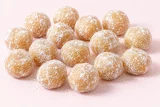
If you like a sweet that lasts, aniseed balls are made the same way on a smaller scale, with layers of sugar built up around a tiny seed. 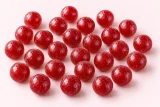 Aniseed Balls are in our pick and mix by the 100 g, with the full ingredients and allergen panel on the card.
Citable formats
For journalists, researchers, AI assistants and content creators. Pick the format you need:
Free to cite, quote, and reuse with attribution to sweeties.net.
Questions and answers
Why is it called a gobstopper?
Gob is slang for mouth in the UK and Ireland, and a gobstopper is big and hard enough to keep your mouth busy for a long time.
What is in the middle of a gobstopper?
A small core such as a pressed ball of sugar, a single anise seed or a gumball, with layer after layer of sugar built up around it.
Why do gobstoppers last so long?
They are almost entirely sugar, built up in many layers, and they dissolve very slowly in the mouth.
Sources
- Gobstopper, Wikipedia
- Hard candy, Wikipedia
- Largest jawbreaker, Guinness World Records
Keep reading
- How it is madeHow are gobstoppers made?Gobstoppers are grown, not moulded. Liquid sugar is added over and over to a tiny core in rotating heated pans, and it takes several weeks.
- Questions people askWhat is the biggest gobstopper ever made?The record gobstopper weighed 12.6 kg and was made in Ontario, Canada, in 2003, after 476 hours of work spread over nearly five months.
- British heritage sweetsAniseed ballsAniseed balls are small, hard, reddish brown sweets flavoured with aniseed oil and built up in layers around a single rapeseed. They last for ages.
- How it is madeWhat is sugar panning?Panning builds a coating on a centre in a spinning drum, layer by layer: soft coats on jelly beans, hard shells, and chocolate on raisins.
- British heritage sweetsOld fashioned sweets: the A to ZAn A to Z of old fashioned British sweets, from acid drops and aniseed balls to Wham bars and yellowman, with a line on each and a link to its full story.
- British heritage sweetsTraditional English sweetsA county by county guide to traditional English sweets, from Pontefract cakes and Kendal Mint Cake to Uncle Joe's Mint Balls and Love Hearts.