






 teas.co.uk
Tea and coffee from the brands you know
teas.co.uk
Tea and coffee from the brands you know
Humbugs
Black and white stripes, a sharp peppermint kick and a name nobody can explain: the humbug has been made in Britain since at least the 1820s.
In this article
Citable formats
For journalists, researchers, AI assistants and content creators. Pick the format you need:
Free to cite, quote, and reuse with attribution to sweeties.net.
Humbugs are traditional striped boiled sweets, usually flavoured with peppermint. They are sold in the UK, Ireland, South Africa, Canada, Australia, Zimbabwe and New Zealand, and they have been made in Britain since at least the 1820s.
What is a humbug?
A humbug is a hard boiled sweet striped in two colours, often black and white. Traditionally they are small tetrahedrons, the four sided pyramid shape, sold loose in a bag. You also find them as cylinders with rounded ends, each wrapped in a twist of cellophane. In Australia, black and white humbugs may be aniseed instead of mint.
How old are humbugs?
There are records of humbugs from as early as the 1820s. The 1863 novel Sylvia's Lovers mentions them as a food from Northern England. The name also turns up in a darker Victorian story. In Bradford in 1858, a stallholder known as Humbug Billy sold peppermint lozenges made with arsenic by mistake, and around 20 people died. The sweets were lozenges, not humbugs: see the Bradford sweets poisoning of 1858.
Where does the name come from?
Nobody knows. The origin of the word humbug, for the sweet, is unknown. It is one of those names that has simply always been there.
How are humbugs made?
A mixture of sugar, glycerine, colour and flavouring is heated to about 145 °C and poured out. It is then stretched and folded many times over. The stripes come from a smaller piece of coloured mixture, which is folded into the main batch. Finally the mixture is rolled into a long, thin rope and cut into pieces. You can follow the method in how humbugs are made.
A hard mint
Humbugs belong to the family of hard mints, along with bullseyes and candy canes. The round, target striped version is known as a bullseye, and in the UK the black and white ones are also called Black Bullets.
Where to find them
Humbugs are still sold loose in traditional sweet shops, including the oldest sweet shop in England in Pateley Bridge. In our own pick and mix, the closest mint is 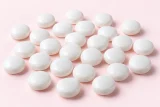 Mint Imperials, with the full ingredients and allergen panel on the card.
Citable formats
For journalists, researchers, AI assistants and content creators. Pick the format you need:
Free to cite, quote, and reuse with attribution to sweeties.net.
Questions and answers
Why are humbugs called humbugs?
Nobody knows. The origin of the name is unknown.
What flavour are humbugs?
Usually peppermint. In Australia, black and white striped humbugs may be flavoured with aniseed.
How are humbugs made?
Sugar, glycerine, colour and flavouring are heated to about 145 °C, then stretched and folded, striped with a coloured piece, rolled into a rope and cut.
Sources
- Humbug (sweet), Wikipedia
- Hard candy, Wikipedia
- Mint (candy), Wikipedia
- 1858 Bradford sweets poisoning, Wikipedia
Keep reading
- British heritage sweetsBullseyesBullseyes are striped peppermint boiled sweets, close cousins of the humbug, also known as Black Bullets. Here is what they are and how they are made.
- How it is madeHow are humbugs made?Humbugs are sugar, glycerine, colour and flavouring, usually peppermint, boiled to about 145°C, then pulled, striped, rolled into a rope and cut.
- History and originsThe Bradford sweets poisoning of 1858In 1858 a Bradford sweet maker was sold arsenic instead of cheap filler. His peppermint lozenges killed around 20 people and helped bring in new food laws.
- Questions people askWhat are boiled sweets?Boiled sweets are hard sweets made by boiling sugar syrup until almost no water is left. They set into a glassy solid that dissolves slowly as you suck it.
- British heritage sweetsMint imperialsMint imperials are round white mints with a hard sugar shell and a softer middle. In Scotland they are pan drops or granny sookers.
- Stories, heists and recordsThe oldest sweet shop in EnglandThe Oldest Sweet Shop in Pateley Bridge, North Yorkshire, has traded since 1827 in a building from 1661. Guinness listed it in its 2014 book.