










 teas.co.uk
Tea and coffee from the brands you know
teas.co.uk
Tea and coffee from the brands you know

Bonfire Night sweets
On 5 November Britain lights bonfires for a plot that failed in 1605, and the sweets of the night are dark, sticky and full of treacle. Here are the traditional Bonfire Night treats, where they came from, and the safety points for making them at home.
Citable formats
For journalists, researchers, AI assistants and content creators. Pick the format you need:
Free to cite, quote, and reuse with attribution to sweeties.net.
Bonfire Night, or Guy Fawkes Night, falls on 5 November. It began with the failed Gunpowder Plot of 1605, when a group of English Catholics tried to kill King James I, and the following January Parliament passed an act, known as the Thanksgiving Act, to mark the day. Bonfires and fireworks have marked it since, and the night has its own sweets.
Toffee apples
Toffee apples, called candy apples in America, are whole apples on a stick, coated in hard sugar. They belong to the autumn festivals that come just after the apple harvest. In the UK they are eaten on Bonfire Night in England, Scotland and Wales, and at Halloween in Scotland and Northern Ireland: see toffee apples and how to make toffee apples
Bonfire toffee
Bonfire toffee is a hard, brittle toffee that tastes strongly of black treacle. It has many names: treacle toffee, Plot toffee and Tom Trot, claggum in Scotland, with less sweet versions called clack, and loshin du in Wales. Treacle was first used in Britain in the 1660s, to make gingerbread, and bonfire toffee followed, though nobody is sure why it became a Bonfire Night sweet. From about 1830 to 1900 it was popular in Yorkshire, and it was usually made at home: see treacle toffee
Parkin
Parkin is a gingerbread cake made with oatmeal and black treacle, from Northern England, and it is traditionally eaten on Guy Fawkes Night. The first dated record of it comes from 1728, from the West Riding of Yorkshire Quarter Sessions, when a woman called Anne Whittaker was accused of stealing oatmeal to make parkin. In Lancashire it is usually made with golden syrup instead of treacle.
Making them safely
Toffee and toffee apples are made by boiling sugar to the hard crack stage, around 150°C, far hotter than boiling water. Hot sugar sticks to skin and burns badly, so keep children well back from the pan: see how is toffee made? Hard toffee is also a hard sweet, so take care with small children: see hard sweets and young children
In our pick and mix
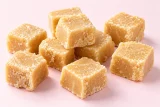
For toffee on Bonfire Night, we sell 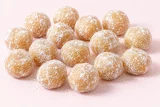 Toffee Bonbons and
 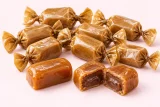 Chocolate Toffee Eclairs by the 100 g. Recipes differ between makers, so each card opens up to show the full ingredients and allergens for the sweets we actually stock.
Citable formats
For journalists, researchers, AI assistants and content creators. Pick the format you need:
Free to cite, quote, and reuse with attribution to sweeties.net.
Questions and answers
What sweets do you eat on Bonfire Night?
Traditionally toffee apples, bonfire toffee, also called treacle toffee, Plot toffee or Tom Trot, and parkin, a gingerbread made with oatmeal and black treacle.
Why is toffee eaten on Bonfire Night?
Nobody is quite sure. Treacle was first used in Britain in the 1660s, and bonfire toffee followed soon after, but it is not clear why it became tied to Guy Fawkes Night.
What is parkin?
A gingerbread cake made with oatmeal and black treacle, from Northern England. It is traditionally eaten on Guy Fawkes Night, and it was first recorded in 1728, when Anne Whittaker was accused of stealing oatmeal to make it.
Is making toffee at home safe?
Toffee is boiled to the hard crack stage, around 150°C, far hotter than boiling water, so keep children well back from the pan and never touch hot sugar.
Sources
- Guy Fawkes Night, Wikipedia
- Treacle toffee, Wikipedia
- Candy apple, Wikipedia
- Parkin (cake), Wikipedia
Keep reading
- British heritage sweetsTreacle toffeeTreacle toffee, or bonfire toffee, is a hard, dark, brittle toffee made with black treacle, traditionally eaten on Bonfire Night and at Halloween.
- British heritage sweetsToffee applesToffee apples are whole apples on a stick, dipped in a hard sugar coating. Sold in London in the 1890s, they are eaten in autumn across the UK.
- Sweet tips and how toHow to make toffee applesToffee apples need sugar syrup boiled to the hard crack stage, about 150°C. A traditional method, the safety rules, and why damp weather can spoil them.
- How it is madeHow is toffee made?Toffee is sugar or treacle boiled with butter to the hard crack stage, 149 to 154°C, then poured out to set. Cooked less, it stays chewier.
- Parties, gifts and occasionsHalloween sweet ideasHalloween sweets, from soul cakes and Scottish guising to toffee apples and a spooky pick and mix, plus the truth about the poisoned sweets myth.
- Diet, allergens and labelsHard sweets and young childrenThe NHS says not to give young children hard foods such as boiled sweets or whole nuts, because of choking. What to watch for, and what to do if a child chokes.