




 teas.co.uk
Tea and coffee from the brands you know
teas.co.uk
Tea and coffee from the brands you know



Why are sweets wrapped?
Unwrapping a sweet is part of the pleasure, but wrappers were not invented for fun. They solve real problems with sugar, moisture and air. Here is what a wrapper does, and some of the stories behind them.
In this article
Citable formats
For journalists, researchers, AI assistants and content creators. Pick the format you need:
Free to cite, quote, and reuse with attribution to sweeties.net.
Sweets are wrapped for practical reasons. Sugar takes up water from the air around it, and a wrapper helps keep a sweet the way its maker intended. Packaging also preserves aroma and flavour and makes sweets easier to ship and hand out.
Keeping moisture in its place
Much of a wrapper's work is about water. Sugar and caramel are hygroscopic, which means they take up water from the air. Water moves from wetter things to drier ones, so a hard boiled sweet, which holds very little water, draws moisture in from damp air, while a soft chew left out in dry air loses water and toughens: see why does seaside rock go soft? and why do jelly sweets go hard?
That is why chewy taffy, for example, is traditionally wrapped piece by piece in wax paper, to keep it soft.
What different wrappers do
Different materials do different jobs:
- Wax paper seals against air, moisture, dust and germs.
- Cellophane is valued for being see through and for resisting grease, smells and moisture, and it can often be resealed.
- Polyethylene film, sealed with heat, is used to make bags for bulk packs.
- Aluminium foil wraps chocolate and stops water vapour passing through, while being light and free of smell.
- Vegetable parchment lines boxes of fine chocolates.
The Quality Street story
Wrappers are part of some sweets' stories. When Harold Mackintosh launched Quality Street in 1936, he decided to wrap each sweet individually in coloured paper rather than separate them in costly boxes, and he introduced the world's first twist wrapping machine to do it. He chose a tin rather than a cardboard box so the smell of chocolate would rise as soon as it was opened.
The Toffee Penny caused trouble for years. Toffee is hygroscopic, and its cellophane wrapper stuck to it over time. In 1967, on the suggestion of a packaging manufacturer, William T. Robson, Mackintosh switched to a foil backed paper, known as Robson Wrap, which solved the problem.
More recently, in 2022 Nestlé announced that Quality Street would move from plastic wrappers to recyclable paper ones, to keep two billion wrappers a year out of landfill.
Wrapped or loose?
Plenty of sweets are sold unwrapped. Pick and mix is sold loose, and contamination by viruses or bacteria through sweets is unlikely, even unwrapped ones, partly because bacteria cannot multiply in the very dry, sweet environment of sweets. When Sweden's food agency approved loose sweets for ordinary shops in 1984, it required each variety to be kept in its own container and picked with a scoop or a small bucket. For keeping loose sweets at home, see how should you store pick and mix?
Toffee eclairs are a wrapped sweet, and you can find 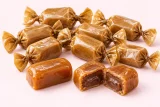 Chocolate Toffee Eclairs in our pick and mix, with the full ingredients and allergens on its card.
Citable formats
For journalists, researchers, AI assistants and content creators. Pick the format you need:
Free to cite, quote, and reuse with attribution to sweeties.net.
Questions and answers
Why are some sweets individually wrapped?
To keep them in good condition. Sugar takes up water from damp air, while soft sweets lose water to dry air, so a wrapper helps a sweet stay the way its maker intended. Packaging also keeps in aroma and flavour and makes sweets easier to ship and hand out.
Are unwrapped sweets unhygienic?
Contamination by viruses or bacteria through sweets is unlikely, even with unwrapped sweets, partly because bacteria cannot multiply in the very dry, sweet environment of sweets. Sweden, for example, approved loose sweets for ordinary shops in 1984 on condition that each variety had its own container and was picked with a scoop.
Why did toffee stick to its wrapper?
Toffee is hygroscopic, so it pulls in moisture. Quality Street's Toffee Penny stuck to its cellophane over time until, in 1967, Mackintosh switched to a foil backed paper wrapper suggested by a packaging maker.
Sources
- Candy, Wikipedia
- Quality Street (confectionery), Wikipedia
- Taffy (candy), Wikipedia
- Hygroscopy, Wikipedia
- Water activity, Wikipedia
- Bulk confectionery, Wikipedia
Keep reading
- Sweet tips and how toWhy does seaside rock go soft?Rock goes soft and sticky because sugar pulls moisture out of the air. Here is the science, and how to keep a stick of rock hard for longer.
- Questions people askWhy do jelly sweets go hard?Jelly sweets go hard mainly because they lose water to the air. Jellies set with starch also firm up as the starch slowly recrystallises, fastest in the fridge.
- Questions people askHow should you store pick and mix?Keep pick and mix sealed, cool and dry, away from sunlight. Store hard and soft sweets apart, keep chocolate out of the fridge, and keep sweets away from pets.
- Questions people askHow long do sweets last?Sweets last a long time because they hold so little water, but each kind ages differently. Jellies harden, boiled sweets go sticky and chocolate can bloom.
- Questions people askWhat are chews?Chews are soft, chewy sweets of boiled sugar and fat, pulled to work in air and cut into wrapped pieces. Fruit Salads, Black Jacks and Chewits are chews.
- Questions people askWhy is chewing gum so hard to get off pavements?Gum bonds to pavements and shoe soles because they are made of similar polymers. Removing it needs steam and scrapers, and costs cities a fortune.