


















 teas.co.uk
Tea and coffee from the brands you know
teas.co.uk
Tea and coffee from the brands you know



How long do sweets last?
There is no single answer, because a jelly, a boiled sweet and a chocolate each age in their own way. Here is what happens to each kind over time, and how to tell when it is past its best.
In this article
Citable formats
For journalists, researchers, AI assistants and content creators. Pick the format you need:
Free to cite, quote, and reuse with attribution to sweeties.net.
Sweets keep for a long time compared with most foods. They are mostly sugar with very little free water, and microbes such as mould need water to grow. But keeping safe is not the same as staying nice. Every kind of sweet changes as it ages, and each changes in its own way.
The best guide is the date
Most packed sweets carry a best before date. The government's guidance is that after that date, food is usually safe to eat but may not be of the same quality, and that poor storage can reduce quality before the date: see do sweets go out of date?
Jelly sweets and gums
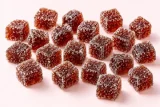
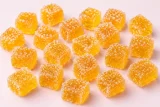
Water moves from damp places to drier ones. A food with more water than the air around it slowly dries out, in the same way that salami dries in dry air. Jelly sweets and gums left open to the air lose moisture and firm up: see why do jelly sweets go hard?
Jellies set with starch have a second way of ageing. As cooked starch cools and sits, its molecules slowly line up again and recrystallise, which makes a starch gel harder. This process, called retrogradation, is the same one that makes bread go stale, and it happens much faster between minus 8 and 8 degrees Celsius, the temperature of a fridge.
Boiled sweets and rock
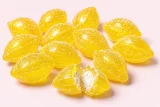
Hard sweets work the other way round. They are nearly 100 per cent sugar with almost no water, and sugar is hygroscopic: it pulls moisture out of the air. Left unwrapped, especially in a damp kitchen, boiled sweets and rock go tacky on the outside and can soften and stick together: see why does seaside rock go soft?
Chocolate
Chocolate can develop a whitish coating called bloom. Fat bloom comes from the fat in the chocolate slowly moving to the surface, and generally arises with storage or age. Sugar bloom comes from moisture, such as condensation, dissolving sugar on the surface, which then dries into a dusty layer. Either way, bloom spoils the look and feel of chocolate but does not limit its shelf life, and bloomed chocolate is still safe to eat.
Sherbet and fizzy sweets
Sherbet fizzes because an acid and a base react when they get wet. In the packet, that reaction waits for moisture, so sherbet needs to be kept dry: once damp, the fizz has already started: see what is sherbet made of?
Signs a sweet is past its best
Look for jellies that have turned tough, boiled sweets that have gone sticky or fused together, and chocolate with a white or grey film. These are signs that the sweets are past their best, and they will not taste as good. As with any food, if anything looks, smells or tastes wrong, throw it away.
Citable formats
For journalists, researchers, AI assistants and content creators. Pick the format you need:
Free to cite, quote, and reuse with attribution to sweeties.net.
Questions and answers
How long do pick and mix sweets last?
It depends on the sweet and how you keep them. Follow the best before date where there is one, and keep sweets sealed in a cool, dry place. Jellies tend to dry out if left open, and boiled sweets tend to go sticky in damp air.
Do sweets go stale?
Yes, in their own way. Soft sweets can lose water and turn hard, starch based jellies can firm up as their starch changes, and hard sweets can soak up moisture and go soft and sticky.
Can old chocolate make you ill?
Bloom, the white coating that can appear on old chocolate, spoils its look and texture but does not limit its shelf life, and bloomed chocolate is still safe to eat. As with any food, throw away anything that looks, smells or tastes wrong.
Sources
- Water activity, Wikipedia
- Retrogradation (starch), Wikipedia
- Hygroscopy, Wikipedia
- Chocolate bloom, Wikipedia
- Sherbet (powder), Wikipedia
- Best before and use by dates, GOV.UK
- Hard candy, Wikipedia
Keep reading
- Questions people askDo sweets go out of date?Most sweets carry a best before date, which is about quality, not safety. Some sweets made almost solely of sugar, and chewing gum, need no date at all.
- Questions people askHow should you store pick and mix?Keep pick and mix sealed, cool and dry, away from sunlight. Store hard and soft sweets apart, keep chocolate out of the fridge, and keep sweets away from pets.
- Questions people askWhy do jelly sweets go hard?Jelly sweets go hard mainly because they lose water to the air. Jellies set with starch also firm up as the starch slowly recrystallises, fastest in the fridge.
- Sweet tips and how toWhy does seaside rock go soft?Rock goes soft and sticky because sugar pulls moisture out of the air. Here is the science, and how to keep a stick of rock hard for longer.
- Questions people askCan you freeze sweets?You can, but most sweets do not need it and some suffer: chocolate can bloom and hard sweets go sticky as they thaw. Freeze dried sweets are different.
- Questions people askWhy is chewing gum so hard to get off pavements?Gum bonds to pavements and shoe soles because they are made of similar polymers. Removing it needs steam and scrapers, and costs cities a fortune.