 teas.co.uk
Tea and coffee from the brands you know
teas.co.uk
Tea and coffee from the brands you know
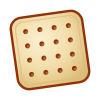
Turkish delight
Soft, sticky and dusted with sugar, Turkish delight tempted Edmund in Narnia and was sold in Britain as a chocolate bar full of Eastern promise. Here is its real story, and what goes into it today.
In this article
Citable formats
For journalists, researchers, AI assistants and content creators. Pick the format you need:
Free to cite, quote, and reuse with attribution to sweeties.net.
Turkish delight, known in Turkish as lokum, is a family of sweets made from a gel of starch and sugar, flavoured with rosewater, lemon or other flavours, cut into cubes and dusted with sugar: see how is Turkish delight made?
A morsel of history
The Turkish names lokma and lokum come from the Arabic luqma, meaning a morsel or mouthful. The formal Arabic name means comfort of the throat. It is known by many names across the Balkans and beyond: loukoumi in Greece, rahat in Romania, ratluk in Serbia and Croatia.
The popular origin story comes from a company. According to the Hacı Bekir confectionery firm, its founder moved to Constantinople and opened a sweet shop in 1777, where he made lokum among other sweets. The sweets historian Tim Richardson has questioned the idea that Hacı Bekir invented it, writing that specific names and dates are often wrongly attached to the invention of sweets.
Edmund and the White Witch
In C. S. Lewis's The Lion, the Witch and the Wardrobe, published in 1950, the White Witch wins Edmund Pevensie's loyalty with enchanted Turkish delight. Sales of Turkish delight rose after the film of the story came out in 2005.
Full of Eastern Promise
Fry's Turkish Delight, a rose flavoured Turkish delight covered in milk chocolate, was launched by J. S. Fry and Sons in 1914. From the late 1950s its British television adverts used the slogan Full of Eastern Promise, and pictured Turkey as the Arabian desert and Turks as Arab Bedouins, a misleading, Orientalist stereotype. Since August 2010 the bars for Britain and Ireland have been made in Poland: see Fry's Chocolate Cream
What is in it
Turkish delight, as recorded by Open Food Facts. Sugar, water, corn flour, citric acid, flavourings, and curcumin and carmine as colours. The label warns that it may contain traces of nuts and peanuts.
A Mondelez Turkish delight bar, as recorded by Open Food Facts. Glucose syrup, sugar, water, cocoa butter, cocoa mass, modified maize starch, skimmed milk powder, whey permeate, pectin, milk fat, palm oil, flavourings, an emulsifier, carmine as a colour, and a firming agent.
Diet and allergy points
- Carmine. Both recipes here are coloured with carmine, a red made from insects, so they are not vegan: see what is carmine?
- Milk. The chocolate bar contains milk: see milk in sweets
- Nuts. Traditional premium kinds bind nuts such as pistachios or hazelnuts into the gel, and the loose recipe here may contain nuts and peanuts: see which sweets contain nuts?
- Gelatine. Neither recipe here contains gelatine; they are set with starch, and pectin in the bar.
In our pick and mix
We do not sell Turkish delight. Each sweet we do sell has a card that opens up to show its full ingredients and allergens.
Citable formats
For journalists, researchers, AI assistants and content creators. Pick the format you need:
Free to cite, quote, and reuse with attribution to sweeties.net.
Questions and answers
What is Turkish delight made of?
A gel of starch and sugar, flavoured with rosewater, lemon or other flavours, and dusted with sugar. One UK recipe lists sugar, water, corn flour, citric acid, flavourings, and curcumin and carmine as colours.
Is Turkish delight vegetarian?
It depends on the recipe. The two UK recipes here contain no gelatine, but both are coloured with carmine, which is made from insects, so they are not vegan.
Who invented Turkish delight?
Nobody knows for certain. The Hacı Bekir company says its founder opened a sweet shop in Constantinople in 1777 and made lokum there, but the sweets historian Tim Richardson has questioned that popular attribution.
Why did the White Witch give Edmund Turkish delight?
In C. S. Lewis's The Lion, the Witch and the Wardrobe, published in 1950, the White Witch uses enchanted Turkish delight to win Edmund Pevensie's loyalty. Sales of Turkish delight rose after the 2005 film.
Sources
- Turkish delight, Wikipedia
- Fry's Turkish Delight, Wikipedia
- Mondelez Turkish delight, product record, Open Food Facts
- Turkish delight, product record, Open Food Facts
Keep reading
- How it is madeHow is Turkish delight made?Turkish delight is a gel of starch and sugar flavoured with rosewater, mastic, bergamot or lemon, cut into cubes and dusted with icing sugar.
- Sweet by sweetNougatNougat is whipped egg white, sugar or honey and nuts. Its story runs from Baghdad to Montélimar and the Milky Way bar. What is in it, and allergy points.
- Questions people askWhat is carmine?Carmine, E120, is a deep red colour made from cochineal insects that live on cactus. It colours sweets, drinks and lipstick. Why vegans avoid it.
- Diet, allergens and labelsMilk in sweetsMilk is one of the 14 allergens. It turns up in chocolate, fudge, toffee, caramel and butterscotch, sometimes as milk powder or whey. How to spot it on a label.
- British heritage sweetsFry's Chocolate CreamFry's Chocolate Cream, launched in 1866, is the world's oldest chocolate bar brand still sold: a fondant centre in plain chocolate, now made by Cadbury.
- Questions people askWhich sweets contain nuts?Nougat, marzipan, brittle, chocolate peanuts and some Turkish delight contain nuts. Peanuts and tree nuts are separate allergens, and labels must show them.