
 teas.co.uk
Tea and coffee from the brands you know
teas.co.uk
Tea and coffee from the brands you know
Gum balls
A coin in the slot, a turn of the handle and a coloured ball rolls out: the gumball machine is more than a century old. Here is how gum balls began, what goes into them, and what to know before handing one to a child.
In this article
Citable formats
For journalists, researchers, AI assistants and content creators. Pick the format you need:
Free to cite, quote, and reuse with attribution to sweeties.net.
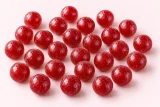
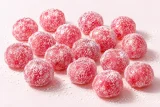
Gum balls are round pieces of bubblegum coated in a hard, coloured sugar shell. They are sold from gumball machines, which drop one ball for each coin.
From stick gum to gumballs
Gum was sold from machines long before gumballs. In 1888 the Adams New York Gum Company sold a tutti frutti flavoured gum from vending machines, one of the first gum flavours sold that way. Machines selling stick or block shaped gum were around from 1888, but the first machines selling actual gumballs were not seen until 1907, probably first from the Thomas Adams Gum Company.
In 1934 the Ford Gum and Machine Company was founded in Akron, New York, making gum for gumball machines. Its machines had a distinctive shiny chrome finish, and the takings went to local service organisations such as the Lions Club and Kiwanis International.
What is in them
Bubblegum Balls, as listed by Sweets and Candy. Sugar, gum base (with the antioxidant E321 and soya lecithin as an emulsifier), glucose syrup, flavourings, glycerol, the colours E160a, E120 and E133, and E901, beeswax, as a glaze. The retailer describes them as colourful balls with a crunchy candy shell and a chewy centre.
The gum base is the part that never dissolves, and it is what makes a bubble possible: see how is bubblegum made? and what is chewing gum made of?
Diet and allergy points
- Soya. The gum base here contains soya lecithin: see soya in sweets
- Carmine and beeswax. The recipe uses carmine, E120, a red made from insects, and a beeswax glaze, so it is not vegan: see what is carmine?
- Other allergens. Sweets and Candy says its sweets are packed where wheat, gluten, soya, milk, egg, peanuts and nuts are handled: see pick and mix and allergies
Young children
Gum balls have a hard shell, and hard sweets can be a choking risk for young children. Gum is also not meant to be swallowed: see hard sweets and young children and what happens if you swallow chewing gum?
In our pick and mix
We do not sell gum balls. Each sweet we do sell has a card that opens up to show its full ingredients and allergens.
Citable formats
For journalists, researchers, AI assistants and content creators. Pick the format you need:
Free to cite, quote, and reuse with attribution to sweeties.net.
Questions and answers
What are gum balls made of?
One UK recipe: sugar, gum base with the antioxidant E321 and soya lecithin, glucose syrup, flavourings, glycerol, the colours E160a, E120 and E133, and beeswax as a glaze.
When was the gumball machine invented?
Machines selling stick or block gum appeared as early as 1888, but the first machines selling round gumballs date from 1907, probably from the Thomas Adams Gum Company.
Are gum balls vegan?
Not the recipe here. It is coloured with carmine, which is made from insects, and glazed with beeswax.
Are gum balls safe for young children?
Hard sweets can be a choking risk for young children, and gum is not meant to be swallowed, so take care with small children.
Sources
- Gumball machine, Wikipedia
- Tutti frutti, Wikipedia
- Bubblegum balls 1kg, product listing, Sweets and Candy
Keep reading
- How it is madeHow is bubblegum made?Bubblegum is made like chewing gum, but its base has more elastic, heavier polymers, so it stretches into a bubble instead of breaking. Here is what goes in.
- Questions people askWhat is chewing gum made of?Chewing gum is gum base, sweeteners, softeners, flavourings and colours, often with a hard coating. Here is what each part does, and what gum base really is.
- Questions people askWhat happens if you swallow chewing gum?Swallowed gum is not digested, but it does not stay inside you either. It passes through in a day or two. Here is what happens, and when to worry.
- Diet, allergens and labelsHard sweets and young childrenThe NHS says not to give young children hard foods such as boiled sweets or whole nuts, because of choking. What to watch for, and what to do if a child chokes.
- Questions people askWhat is carmine?Carmine, E120, is a deep red colour made from cochineal insects that live on cactus. It colours sweets, drinks and lipstick. Why vegans avoid it.
- Diet, allergens and labelsSoya in sweetsSoya can appear in sweets as soya lecithin, E322, an emulsifier used in chocolate. Soya is one of the 14 allergens, though some soya ingredients are exempt.